I am a Christian, a retired teacher, a mother and a grandmother. I love to read and I love the Lord Jesus Christ! Unless otherwise specified ,all visual illustrations are from the YOU VERSION APP of the Bible.
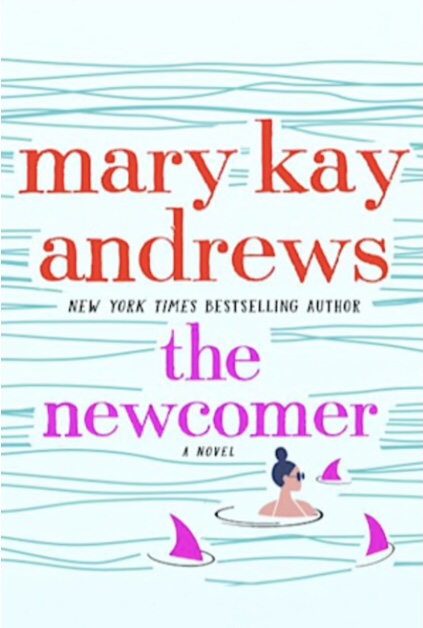
This book is part mystery, part romance and all about family. When Letty is awakened in the parking lot of The Murmuring Surf motel in Florida, she had no idea that policeman Joe who awakened her would play such a big part in her life. Letty was running from NYC and had her niece Maya with her, a precocious four year old who wants her mommy. Unfortunately, Letty had discovered her sister Tanya dead on the floor of her NY condo and had fled with Maya, escaping the possible murderer. The story has some parts that are too coincidental, but all of the pieces flowed together well and made the story an awesome read. The characters were fun to read about, especially the snow birds who inhabited The Murmuring Surf and made constant demands on Ava, the owner and Joe’s mom. Ava was a determined owner of a classic motel, setting high standards for her tenants and providing all kinds of opportunities fo them to socialize. Her acceptance of Letty without asking questions made the story. There were too many minor characters to name, but one of the most memorable is Vicki Hill, the FBI agent who reminded me of Stephanie Plum from the Evanovich series. She was bold, brash and reckless, but she also got the job done. The plot was an enjoyable read with some unexpected twists and a great ending! Fans of romance with mystery will love this book as much as I did. Disclaimer Disclosure of Material Connection: I received a complimentary copy of this book from the publisher via Netgalley. I was not required to write a positive review. The opinions expressed are my own. I am disclosing this in accordance with the Federal Trade Commission’s 16 CFR, Part 255, “Guides Concerning the Use of Testimonials and Endorsements in Advertising.”
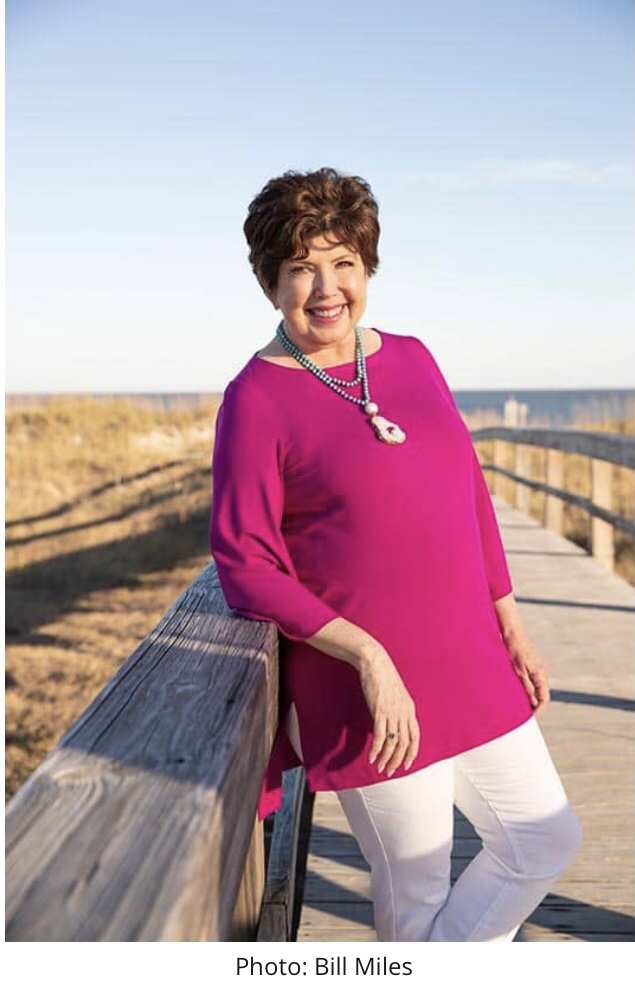
MARY KAY ANDREWS is the New York Times bestselling author of 27 novels (including Hello, Summer; Sunset Beach;The High Tide Club; The Weekenders; Beach Town; Save the Date; Ladies’ Night; Christmas Bliss; Spring Fever; Summer Rental;The Fixer Upper; Deep Dish; Blue Christmas; Savannah Breeze; Hissy Fit; Little Bitty Lies; and Savannah Blues), and one cookbook,The Beach House Cookbook.
A native of St. Petersburg, Florida, she earned a B.A. in journalism from The University of Georgia. After a 14-year career working as a reporter at newspapers including The Savannah Morning News, The Marietta Journal, and The Atlanta Journal-Constitution, where she spent the final ten years of her career, she left journalism in 1991 to write fiction.
Her first novel, Every Crooked Nanny, was published in 1992 by HarperCollins. She went on to write ten critically acclaimed mysteries under her real name, Kathy Hogan Trocheck. In 2002, she assumed the pen name Mary Kay Andrews with the publication of Savannah Blues. In 2006, Hissy Fit became her first New York Times bestseller, followed by twelve more New York Times, USA Today and Publisher’s Weekly bestsellers. To date, her novels have been published in German, Italian, Polish, Slovenian, Hungarian, Dutch, Czech and Japanese.
She and her family divide their time between Atlanta and Tybee Island, GA, where they cook up new recipes in two restored beach homes, The Breeze Inn and Ebbtide—both named after fictional places in Mary Kay’s novels, and both available to rent through Tybee Vacation Rentals. In between cooking, spoiling her grandkids, and plotting her next novel, Mary Kay is an intrepid treasure hunter whose favorite pastime is junking and fixing up old houses.
This book will be available on Tuesday, May 2, 2021, but you can pre-order it now.
What a very sweet and clean romance! Grace has retired as the town’s librarian and is looking forward to a long trip to celebrate when her old love Jack Prinz shows up with his little granddaughter Lizzie and is insistent that Grace is going to marry him. Grace is generous, compassionate and the perfect person to be Lizzie’s grandmother. All of her traits are admirable and to be emulated. Jack is learning to be a new Christian and to trust God’s will instead of insisting on his own. The plot is predictable but getting to the end was heart-warming entertainment. The characters were well-developed, even little Lizzie with her heartbreak that she needs Grace to help heal. I especially enjoyed Grace’s generosity to her friend Jess and how the entire town rallied around to do a fundraiser to improve the children’s camp. This book portrayed life the way I wish it could be, with people just loving and accepting each other and waiting for God to tell them the next step to take in life. Fans of romance will enjoy this book, especially if you’re older and have given up on love. With the lesson to never give up on God, this was a wonderful story to read! Disclaimer Disclosure of Material Connection: I received a complimentary copy of this book from Harlequin via Netgalley. I was not required to write a positive review. The opinions expressed are my own. I am disclosing this in accordance with the Federal Trade Commission’s 16 CFR, Part 255, “Guides Concerning the Use of Testimonials and Endorsements in Advertising.”
With more than fifty books and millions of copies in print worldwide, Lois Richer continues to write of characters struggling to find God amid their troubled world. Whether from her small prairie town, while crossing oceans or in the midst of the desert, Lois strives to impart hope as well as encourage readers’ hunger to know more about the God of whom she writes.
Grace Partridge, you look stunning so stop fussing.” Jessica James flipped up the car’s visor, hiding the passenger mirror. “Trust me, with your makeup update, your stunning wardrobe and now that glorious feathered cut, you’re going to be attracting men’s looks the entire three months you’re traveling the world.”
“Oh.” Grace gulped. Attracting men’s looks— Did she really want that? “Maybe it’s too much…”
“Out!” Jess laughed as she parked in front of Grace’s tidy bungalow. She leaned across and flicked the door latch so the passenger door swung open. “No more second- guessing yourself. Embrace the new you, best friend of mine. And finish getting ready,” she ordered after glancing at her watch. “The Calhoun boys will soon be here to drive you to catch your flight in Missoula.”
“Yes, they will. Thanks for being my cheerleader.” Grace hugged Jess, stepped out of her car and then she bent over to ask anxiously, “You will call me before I leave?”
“Try and stop me.” Jessica sounded amused by her hesitancy.
“Thank you, dear friend. You are so—”
“I love you, too. Later, kiddo.” With a cheery wave, Jess drove away.”
–
Inside her home, Grace dropped her keys on the dish in the foyer while thinking how much she’d miss Jess these next few months. She hung the new dress she’d just purchased in the closet. What a lot of things she’d bought for this trip.
Actually, her wardrobe shift wasn’t only for the trip. It was part of Grace’s plan to shed the three D’s: Dumpy, Drab and Dreary.
Her musing disintegrated at the sound of frantic pounding on her front door. When she pulled it open, her jaw dropped at the sight of a young girl whose face streamed with tears while she danced from one foot to the other.
“Help,” she pleaded. “My pops is hurt.”
Taken aback, Grace wondered when that nest of black hair had last seen a comb.
“Hey! Lady! Help him,” the girl begged.
“Of course, dear.” Grace snapped into action and grabbed her phone. “Uh, where is your pops?”
“There.” The child pointed.
Grace gasped at the sight of a silver-templed man in a battered black leather jacket, lying sprawled on the street in front of an expensive-looking black car. She dialed 911 before racing outside and down her sidewalk toward the victim.
“I didn’t see him, Grace,” her elderly neighbor Mrs. Fothergill wailed as she stood by her car. “When I started backing up, he wasn’t there. Then he was and my foot slipped on the gas pedal. Please help him.”
“I’ll try, Mrs. Fothergill. I’m reporting an accident.” Grace focused on the operator and gave her address. “A man’s been hit by a car. We need the ambulance and police. Hold on while I try to find out more about his condition.”
Grace knelt by the man. He was unconscious. She pressed her fingers against his neck for a pulse. With his head half-buried under his arm she couldn’t get a good look at his face. She was afraid to move him lest there were nonvisible injuries.
“Oh, Lord, help us,” Mrs. Fothergill chanted repeatedly. Distracted by the feeble woman’s agitation, Grace suggested she sit in her car and wait for help.
“Please, do something for Pops,” the little girl implored her.
“I’m doing my best, dear.” Grace studied her watch. “He has a pulse,” she told the operator. “It’s a bit fast. Yes, I do have first-aid knowledge, but I don’t want to move him because his leg is at a strange angle. Also, there’s a large bruise forming above his left eyebrow. I believe he hit his head when he fell so he may be concussed.” She turned to the child. “Does your grandfather take medication?”
“He already took it,” the girl explained. “I dunno if he’s s’posed to take more.”
Grace relayed that information and the name of the pre- scription on the vial she withdrew from the pocket of the leather jacket. The name suddenly registered.
“Jack?” she gasped in utter consternation.
The man moaned and moved his arm slightly, revealing his face. Grace gaped as her breath whooshed out.
He’d aged. His face was thinner, more angled, rendering him more rakish-looking than ever. But it was Jack. The operator demanded to know what was going on.
“The victim’s name is Jack Prinz,” Grace explained after licking her dry lips and finding her voice. “He’s fifty-three. Not from Sunshine. Not for many years.”
***
Heartfelt or thrilling, passionate or uplifting—our romances have it all. Visit TryHarlequin.com to sample FREE books from among 12 different series. It’s just a taste of the new books published each month—every story a journey guaranteed to leave you with That Harlequin Feeling.
This riveting second book in the Devlin and Falco series had me on the edge of my seat as the complicated and multi-layered plot was masterfully unraveled by author Debra Webb. Definitely a suspense thriller, the main characters are Birmingham detectives Katie Devlin and Luke Falco who are called in to investigate a double homicide. One of the victims is a deputy district attorney, Asher Walsh who is somehow connected to former detective Sadie Cross. Sadie had left the force after an undercover operation with the Osorio drug cartel went way south and she ended up with a fragmented memory and nightmares. To add to the plot, Katie’s daughter Tori is involved in an incident at her school that resulted in the injury of a “mean girl.” So many interesting twists and turns were in this book! I enjoyed learning more about Katie’s family life and how devoted she is to Tori and I really liked getting to know Sadie. She is broken because of her past, but she is not irredeemable. The characters made the story, in my opinion, because they were varied, active and so realistic that I expected them to leave the written page and share with me the secrets of what was going to happen next. There was lots of fast-paced action and plenty of cerebral detective work going on as well. Although this is the second book in the series, it can easily be read as a standalone. Fans of suspense thrillers and police procedurals will want to get their hands on this book and devour its mesmerizing pages! Disclaimer Disclosure of Material Connection: I received a complimentary copy of this book from the publisher via Netgalley. I was not required to write a positive review. The opinions expressed are my own. I am disclosing this in accordance with the Federal Trade Commission’s 16 CFR, Part 255, “Guides Concerning the Use of Testimonials and Endorsements in Advertising.”
Because of the mature content in this book, I would rate it a hard PG-13. Photo from the author’s page at http://www.debrawebb.com
DEBRA WEBB is the USA Today bestselling author of more than 150 novels, including reader favorites the Faces of Evil, the Colby Agency and the Shades of Death series. She is the recipient of the prestigious Romantic Times Career Achievement Award for Romantic Suspense as well as numerous Reviewers Choice Awards. In 2012 Debra was honored as the first recipient of the esteemed L. A. Banks Warrior Woman Award for her courage, strength, and grace in the face of adversity. Recently Debra was awarded the distinguished Centennial Award for having achieved publication of her 100th novel. With this award Debra joined the ranks of a handful of authors like Nora Roberts and Carole Mortimer.
With more than four million books sold in numerous languages and countries, Debra’s love of storytelling goes back to her childhood when her mother bought her an old typewriter in a tag sale. Born in Alabama, Debra grew up on a farm and spent every available hour exploring the world around her and creating her stories. She wrote her first story at age nine and her first romance at thirteen. It wasn’t until she spent three years working for the Commanding General of the US Army in Berlin behind the Iron Curtain and a five-year stint in NASA’s Shuttle Program that she realized her true calling. A collision course between suspense and romance was set. Since then she has expanded her work into some of the darkest places the human psyche dares to go.
This riveting book will be available on Tuesday, April 27, 2021. Pre-order now at these retailers:
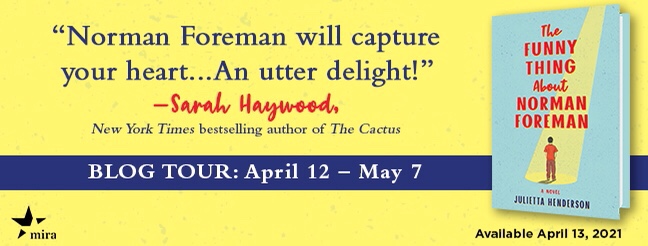
This is the story of a young boy named Norman whose dream is to appear on the stage and do a comedy routine with his best friend. When tragedy interrupts his plans, Norman gets the help of his mom and an elderly friend named Leonard to fulfill his dream. An important part of the plot is the fact that Norman does not know who his father is (thanks to his mom’s promiscuity), so with the help of Leonard’s research, he sets out to find his bio dad, a man who doesn’t know he exists. The character studies were the most outstanding part of this book. By the time I completed the book, I felt like I knew all three main characters, especially Norman and his mom Sadie. Their strengths and weaknesses were portrayed honestly and in a humorous way. Norman is learning how to be a solo comedian as they travel together and Sadie is learning to accept herself and all of the mistakes she has made in the past. She is also still dealing with the death of her father, so she is conflicted about finding Norman’s father. There are relationships forming and growing between the three as well as with those they meet along the way. I think my favorite part was Norman’s adventures on a moped and his becoming more independent as the book progressed. This is a coming of age novel as well as a novel that touched my heart and led me to reflect on my own life’s choices. Disclaimer Disclosure of Material Connection: I received a complimentary copy of this book from the publisher via Netgalley. I was not required to write a positive review. The opinions expressed are my own. I am disclosing this in accordance with the Federal Trade Commission’s 16 CFR, Part 255, “Guides Concerning the Use of Testimonials and Endorsements in Advertising.”
I would rate this book a PG-13 due to content.
About the Author:
Julietta Henderson is a full-time writer and comedy fan who splits her time between her home country of Australia and the UK. The Funny Thing about Norman Foreman is Julietta’s first novel.
When I was born my insides lay outside my body for twenty-one days. Which is unexpected but not nearly as unusual as you might think. For every 3,999 other babies that come out with everything tucked in neatly and sealed away exactly where it should be, there’s one like me. Nobody really knows why. Luck of the draw, my father used to say.
For those three weeks while I lay spread-eagled in an incubator like a Nando’s special, a crowd of doctors gathered every morning to discuss their cleverness and, as my organs shrank to their correct size, bit by bit they gently posted a little more of the me-parts that had made a break for it back inside.
Well that’s the way my mother told it anyway. The way my father told it, the doctors gathered around the incubator every morning to discuss whether they’d be having my large intestine or my liver for their lunch, and whether it’d be with chips or salad. And that right there might tell you almost everything you need to know about my parents.
On my insides’ final day of freedom the head surgeon pushed the last bit through the slit in my stomach and stitched it closed, presumably with everything in its rightful place. I was declared whole and sent home to begin life like almost nothing had ever happened.
Except that even when the regular hospital check-ups stopped, and the scar on my stomach that I’d never lived without faded to a thin silver seam, I can always remember still feeling the tugging behind it. Something I could never quite name, nudging at the fleshy edges whenever things were going badly, or too well. Or just for fun. To remind me how easily those parts of me that never really fit could come sliding out. Any time we like Sadie. Any time we like.
It wasn’t until I held my own son for the first time that the constant, dull pressure of keeping the scar together receded. When a nurse placed that slippery, crumpled up bundle of boy on my chest, I tightened my grip on a handful of hospital sheet as my world creaked on its axis, bumped into a comfy spot and was finally facing the right way.
I didn’t feel the tug on the scar again until a different boy died, and to say I wasn’t ready for it isn’t even the most important thing. Because by then there was a lot more at stake than just my own stupid insides spilling out into the world. I was as scared as hell and I had no idea how to fix any of it. And that right there might tell you almost everything you need to know about me.
2
NORMAN
First rule of comedy: Timing is everything
Timing is everything. First rule of comedy, Jax says. Because when push comes to shove, if you can get the timing right you can get a laugh. He says. Well I don’t really know how to tell when push is coming to shove but I’ll tell you something I do know. That rule works the other way too. Because when the you-know-what starts to hit the fan, if your timing’s wrong there’s pretty much zilcho you can do to stop it from splattering all over the place.
Stare straight ahead and think about nothing. That’s a world famous Jax Fenton tactic for what to do when you get yourself into a bit of a mess. Works every time he reckons and he should know. Only maybe it doesn’t. Because when I stare straight ahead all I can see is that big shiny wooden box and instead of nothing I’m thinking about everything. And loads of it. Like does any light get in through the joins and did they let Jax wear his Frankie Boyle Tramadol Nights tour t-shirt. And does whoever put him in there know he only likes to sleep on his side.
The massive scab on my chest feels so tight that I’m scared to breathe too deep in case it splits down the middle and bleeds all over my new shirt. Stare straight ahead. I move just a bit so I almost can’t see the box behind a couple of heads and my arm touches Mum’s. When I feel her, straight away the mess on my chest relaxes and lets me take half an almost good in-breath. Nearly a whole one. Right before it stabs me all the way through to my back and kazams like a rocket down to my toes. I’m pretty sure I can hear it laughing. Timing is everything, sucker.
And by the way, that’s another thing I know. That you can’t trust your timing no matter how good it’s been in the past. Not even for people as excellently funny as Ronnie Barker or Dave Allen or Bob Mortimer. Or Jax.
Because even if you nick a little bit of money for sweets every week-day morning from your mum’s purse, even if you accidentally-on-purpose leave your stepfather’s car door open so the cats get in and wee on the seats, and even if you’re the naughtiest kid in the whole school by a long shot, when you’re eleven years, 297 days and from what the paramedics can tell anything between twelve and sixteen hours old, it’s definitely not a good time to die.
Stare straight ahead and think about nothing.
3
SADIE
Squashed into the end of the pew with my body leaning into the shape of the space that Norman’s made, I could feel the tense and release of his arms as his small boy hands curled in and out of fists. The buttoned down cuffs of his sleeves rode up ever so slightly with every movement to reveal the trail of psoriasis that spread triumphantly down to the second knuckles. His face was blank as a brick. Dry eyes staring straight ahead.
‘Just hold on. Hold on son. You’ll get through this.’ I murmured reassuringly. Telepathically. But Norman’s hands kept on curling and flexing and then I noticed his chest was keeping time, rising and collapsing with the movement of his hands. I knew what was lying in wait underneath the thin fabric of his shirt, so then I had another thing to worry about.
I had to admit it looked like he wasn’t getting my message, possibly because my best telepathic motherly voice was being all but drowned out by the other, very much louder one that lived in luxury inside my head. Fuck you Sadie. You can’t even get this right. As usual it wasn’t pulling any punches.
The priest who had never met him declared the end to Jax’s life and people began shuffling out of the pews as fast as they could, as if death might still be hanging around looking for company. They knocked our knees, murmured apologies and spilled their overflow of sadness all over us. Like we needed it. The moving huddle in the aisle parted from the back as Jax’s parents set off on their million mile walk, and without turning my head I felt more than saw Josie Fenton hesitate ever so slightly as they passed us. But then they were gone. And my son’s eyes remained fixed on some invisible point that I could only hope lay somewhere far, far beyond the awfulness of the moment.
A good forty minutes after the last person had left, I reached for Norman’s nearest hand and closed it gently between mine. The chill of the empty church had sidled deep into my bones and I was shocked at the heat of his raw knuckles on my palms. The voice in my head began stage whispering nonsense louder and louder and Norman’s hand stayed rigid in its fist. But I didn’t need that voice to tell me what I’d already figured out about thirty-eight minutes before. I wasn’t going to be nearly enough for this.
Excerpted from The Funny Thing About Norman Foreman @ 2021 by Julietta Henderson, used with permission by MIRA Books.
The story of a bomb planted at a political rally and concert had me absolutely riveted from beginning to end. Dustin, the man who was orphaned at a very young age, is suspected of terrorism and arrested. That leads to his calling his old childhood friend, Jamie Powell, to be his defense attorney. The action was non-stop and the story was a totally intense read on so many fronts. There was Dustin charged with supplying the explosives for the bomb, Jamie who is trying desperately to defend her friend, Travis, Dustin’s business partner who is spending all of his time with his wife Chrystal, who is dying of cancer and Taylor, the young woman who walked away from the explosion but who is suffering from the loss of her two best friends there. The emotions were deep in this exploration of domestic terrorism, desperation and loss of freedom. I did not really relate to any of the characters since I have never suffered as they have, but all of them were well-developed and three-dimensional. I cried with Taylor over the loss of her friends. I sobbed at the Chrystal’s bedside, knowing that her death would mean two toddlers would be motherless. I was at the edge of my seat when Dustin was arrested and when Jamie was working hard to exonerate him. The entire book was breathtakingly realistic and scary good! I would highly recommend this novel to anyone who enjoys a fantastic romantic suspense thriller. The tale of the aftermath following a disaster and all of the people who are affected was compelling and an excellent addition to any library. Disclaimer Disclosure of Material Connection: I received a complimentary copy of this book from the publisher via Netgalley. I was not required to write a positive revew. The opinions expressed are my own. I am disclosing this in accordance with the Federal Trade Commission’s 16 CFR, Part 255, “Guides Concerning the Use of Testimonials and Endorsements in Advertising.”
The genre is Christian fiction so there is nobad language or explicit sexual scenes. However, since the content is about a bomb in a public arena, readers should be aware that certain scenes could be disturbing. Rated PG-13.
BIO: Terri Blackstock is a New York Times and USA Today best-seller, with over seven million books sold worldwide. She is the winner of two Carol Awards, a Christian Retailers Choice Award, and a Romantic Times Book Reviews Career Achievement Award, among others. She has had over twenty-five years of success as a novelist. Terri spent the first twelve years of her life traveling in an Air Force family. She lived in nine states and attended the first four years of school in The Netherlands. Because she was a perpetual “new kid,” her imagination became her closest friend. That, she believes, was the biggest factor in her becoming a novelist. She sold her first novel at the age of twenty-five, and has had a successful career ever since.
In 1994 Terri was writing romance novels under two pseudonyms for publishers such as HarperCollins, Harlequin, Dell and Silhouette, when a spiritual awakening prompted her to switch gears. At the time, she was reading more suspense than romance, and felt drawn to write thrillers about ordinary people in grave danger. Her newly awakened faith wove its way into the tapestry of her suspense novels, offering hope instead of despair. Her goal is to entertain with page-turning plots while challenging her readers. She hopes to remind them that they’re not alone, and that their trials have a purpose.
Terri has appeared on national television programs such as “The 700 Club” and “Home Life,” and has been a guest on numerous radio programs across the country. The story of her personal journey appears in books such as Touched By the Savior by Mike Yorkey, True Stories of Answered Prayer by Mike Nappa, Faces of Faith by John Hanna, and I Saw Him In Your Eyes by Ace Collins.
Many thanks to Thomas Nelson Publishers for the ARC to read and review. You will really want to read this awesome story that teaches a lesson and entertains at the same time!
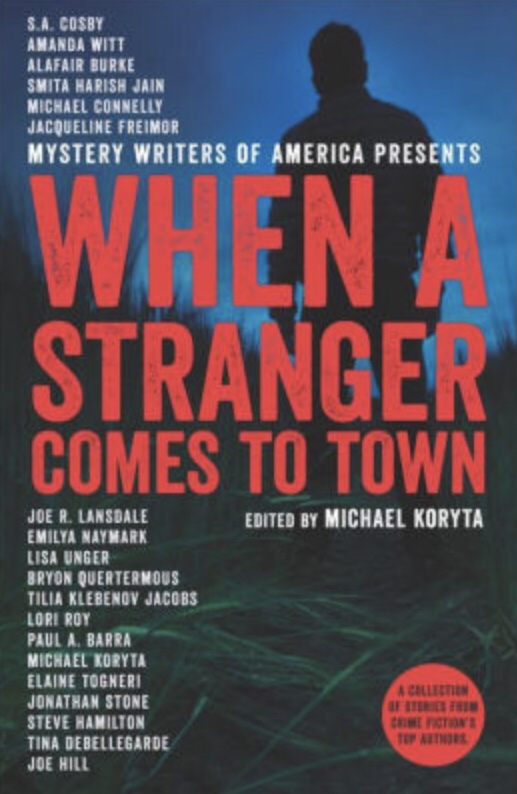
This was a stellar collection of short stories by some really famous authors like Dean Koontz and Lisa Unger. I don’t usually review anthologies because I don’t usually read them, but this one spoke to me because it came from the Mystery Writers of America and it promised to introduce me to authors new to me. Wow! The promise was fulfilled and now I have a list of authors to look for in novel-length books. Any author who can write a short story and capture my attention as this group of stories did has a “tip of the hat” from me because I have not read a collection of short stories since high school and that was required reading. I was absolutely mesmerized by these stories, most of which were spooky, scary and page turners. This collection reminded me of the Alfred Hitchcock collections that I used to read, in a really good way. Some stories were short, others were fairly long but they all promoted the theme that is in the title. Strangers can be a new person in town, at your door or a new neighbor. The book was relatable, with excellent characterization even in the format of short stories. I had my favorites, but I will keep mine a secret and let you choose your own. So many good ones to choose from! In fact, I was sad when I read the last story. Fans of anthologies with a mystery or suspense involved will devour this collection and want more from the next collection. Disclaimer Disclosure of Material Connection: I received a complimentary copy of this book from the publisher via Netgalley. I was not required to write a positive review. The opinions expressed are my own. I am disclosing this in accordance with the Federal Trade Commission’s 16 CFR, Part 255, “Guides Concerning the Use of Testimonials and Endorsements in Advertising.”
Some of the stories are pretty scary in a “gotcha” kind of way, so I would rate this book a PG-13. Also includes expletives which are widely used in some stories more than in others.
The list of writers includes: S.A. Cosby, Amanda Witt, Alafair Burke, Smita Harish Jain, Michael Connelly, Jaqueline Freimor, Dean Koontz, Joe R. Lansdale, Emilya Naymark, Lisa Unger, Bryan Quertermous, Tilia Klebenov Jacobs, Lori Roy,Paul A. Barra, Michael Kortya, Elaine Togneri, Jonathan Stone, Steve Hamilton, Attica Locke, Tina Debellegarde, and Joe Hill.
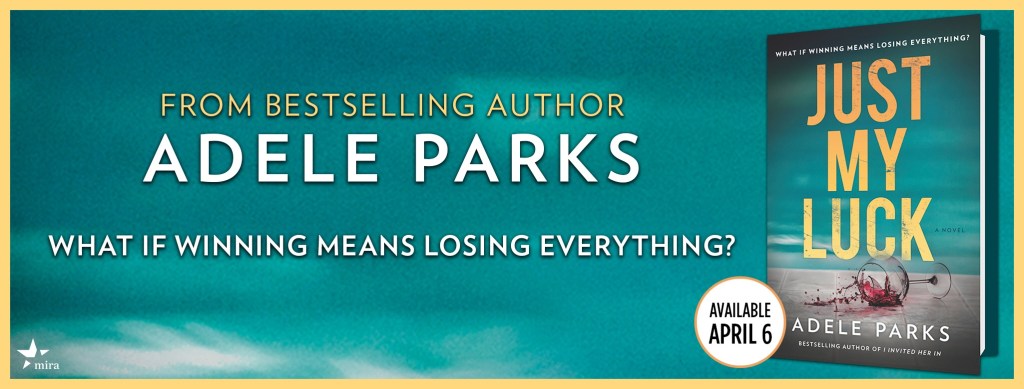
Having read a previous book by this author, I really looked forward to this one. Although the characterization is brilliant, the plot is rather predictable and blah at points. Lexi and Jake win a lottery worth over seventeen million pounds and their lives begin to change almost immediately. The first problem is with their long-term friends who have always played the lottery with them. However, this last time, when they won, the friends had argued and backed out of playing. Now, though, of course, they want a share, saying that Lexi and Jake are lying about them leaving the “syndicate.” I think that the saddest part of how the money affected the family was how greedy Jake and teen Emily were. They couldn’t spend the money fast enough, and I was very disappointed that Lexi did nothing to try to halt their erratic behavior. I did like the sub-plot about Toma, an immigrant down on his luck and a tragic victim of an unscrupulous landlord. Since Lexi’s job is helping people like Toma, she wants to be more practical and do some good with some of the winnings. She also wants to continue to live their regular lives, with a few luxuries, but she seems totally unable to stop the train wreck that is Jake’s spending money way too fast and not keeping an account of it all. There is a big twist at the end that I didn’t see coming, but for the most part the story is unsurprising. With themes of greed, envy and broken relationships, this is not an uplifting book, but it is perhaps one that can teach a lesson about what to do if you happen to receive a windfall. Disclaimer Disclosure of Material Connection: I received a complimentary copy of this book from the publisher via Netgalley. I was not required to write a positive review. The opinions expressed are my own. I am disclosing this in accordance with the Federal Trade Commission’s 16 CFR, Part 255, “Guides Concerning the Use of Testimonials and Endorsements in Advertising.”
I would rate this book PG because of the theme and content.
What other book reviewers are saying about this book:
About the author:
Adele Parks is the #1 Sunday Times bestselling author of twenty novels, including Lies Lies Lies and Just My Luck, as well as I Invited Her In. Just My Luck is currently in development to be made into a movie. Her novels have sold 4 million copies in the UK alone, and her work has also been translated into thirty-one languages.
I can’t face going straight home to Jake. I’m not ready to deal with this. I need to try to process it first. But how? Where do I start? I have no idea. The blankness in my mind terrifies me.
I always know what to do. I always have a solution, a way of tackling something, giving it a happy spin. I’m Lexi Greenwood, the woman everyone knows of as the fixer, the smiler—some might even slightly snidely call me a do-gooder. Lexi Greenwood, wife, mother, friend.
You think you know someone. But you don’t know anyone, not really. You never can.
I need a drink. I drive to our local. Sod it, I’ll leave the car at the pub and walk home, pick it up in the morning. I order a glass of red wine, a large one, and then I look for a seat tucked away in the corner where I can down my drink alone. It’s Easter weekend, and a rare hot one. The place is packed. As I thread my way through the heaving bar, a number of neighbors raise a glass, gesturing to me to join them; they ask after the kids and Jake. Everyone else in the pub seems celebratory, buoyant. I feel detached. Lost. That’s the thing about living in a small village—you recognize everyone. Sometimes that reassures me, sometimes it’s inconvenient. I politely and apologetically deflect their friendly overtures and continue in my search for a solitary spot. Saturday vibes are all around me, but I feel nothing other than stunned, stressed, isolated.
You think you know someone.
What does this mean for our group? Our frimily. Friends that are like family. What a joke. Blatantly, we’re not friends anymore. I’ve been trying to hide from the facts for some time, hoping there was a misunderstanding, an explanation; nothing can explain away this.
I told Jake I’d only be a short while, and I should text him to say I’ll be longer. I reach for my phone and realize in my haste to leave the house I haven’t brought it with me. Jake will be wondering where I am. I don’t care. I down my wine. The acidity hits my throat, a shock and a relief at once. Then I go to the bar to order a second.
The local pub is only a ten-minute walk away from our home, but by the time I attempt the walk back, the red wine has taken effect. Unfortunately, I am feeling the sort of drunk that nurtures paranoia and fury rather than a light head or heart. What can I do to right this wrong? I have to do something. I can’t carry on as normal, pretending I know nothing of it. Can I?
As I approach home, I see Jake at the window, peering out. I barely recognize him. He looks taut, tense. On spotting me, he runs to fling open the front door.
“Lexi, Lexi, quickly come in here,” he hiss-whispers, clearly agitated. “Where have you been? Why didn’t you take your phone? I’ve been calling you. I needed to get hold of you.”
What now? My first thoughts turn to our son. “Is it Logan? Has he hurt himself?” I ask anxiously. As I’m already teetering on the edge, my head quickly goes to a dark place. Split skulls, broken bones. A dash to the hospital isn’t unheard-of. Thirteen-year-old Logan has daredevil tendencies and the sort of mentality that thinks shimmying down a drainpipe is a reasonable way to exit his bedroom in order to go outside and kick a football about. My fifteen-year-old daughter, Emily, rarely causes me a moment’s concern.
“No, no, he’s fine. Both the kids are in their rooms. It’s… Look, come inside, I can’t tell you out here.” Jake is practically bouncing up and down on the balls of his feet. I can’t read him. My head is too fuzzy with wine and full of rage and disgust. I resent Jake for causing more drama, although he has no idea what shit I’m dealing with. I’ve never seen him quite this way before. If I touched him, I might get an electric shock; he oozes a dangerous energy. I follow my husband into the house. He is hurrying, urging me to speed up. I slow down, deliberately obtuse. In the hallway he turns to me, takes a deep breath, runs his hands through his hair but won’t—can’t—meet my eyes. For a crazy moment I think he is about to confess to having an affair. “Okay, just tell me, did you buy a lottery ticket this week?” he asks.
“Yes.” I have bought a lottery ticket every week for the last fifteen years. Despite all the bother last week, I have stuck to my habit.
Jake takes in another deep breath, sucking all the oxygen from the hallway. “Okay, and did you—” He breaks off, finally drags his eyes to meet mine. I’m not sure what I see in his gaze, an almost painful longing, fear and panic. Yet at the same time there is hope there, too. “Did you pick the usual numbers?”
“Yes.”
His jaw is still set tight. “You have the ticket?”
“Yes.”
“You’re sure?”
“Yes, it’s pinned on the noticeboard in the kitchen. Why? What’s going on?”
“Fuck.” Jake lets out a breath that has the power of a storm. He falls back against the hall wall for a second, and then he rallies, grabs my hand and pulls me into the room that was designed to be a dining room but has ended up being a sort of study slash dumping ground. A place where the children sometimes do their homework, where I tackle paying the household bills, and where towering piles of ironing, punctured footballs and old trainers hide out. Jake sits down in front of the computer and starts to quickly open various tabs.
“I wasn’t sure that we even had a ticket, but when you were late back and the film I was watching had finished, I couldn’t resist checking. I don’t know why. Habit, I suppose. And look.”
“What?” I can’t quite work out what he’s on about. It might be the wine, or it might be because my head is still full of betrayal and deceit, but I can’t seem to climb into his moment. I turn to the screen. The lottery website. Brash and loud. A clash of bright colors and fonts.
The numbers glare at me from the computer—1, 8, 20, 29, 49, 58. Numbers I am so familiar with, yet they seem peculiar and unbelievable.
“I don’t understand. Is this a joke?”
“No, Lexi. No! It’s for real. We’ve only gone and won the bloody lottery!”
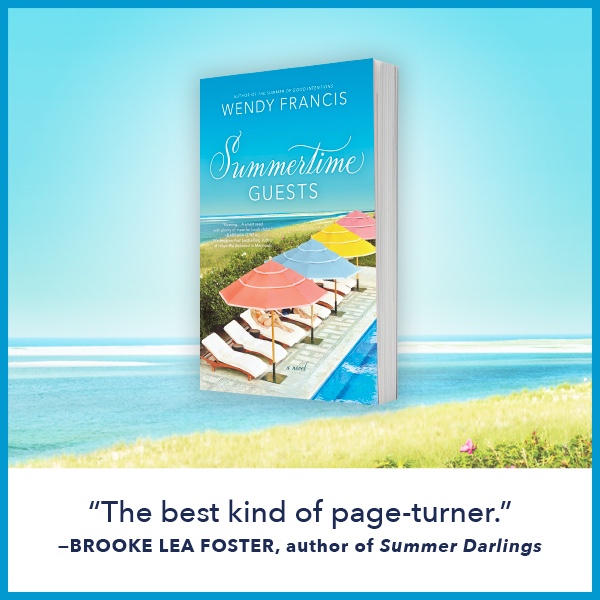
Oh, my! I don’t even know where to start gushing about how good this book was! The story of a luxurious hotel in Boston Harbor is one that took me to a world of wealth and relationship problems. The new manager of the hotel, Jean-Paul, has arrived from Europe and is settling into the job but has left his wife and baby daughter in the dust while he chases the dream of success. Claire O’Dell is a new widow who wants to meet up with her former high school love and hopefully reconnect. Jason and Gwen are a power couple who enjoy spending time together on the tennis courts, but both have secrets that could mean the end of their courtship. Finally, there is young Riley, engaged to Tom and meeting her mother-in-law at The Seafarer in order to decide if this luxury hotel is the right place for her and Tom to get married. The four couples were all magnetically attractive, but the way the story was told, jumping from one couple to another, made me want to keep reading to find out what happened to each. Each one was well-developed, with intriguing descriptions of their relationship and the underlying problems. My favorite couple was Riley and Tom because they were the ones with the most at stake by having The Seafarer as their wedding venue. Of course, I didn’t like Tom’s mother much because she was very pushy and not very thoughtful about Riley’s wishes for her own wedding. Watching the relationships develop was very entertaining! The plot was a complex one, with four couples, each with problems and each with secrets and some lack of communication between them. I enjoyed the fascinating character studies and the brilliantly written plot that was so well crafted. This was not a typical beach read because it had me on the edge of my seat in many parts, especially at the beginning when we know someone has died and at the end when it is ultimately revealed the identity of this unlucky guest. Fans of contemporary fiction will enjoy this spiraling and captivating book! Disclaimer Disclosure of Material Connection: I received a complimentary copy of this book from the publisher via Netgalley. I was not required to write a positive review. The opinions expressed are my own. I am disclosing this in accordance with the Federal Trade Commission’s 16 CFR, Part 255, “Guides Concerning the Use of Testimonials and Endorsements in Advertising.”
Rated PG because of content. A mysterious death is the first thing that occurs.I could not agree more! Mastery is shown on every page as the story is intricately woven.
Wendy Francis is a former book editor and the author of the novels The Summer Sail, The Summer of Good Intentions, Three Good Things, and Best Behavior. Her essays have appeared in Good Housekeeping, The Washington Post, Yahoo Parenting, The Huffington Post, and WBUR’s Cognoscenti. A proud stepmom of two grown-up children, she lives outside Boston with her husband and eleven-year-old son.
It wasn’t as if Riley could have anticipated what would happen later that day. None of them could. Because when you’re at a tasting for your wedding reception at one of Boston’s ritziest hotels, trying to decide between crab cakes or lobster quiches, no one thinks of anything bad happening. Or at least, this is what Riley tells herself later. Why she—and no one else there—could possibly be to blame.
At the moment, though, Riley is sitting at a table by the window, half-listening to her future mother-in-law while she sips gazpacho the color of marigolds. Something about wanting to know if the outdoor terrace can be transformed into a dance floor, assuming the weather cooperates. If Riley were asked to gauge her interest in planning her own wedding, she would characterize it as mild at best. Her only requirement being that she and Tom marry in July—and that the flowers are pale pink peonies from Smart Stems, the shop where she has worked for the past three years.
It was Tom who’d suggested the Seaport District for their reception, Boston’s new up-and-coming neighborhood, and Riley had happily agreed. It’s an easy spot for guests to travel to, and the setting is over-the-top gorgeous with views of both the city and the water. Not to mention the promise of fresh seafood—an almost impossible request if they were to wed in Riley’s hometown of Lansing, Michigan, where everything remains hopelessly landlocked.
But she hadn’t counted on Tom’s mother wanting to be so, well, involved. Maybe it’s the fact that Riley’s own mother passed away a few short years ago, and so Marilyn feels compelled to step up and fill her mother’s shoes. A retired schoolteacher, her mother-in-law-to-be still tackles each new day with the necessary energy for a classroom of boisterous second-graders, a gusto which she now seems to be funneling into her son’s nuptials. At first, Riley was grateful, but while she sits listening to the hotel’s wedding coordinator drone on about the Seafarer’s rich history, she’s beginning to feel as though she has stepped into one of those horrible, never-ending lines at Disney for a ride she doesn’t particularly want to go on.
Riley is well aware that the Seafarer is one of the most coveted venues for weddings, especially in light of its recent renovations. It’s no secret that New England’s most glamorous, its most fashionable clamor to stay here and that the Seafarer’s well-appointed rooms are typically booked months in advance. She should be grateful that they’re even considering it as an option. Rumor has it that everyone from Winston Churchill to Taylor Swift has been a guest (as the saying goes, if you want to appear in the society pages of the Boston Globe, then spend a few hours at the Seafarer’s exclusive summer cocktail hour from four to six). As for out-of-towners hoping to take in the full scene that Boston can be—with its attendant snobbishness and goodwill and weird accents wrapped into one—the Seafarer, Riley understands, puts you in the heart of it.
Not that she has anything against tradition, but if it were up to her alone, she would probably choose a smaller, more modest setting, a wedding with no more than fifty guests. There’d be a justice of the peace and rows of white chairs lining the harbor, the wind whipping her veil in front of her face. Naturally, she’d want a reception afterward, but Riley counts herself as the type of girl who’d be equally content with trays of fish tacos and margaritas under a tent as with oysters on the half shell served in a tony hotel restaurant.
“I can’t reveal everyone,” the coordinator is saying in hushed tones, “but it’s no secret that some of Boston’s greatest legends have celebrated their nuptials with us.” Riley shoots Tom a sideways glance, as if to say Is she for real? but her fiancé’s chin rests firmly in his hand, his attention rapt. He’s eating up every word.
“Well, Gillian, it’s all very impressive,” Tom’s mother says, slipping her reading glasses back into her pocketbook after a review of the menu. Her hair is pulled back in a severe ponytail, her lips coated in her trademark color, fuchsia. “It’s no wonder Boston’s finest flock here for their special occasions. The view alone is to die for.” She gestures toward the expanse of crystalline water out the window, the romantic outline of the city’s financial district in the distance. “Kids, wouldn’t it be something to come back here every year to toast your anniversary?”
Marilyn shoots Riley a wink, as if the two of them are in cahoots to convince Tom that this is the spot, meant to be. There’s no need to point out that she and Tom could never afford such a venue. They already discussed it over dinner the other night when Marilyn revealed that she’d gone ahead and booked an appointment for a tasting at the Seafarer on Friday and how she hoped Riley wouldn’t mind. “I don’t want you to worry about money, dear,” she instructed. “Tom’s dad and I would be honored to host. Tom is our only child after all.”
And Riley had breathed a tiny sigh of relief while swallowing her pride. Not because she wants an extravagant wedding but because it means that she and Tom can now channel the nest egg they’ve been building toward a mortgage on a new home instead of toward an elaborate one-day celebration. It’s a much more sensible use of their money, and Riley, having grown up poor verging on destitute, is nothing if not sensible.
Can she really imagine herself celebrating her marriage here, though? Tom keeps missing her not-so-thinly veiled comments about the food on the menu, which leans toward the bite-size variety that he hates (precisely because it never fills him up), but he has said nothing. Maybe he’s just being polite. Riley quickly scans the room for other future newlyweds, but most of today’s diners appear to be here for business lunches—buttoned-up men in suits and women in sharp blazers with silk shifts underneath. A few couples, perhaps away for a romantic long weekend, and a group of older women sharing a bottle of wine, sit wedged into the corners. It’s a lovely space, but is it too lovely?
She shifts in her seat and tries to picture her dad here, wearing his familiar old sports coat that’s nearly worn through at the elbows, his khaki pants and penny loafers, pretending to feel comfortable when he wouldn’t know which fork to reach for, which glass to use.
When Marilyn turns toward to her and says, “Don’t you agree, Riley?” Riley feels her cheeks flushing because she hasn’t been paying attention. She has no idea what her future mother-in-law is referring to.
“I’m sorry. What was the question again?” She’s slightly annoyed that Tom can’t—or won’t—decide on a few things himself or at the very least rein his mother in. Especially because they talked about this very thing—not letting Marilyn take over the tasting—last night! They’re discussing the appetizers, apparently, and all Riley knows is that she doesn’t want crudités. If there’s one rule she’s abiding by, it’s that her wedding menu will include only those foods that she can pronounce.
It seems there should be a box on a list that they can check for the Standard Reception—something not overtly cheap but not insanely expensive, either. Tom squeezes her knee beneath the table, though it’s unclear if it’s meant as encouragement or as a reprimand for her not giving this conversation one hundred percent. What Riley really wants to know is this: How can she avoid attending any more tastings with Marilyn? Should she just agree to the Seafarer right now and be done with it?
“Mom was wondering,” Tom says in complete seriousness, “if you thought it would be better to have cold and hot hors d’oeuvres or just cold since the wedding will be in July?”
“Oh, right.” Riley pretends to consider her options. “Good point. It’s bound to be hot, so I wonder—”
But somewhere between the words so and wonder, a loud whistle of air followed by a deafening blast socks through the room like a fist, sending Riley to grab the table and Tom to reach for her hand. Marilyn’s fork drops from her elongated fingers, clattering onto her plate, and the room seems to shake for a brief moment. There are shouts followed by an eerie hush while the dining room settles back into itself. Riley watches the other diners who begin to mumble to each other across their tables, asking if they’re okay and spinning in their seats to better determine the source of the blast. The woman at the adjacent table hovers on the edge of her chair, as if considering diving underneath the table.
When Riley glances over at Gillian, she looks equally alarmed and as surprised as the rest of them, which means this isn’t some kind of bizarre emergency testing by the hotel. Whatever they heard was real. Significant. Riley’s eyes slide toward Tom, then Marilyn, whose face has turned a shade as pale as milk, then back to Tom.
“What on earth was that?” Marilyn gasps, her voice an octave too high, her fingers fluttering to her necklace. It’s a silver chain studded with azure stones, the kind of jewelry that Riley has come to associate with women of a certain age.
“I’m not sure.” Gillian’s voice cracks. “It almost sounded like some kind of explosion, didn’t it?” And then, as if remembering her wedding-coordinator cap, she rushes to reassure them. “But I’m sure it’s nothing like that. Maybe a blown transformer?
But both Riley and Tom exchange glances because no matter how ill-versed they are in loud noises, that definitely was not a transformer. It wasn’t so much a popping sound as a crash, she thinks. Did the massive chandelier in the lobby fall? Did it come from the kitchen? Construction work outside maybe? It’s hard to tell.
“Not to be overly dramatic, but it almost felt like an earthquake,” Riley says. “The table actually shook, I think.” And although she understands that the curiosity sparked inside her is somehow inappropriate, she wants an explanation. “Whatever it was,” she says, lowering her voice, “it sounded awfully close.”
“Yes, very close,” Marilyn agrees, still fiddling with her necklace.
And that’s when the screams begin. Not from the kitchen at the back of the restaurant, not from the lobby, but from outside, just beyond the elegant bay windows peering out onto the terrace that fronts the water, the ocean seemingly close enough to dip a hand into. Riley’s glance swivels toward the small crowd that’s beginning to form outside near the firepit and hot tub.
“If you’ll excuse me?” Gillian says, as if emerging from a fog, and rises awkwardly to her feet before heading toward the row of windows.
Riley’s gaze follows her, and suddenly, she, too, feels compelled to get up, as if an invisible string tugs her toward the window. She hurries forward and angles around Gillian for a better view. But when she does, she immediately regrets her decision. Because it’s not a collapsed scaffolding or an awning or even construction work that has caused the sudden shaking, the loud blast.
But a woman, lying facedown on the terrace, several yards beyond the window.
The body lies completely still, the woman’s legs scissored like a rag doll’s, her left leg angled upward awkwardly. A curtain of muddy blond hair shields her face from view. Riley watches while a few bystanders move hesitantly toward the woman, as if afraid of startling her, until someone kneels down and grasps her wrist, presumably to check for a pulse. A man in blue running shorts and a Red Sox T-shirt yells for someone to call 9-1-1.
To Riley, it looks as if the woman was perhaps reaching for a glass that slipped from her hand, her arms still outstretched above her head. Her body is long, lean, even elegant. Riley holds her breath, waiting, and feels Gillian stiffen beside her when a youngish man, nicely tanned and formally dressed, parts the crowd and gently encourages everyone to take a few steps back. He assures them that an ambulance is on the way and speaks with an authority that suggests his importance.
“That’s Jean-Paul, our manager,” Gillian says quietly as they watch him crouch down next to the woman and brush her hair away from her face.
Just then, a young man in the crowd throws his hand to his mouth and rushes off, and Riley stands on her tiptoes for a better view. And that’s when she sees it, too—the wild splash of bright red she hadn’t noticed earlier that lies at the far edge of the woman’s hair. And in that awful moment, Riley—and everyone else watching—understands. An image of a woman in her yellow summer dress, cartwheeling through the air from somewhere up high, perhaps her hotel balcony, spirals through her mind.
“Oh, my God.” It hits her all at once, a hollow pit forming in her stomach.
“Jesus,” says Tom, who has come up beside her to rest a hand on her shoulder. “She’s not moving.”
“No.”
It’s obvious to them both, but somehow still needs to be said, as if by acknowledging it aloud, the woman might hear their words through the open window, might somehow will herself to move an inch, if only to give them a sign—a flutter of a hand, the shifting of a foot—that she’s going to be all right.
This is a suspense/mystery/police procedural that was well-written and fast-paced. Each chapter flowed seamlessly to the next one and kept me interested and reading. The main characters are Detective Jake McAllister and Victims’ Advocate Kyra Chase. They have a porcupine kind of relationship with each other at first, but there is no doubt that each knows and does their job well. In this first book of a new series, Jake and Kate are trying to outsmart and catch a serial killer who is imitating a killer from two decades ago called The Player. Assisting them on the task force are some really unique characters, including Billy, Jake’s partner who is a flashy dresser and a ladies’ man (emphasis on the plural). Billy is a smart addition to the cast of characters since he often added some comic relief. Also in the mix is the retired detective who investigated the murders of The Player and who is a good friend already of Kyra. Quinn is highly intelligent and was a good addition to the story. There were some twists in the story and an unexpected confrontation at the end. For sure, I look forward to book two in the series and more adventures with Jake and Kyra. I hope that Quinn will be along for that ride, too, because his grudging help and sarcastic remarks to Jake about accepting his age were well worth reading and developing his character more. There was a little romance, but it was subtle as this was the introductory book in the series and the characters are just now developing trust for each other. Fans of Harlequin Intrigue and mystery in general will want to delve into this one. Disclaimer Disclosure or Material Connection: I received a complimentary copy of this book from Harlequin via Netgalley. I was not required to write a positive review. The opinions expressed are my own. I am disclosing this in accordance with the Federal Trade Commission’s 16 CFR, Part 255, “Guides Concerning the Use of Testimonials and Endorsements in Advertising.”
Highly entertaining and fast paced. I would rate this book PG because of the content being about a serial killer.
Author Bio:
Carol Ericson lives in southern California, home of state-of–the-art cosmetic surgery, wild freeway chases, and a million amazing stories. These stories, along with hordes of virile men and feisty women clamor for release from Carol’s head until she sets them free to fulfill their destinies and her readers’ fantasies. To find out more about Carol and her current books, please visit her website at http://www.carolericson.com, “where romance flirts with danger.”
“Good thing she was already dead when he took her finger.” Detective Jake McAllister lifted the victim’s wrist and grimaced. He called over his shoulder, “Tire tracks at the trailhead? We know this isn’t the kill site.”
“Too many to identify just one.” His partner, Billy Crouch, impressive in a dark gray tailored suit, purple pocket square and wing tips, strode down the trail to join Jake where he crouched beside the body. “No tire tracks, no cameras. I had one of the officers check with the park rangers.”
“No cameras at the other dump site, either. He’s being careful.” Jake rose to his feet, inhaling the scent of pine from the trees and locking eyes with an ambitious squirrel who’d been busy scurrying up and down the large oak that provided a canopy over the body.
Griffith Park was an oasis of rugged, untamed land in the middle of the urban sprawl of LA. It housed the zoo, the observatory, a concert venue, a carousel, pony rides and acres of wilderness crisscrossed with hiking trails. It had also hosted several dead bodies in its day, including the Hillside Strangler’s first victim.
Jake pointed at the card inserted between the victim’s lips. “Queen of hearts, missing finger—looks like we have a pattern here.”
Billy whistled as he pushed his sunglasses to the end of his nose. “It’s The Player all over again.”
“Copycat.” Jake raised his hand to the crime scene investigators who had just arrived at the park and waved. “The Player was working twenty years ago and abruptly stopped. He’s gotta be dead or in prison.”
“Maybe he just got paroled.” Billy picked an imaginary speck of lint from the arm of his jacket. “He could’ve been twenty when he was operating before, spent twenty years behind bars for armed robbery, as- sault, rape. Now he’s forty, tanned, ready and rested.”
“Could be. They never got his DNA back then. Never left any—just like these two murders.”
Billy whipped the handkerchief, which Jake had believed was just for show, out of his front pocket and dashed it across the shiny tip of one of his shoes. “Damn, it’s dirty out here.”
Jake rolled his eyes. “It’s the great outdoors. Most people don’t take hikes in Italian suits and shoes.”
Shaking his head, Billy clicked his tongue. “Only the shoes are Italian, man. The suit’s from England.”
“Excuse me, Cool Breeze.” Jake bowed to his partner. He’d given Billy the nickname Cool Breeze, and it had stuck. The man knew his fashion, his fine wines and his women.
Jake had warned him about the women because Billy already had a fine woman, Simone, at home. They needed only one divorce in the partnership, and Jake had that covered—not that he had run around on his wife, unless you counted the job as the other woman…and a lot of cops’ wives did.
Someone cleared his throat behind him. “Finger- prints?”
Jake jerked his head toward Clive Stewart, their fingerprint guy in Forensics, his shaved head already sporting a sheen. “Yeah, you can check, Clive. He didn’t leave the knife or box cutter behind that he used to slice off the finger. You might try the playing card, her neck. You know your job, man. I’ll let you and the others do it.”
As CSI got to work, Jake shuffled away from the body on the ground and eyed the crunch of people beyond the yellow crime scene tape. Although still morning, the air possessed that quiet, suffocating feel that heralded a heat wave, and the tape hung limply, already conceding defeat.
Jake pulled out his phone. Holding it up, he snapped some pictures of the looky-loos leaning in, hoping to catch a glimpse of…what? What did they hope to see? Did they want to ogle the lifeless body of this poor woman dumped on the ground?
Maybe one of them was already familiar with the position of the victim. Killers had been known to re- turn to the scene of the crime and relive the thrill.
He swung his phone to the right to take a few more pictures from the other side of the trail. As he tipped up his sunglasses and peered into the viewfinder to zero in on his subjects, he swore under his breath.
What the hell was she doing here?
Billy stepped into his line of fire. “He wanted some- one to discover her quickly. She’s not that far off the trail, but no purse or ID, so he doesn’t want us to identify her right away.”
“You’re blocking my view.” Jake nudged Billy’s shoulder and framed the crowd at the edge of the tape again…but she was gone.
***
Heartfelt or thrilling, passionate or uplifting—our romances have it all. Visit TryHarlequin.com to sample FREE books from among 12 different series. It’s just a taste of the new books published each month—every story a journey guaranteed to leave you with That Harlequin Feeling.
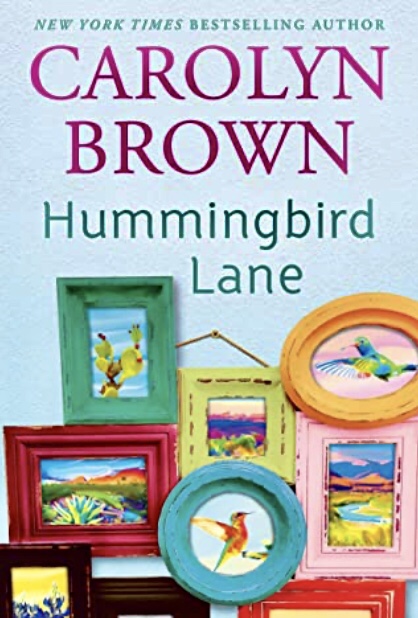
Hummingbird Lane is a fictional place, but in reality, we all need a place like this. Emma and Sophie befriended each other in childhood when Sophie’s mom Rebel was the housekeeper for Emma’s mother Victoria. Separated by Victoria’s determination to control Emma’s life, the story begins when the two women are re-united because Sophie wants to rescue Emma from an institution and whisk her away to her hideaway at Hummingbird Lane. A place with tiny trailers and a landscape that was breathtaking, it awakened in Emma a new desire to not just to survive but to thrive. Everyone needs a friend like Sophie and a place like Hummingbird Lane! I loved the realistic characters, each one portrayed with their own secrets and weaknesses which made them even more endearing. I wanted to visit Hummingbird Lane and see the views, sitting in the stillness of a place that seemed to speak to hearts. This book teaches a lesson and touched my heart with the simplicity of relationships that you can count on and places you can escape to. With a plot that had many surprises and a lot of energy, this book was one that I was happy to read because it made me think of my friends and my special places and gave me things to consider about life’s choices and how we can change things in mid-stream and be better for that decision. Fans of the author and women’s fiction with strong female protagonists will thoroughly enjoy this book. Disclaimer Disclosure of Material Connection: I received a complimentary copy of this book from the author. I was not required to write a positive review. I am disclosing this in accordance with the Federal Trade Commission’s 16 CFR, Part 255, “Guides Concerning the Use of Testimonials and Endorsements in Advertising.”
Excellent, entertaining book with lots of lessons about friendship and love.Rated PG because of extramarital sex.Photo and bio from the author’s website at http://www.carolynbrownbooks.com
Coming on April 6th, but you can pre-order today! Purchase Links:
This is a standalone book with an awesome lesson and so much positivity that it made me happy to read it. I hope that you will get a copy and enjoy the encouragement of visiting HUMMINGBIRD LANE!























 Vickie's Book Nook and Meditation Corner