I am a Christian, a retired teacher, a mother and a grandmother. I love to read and I love the Lord Jesus Christ! Unless otherwise specified ,all visual illustrations are from the YOU VERSION APP of the Bible.
This book was a good Amish story with lovable characters and a plot that had some surprises and unexpected twists in it. Lauren Nolt is a former member of the Amish community in Lancaster County where she is sent by her employer to win the people over to the idea of building a casino in their community. When her car breaks down during an ice story, Lauren is stuck asking for assistance from widower Adam Hershberger, a mechanic who used to bully her in their childhood. Lauren stays with her Aunt Sylvia, a feisty older Amish woman who speaks the truth in love to Lauren and who was my favorite character in the book. Her wisdom led Lauren to many hours of thoughtful reflection. When Lauren meets Adam’s precocious daughter Mary Beth, it was life love at first sight. Mary Beth is a cute little matchmaker who wants her dad to have a new wife and for herself to have a new mother. Although parts of the book were predictable, there were numerous secrets revealed and some surprises, too, so it was was a really captivating read. I was totally invested in the story of Lauren and Adam and rooting for little Mary Beth to get her way with them. This is a great first book in a new series and I look forward to more! Disclaimer Disclosure of Material Connection: I received a complimentary copy of this book from the publisher via Netgalley. I was not required to write a positive review. The opinions expressed are my own. I am disclosing this in accordance with the Federal Trade Commission’s 16 CFR, Part 255, “Guides Concerning the Use of Testimonials and Endorsements in Advertising.”
Totally clean Christian fiction from Harlequin Love Inspired.Photo and biography from author’s website http://www.joannbrownbooks.com
I loved this romantic story and hope that you will buy it and read it for yourselves. Many thanks to Harlequin for giving me the opportunity to read and review this book!
This was a great summer read that took me away from the doldrums of pandemic quarantine onto the road of discovering new things and being open to new adventures. Kathleen is an eccentric and fun eighty-year old who is determined to go on a road trip across America. She needs a companion and chooses Martha, a twenty-something who is still trying to find herself and her purpose in life. Kathleen leaves behind her morose and worrying daughter Liza, a middle-aged woman who is burdened down with her responsibilities in life and has forgotten to take care of herself. There is thus a character for all generations to relate to: wild and carefree Kathleen who has just gotten her second wind in life; stalwart and long suffering Liza who is desperate to discover a place for herself beyond her family and its stress; and Martha, the exuberant young woman who is open to adventure. At the beginning, the tone of the book was one of humor and was light-hearted. As the book progressed, there were some somber and thought-provoking moments. Reading the book was like taking a journey on the road of life and the three main characters portrayed traveling down this road perfectly. This was an uplifting story of self-discovery and being open to looking for and finding new things in life, even at an advanced age. I loved this book and highly recommend it to those who enjoy contemporary fiction and a good read. Disclaimer Disclosure of Material Connection: I received a complimentary copy of this book from the publisher via Netgalley. I was not required to write a positive review. The opinions expressed are my own. I am disclosing this in accordance with the Federal Trade Commission’s 16 CFR, Part 255, “Guides Concerning the Use of Testimonials and Endorsements in Advertising.”
Fun book, rated PG-13
Author Bio: USA Today bestselling author Sarah Morgan writes hot, happy, contemporary romance and women’s fiction, and her trademark humor and sensuality have gained her fans across the globe. Described as “a magician with words” by RT Book Reviews, she has sold more than eleven million copies of her books. She was nominated three years in succession for the prestigious RITA® Award from the Romance Writers of America and won the award three times: once in 2012 for Doukakis’s Apprentice, in 2013 for A Night of No Return and in 2017 for Miracle on 5th Avenue. She also won the RT Reviewers’ Choice Award in 2012 and has made numerous appearances in their Top Pick slot. As a child, Sarah dreamed of being a writer, and although she took a few interesting detours along the way, she is now living that dream. Sarah lives near London, England, with her husband and children, and when she isn’t reading or writing, she loves being outdoors, preferably on vacation so she can forget the house needs tidying.
It was the cup of milk that saved her. That and the salty bacon she’d fried for her supper many hours earlier, which had left her mouth dry.
If she hadn’t been thirsty—if she’d still been upstairs, sleeping on the ridiculously expensive mattress that had been her eightieth birthday gift to herself—she wouldn’t have been alerted to danger.
As it was, she’d been standing in front of the fridge, the milk carton in one hand and the cup in the other, when she’d heard a loud thump. The noise was out of place here in the leafy darkness of the English countryside, where the only sounds should have been the hoot of an owl and the occasional bleat of a sheep.
She put the glass down and turned her head, trying to locate the sound. The back door. Had she forgotten to lock it again?
The moon sent a ghostly gleam across the kitchen and she was grateful she hadn’t felt the need to turn the light on. That gave her some advantage, surely?
She put the milk back and closed the fridge door quietly, sure now that she was not alone in the house.
Moments earlier she’d been asleep. Not deeply asleep—that rarely happened these days—but drifting along on a tide of dreams. If someone had told her younger self that she’d still be dreaming and enjoying her adventures when she was eighty she would have been less afraid of aging. And it was impossible to forget that she was aging.
People said she was wonderful for her age, but most of the time she didn’t feel wonderful. The answers to her beloved crosswords floated just out of range. Names and faces refused to align at the right moment. She struggled to remember what she’d done the day before, although if she took herself back twenty years or more her mind was clear. And then there were the physical changes—her eyesight and hearing were still good, thankfully, but her joints hurt and her bones ached. Bending to feed the cat was a challenge. Climbing the stairs required more effort than she would have liked and was always undertaken with one hand on the rail just in case.
She’d never been the sort to live in a just in case sort of way.
Her daughter, Liza, wanted her to wear an alarm. One of those medical alert systems, with a button you could press in an emergency, but Kathleen refused. In her youth she’d traveled the world, before it was remotely fashionable to do so. She’d sacrificed safety for adventure without a second thought. Most days now she felt like a different person.
Losing friends didn’t help. One by one they fell by the wayside, taking with them shared memories of the past. A small part of her vanished with each loss. It had taken decades for her to understand that loneliness wasn’t a lack of people in your life, but a lack of people who knew and understood you.
She fought fiercely to retain some version of her old self—which was why she’d resisted Liza’s pleas that she remove the rug from the living room floor, stop using a step ladder to retrieve books from the highest shelves and leave a light on at night. Each compromise was another layer shaved from her independence, and losing her independence was her biggest fear.
Kathleen had always been the rebel in the family, and she was still the rebel—although she wasn’t sure that rebels were supposed to have shaking hands and a pounding heart.
She heard the sound of heavy footsteps. Someone was searching the house. For what, exactly? What treasures did they hope to find? And why weren’t they trying to at least disguise their presence?
Having resolutely ignored all suggestions that she might be vulnerable, she was now forced to acknowledge the possibility. Perhaps she shouldn’t have been so stubborn. How long would it have taken from pressing the alert button to the cavalry arriving?
In reality, the cavalry was Finn Cool, who lived three fields away. Finn was a musician, and he’d bought the property precisely because there were no immediate neighbors. His antics caused mutterings in the village. He had rowdy parties late into the night, attended by glamorous people from London who terrorized the locals by driving their flashy sports cars too fast down the narrow lanes. Someone had started a petition in the post office to ban the parties. There had been talk of drugs, and half-naked women, and it had all sounded like so much fun that Kathleen had been tempted to invite herself over. Rather that than a dull women’s group, where you were expected to bake and knit and swap recipes for banana bread.
Finn would be of no use to her in this moment of crisis. In all probability he’d either be in his studio, wearing headphones, or he’d be drunk. Either way, he wasn’t going to hear a cry for help.
Calling the police would mean walking through the kitchen and across the hall to the living room, where the phone was kept and she didn’t want to reveal her presence. Her family had bought her a mobile phone, but it was still in its box, unused. Her adventurous spirit didn’t extend to technology. She didn’t like the idea of a nameless faceless person tracking her every move.
There was another thump, louder this time, and Kathleen pressed her hand to her chest. She could feel the rapid pounding of her heart. At least it was still working. She should probably be grateful for that.
When she’d complained about wanting a little more adventure, this wasn’t what she’d had in mind. What could she do? She had no button to press, no phone with which to call for help, so she was going to have to handle this herself.
She could already hear Liza’s voice in her head: Mum, I warned you!
If she survived, she’d never hear the last of it.
Fear was replaced by anger. Because of this intruder she’d be branded Old and Vulnerable and forced to spend the rest of her days in a single room with minders who would cut up her food, speak in overly loud voices and help her to the bathroom. Life as she knew it would be over.
That was not going to happen.
She’d rather die at the hands of an intruder. At least her obituary would be interesting.
Better still, she would stay alive and prove herself capable of independent living.
She glanced quickly around the kitchen for a suitable weapon and spied the heavy black skillet she’d used to fry the bacon earlier.
She lifted it silently, gripping the handle tightly as she walked to the door that led from the kitchen to the hall. The tiles were cool under her feet—which, fortunately, were bare. No sound. Nothing to give her away. She had the advantage.
She could do this. Hadn’t she once fought off a mugger in the backstreets of Paris? True, she’d been a great deal younger then, but this time she had the advantage of surprise.
How many of them were there?
More than one would give her trouble.
Was it a professional job? Surely no professional would be this loud and clumsy. If it was kids hoping to steal her TV, they were in for a disappointment. Her grandchildren had been trying to persuade her to buy a “smart” TV, but why would she need such a thing? She was perfectly happy with the IQ of her current machine, thank you very much. Technology already made her feel foolish most of the time. She didn’t need it to be any smarter than it already was.
Perhaps they wouldn’t come into the kitchen. She could stay hidden away until they’d taken what they wanted and left.
They’d never know she was here.
They’d—
A floorboard squeaked close by. There wasn’t a crack or a creak in this house that she didn’t know. Someone was right outside the door.
Her knees turned liquid.
Oh Kathleen, Kathleen.
She closed both hands tightly round the handle of the skillet.
Why hadn’t she gone to self-defense classes instead of senior yoga? What use was the downward dog when what you needed was a guard dog?
A shadow moved into the room, and without allowing herself to think about what she was about to do she lifted the skillet and brought it down hard, the force of the blow driven by the weight of the object as much as her own strength. There was a thud and a vibration as it connected with his head.
“I’m so sorry—I mean—” Why was she apologizing? Ridiculous!
The man threw up an arm as he fell, a reflex action, and the movement sent the skillet back into Kathleen’s own head. Pain almost blinded her and she prepared herself to end her days right here, thus giving her daughter the opportunity to be right, when there was a loud thump and the man crumpled to the floor. There was a crack as his head hit the tiles.
Kathleen froze. Was that it, or was he suddenly going to spring to his feet and murder her?
No. Against all odds, she was still standing while her prowler lay inert at her feet. The smell of alcohol rose, and Kathleen wrinkled her nose.
Drunk.
Her heart was racing so fast she was worried that any moment now it might trip over itself and give up.
She held tightly to the skillet.
Did he have an accomplice?
She held her breath, braced for someone else to come racing through the door to investigate the noise, but there was only silence.
Gingerly she stepped toward the door and poked her head into the hall. It was empty.
It seemed the man had been alone.
Finally she risked a look at him.
He was lying still at her feet, big, bulky and dressed all in black. The mud on the edges of his trousers suggested he’d come across the fields at the back of the house. She couldn’t make out his features because he’d landed face-first, but blood oozed from a wound on his head and darkened her kitchen floor.
Feeling a little dizzy, Kathleen pressed her hand to her throbbing head.
What now? Was one supposed to administer first aid when one was the cause of the injury? Was that helpful or hypocritical? Or was he past first aid and every other type of aid?
She nudged his body with her bare foot, but there was no movement.
Had she killed him?
The enormity of it shook her.
If he was dead, then she was a murderer.
When Liza had expressed a desire to see her mother safely housed somewhere she could easily visit, presumably she hadn’t been thinking of prison.
Who was he? Did he have family? What had been his intention when he’d forcibly entered her home? Kathleen put the skillet down and forced her shaky limbs to carry her to the living room. Something tickled her cheek. Blood. Hers.
She picked up the phone and for the first time in her life dialed the emergency services.
Underneath the panic and the shock there was something that felt a lot like pride. It was a relief to discover she wasn’t as weak and defenseless as everyone seemed to think.
When a woman answered, Kathleen spoke clearly and without hesitation.
“There’s a body in my kitchen,” she said. “I assume you’ll want to come and remove it.”
This was certainly a multi-layered book in which each character had her own story and then the stories gradually meshed together. It was the story of Mary, a mom who doesn’t feel that she has a close relationship with her own daughters and knows that she feels abandoned by her own mother. It is also the story of each of her daughters: Avery, a proud stay-at-home-mom; Hannah, an accomplished violinist on break from the Boston Symphony; and Lark, an artist with a real spark of creativity. Each girl and her mother has a secret that is the central focus of the story, unraveling the secrets as they make a quilt together from the scraps that Mary’s mom left behind. Some of the story was heartbreaking to me because of my own past experiences. Other parts were interesting but not in a personal way. I think this story will appeal of all because of its characters that are so varied and yet so much alike in the way that a family is. I like the saying that kept getting repeated, “You can never go so far that you can’t go home again.” This was a powerful theme that lent itself to the focus of self-discovery, revelations and forgiveness. I loved the way the author crafted the story around sewing a quilt, with its many pieces that are totally different. I especially liked the slow reveals of what was in each ladies’ heart. The characters and theme made this story and I highly recommend it to those looking for a good contemporary fiction or romance. Yes, there is romance, but it is not the main idea of the book. The real theme is discovering each other and accepting one’s past. Amazing book with so many life lessons! Deep and yet so simple…loved it! Disclaimer Disclosure of Material Connection: I received a complimentary copy of this book from the publisher via Netgalley. I was not required to write a positive review. The opinions expressed are my own. I am disclosing this in accordance with the Federal Trade Commission’s 16 CFR, Part 255, “Guides Concerning the Use of Testimonials and Endorsements in Advertising.”
I would rate this book PG because of content.Author Bio: New York Times Bestselling author Maisey Yates lives in rural Oregon with her three children and her husband, whose chiseled jaw and arresting features continue to make her swoon. She feels the epic trek she takes several times a day from her office to her coffee maker is a true example of her pioneer spirit.
The dress is perfect. Candlelight satin and antique lace. I can’t wait for you to see it. I can’t wait to walk down the aisle toward you. If only we could set a date. If only we had some idea of when the war will be over.
Love, Dot
Present day—Lark
Unfinished.
The word whispered through the room like a ghost. Over the faded, floral wallpaper, down to the scarred wooden floor. And to the precariously stacked boxes and bins of fabrics, yarn skeins, canvases and other artistic miscellany.
Lark Ashwood had to wonder if her grandmother had left them this way on purpose. Unfinished business here on earth, in the form of quilts, sweaters and paintings, to keep her spirit hanging around after she was gone.
It would be like her. Adeline Dowell did everything with just a little extra.
From her glossy red hair—which stayed that color till the day she died—to her matching cherry glasses and lipstick. She always had an armful of bangles, a beer in her hand and an ashtray full of cigarettes. She never smelled like smoke. She smelled like spearmint gum, Aqua Net and Avon perfume.
She had taught Lark that it was okay to be a little bit of extra.
A smile curved Lark’s lips as she looked around the attic space again. “Oh, Gram…this is really a mess.”
She had the sense that was intentional too. In death, as in life, her grandmother wouldn’t simply fade away.
Neat attics, well-ordered affairs and pre-death estate sales designed to decrease the clutter a family would have to go through later were for other women. Quieter women who didn’t want to be a bother.
Adeline Dowell lived to be a bother. To expand to fill a space, not shrinking down to accommodate anyone.
Lark might not consistently achieve the level of excess Gram had, but she considered it a goal.
“Lark? Are you up there?”
She heard her mom’s voice carrying up the staircase. “Yes!” She shouted back down. “I’m…trying to make sense of this.”
She heard footsteps behind her and saw her mom standing there, gray hair neat, arms folded in. “You don’t have to. We can get someone to come in and sort it out.”
“And what? Take it all to a thrift store?” Lark asked.
Her mom’s expression shifted slightly, just enough to convey about six emotions with no wasted effort. Emotional economy was Mary Ashwood’s forte. As contained and practical as Addie had been excessive. “Honey, I think most of this would be bound for the dump.”
“Mom, this is great stuff.”
“I don’t have room in my house for sentiment.”
“It’s not about sentiment. It’s usable stuff.”
“I’m not artsy, you know that. I don’t really…get all this.” The unspoken words in the air settled over Lark like a cloud.
Mary wasn’t artsy because her mother hadn’t been around to teach her to sew. To knit. To paint. To quilt.
Addie had taught her granddaughters. Not her own daughter.
She’d breezed on back into town in a candy apple Corvette when Lark’s oldest sister, Avery, was born, after spending Mary’s entire childhood off on some adventure or another, while Lark’s grandfather had done the raising of the kids.
Grandkids had settled her. And Mary had never withheld her children from Adeline. Whatever Mary thought about her mom was difficult to say. But then, Lark could never really read her mom’s emotions. When she’d been a kid, she hadn’t noticed that. Lark had gone around feeling whatever she did and assuming everyone was tracking right along with her because she’d been an innately self focused kid. Or maybe that was just kids.
Either way, back then badgering her mom into tea parties and talking her ear off without noticing Mary didn’t do much of her own talking had been easy.
It was only when she’d had big things to share with her mom that she’d realized…she couldn’t.
“It’s easy, Mom,” Lark said. “I’ll teach you. No one is asking you to make a living with art, art can be about enjoying the process.”
“I don’t enjoy doing things I’m bad at.”
“Well I don’t want Gram’s stuff going to a thrift store, okay?”
Another shift in Mary’s expression. A single crease on one side of her mouth conveying irritation, reluctance and exhaustion. But when she spoke she was measured. “If that’s what you want. This is as much yours as mine.”
It was a four-way split. The Dowell House and all its contents, and The Miner’s House, formerly her grandmother’s candy shop, to Mary Ashwood, and her three daughters. They’d discovered that at the will reading two months earlier.
It hadn’t caused any issues in the family. They just weren’t like that.
Lark’s uncle Bill had just shaken his head. “She feels guilty.”
And that had been the end of any discussion, before any had really started. They were all like their father that way. Quiet. Reserved. Opinionated and expert at conveying it without saying much.
Big loud shouting matches didn’t have a place in the Dowell family.
But Addie had been there for her boys. They were quite a bit older than Lark’s mother. She’d left when the oldest had been eighteen. The youngest boy sixteen.
Mary had been four.
Lark knew her mom felt more at home in the middle of a group of men than she did with women. She’d been raised in a house of men. With burned dinners and repressed emotions.
Lark had always felt like her mother had never really known what to make of the overwhelmingly female household she’d ended up with.
“It’s what I want. When is Hannah getting in tonight?”
Hannah, the middle child, had moved to Boston right after college, getting a position in the Boston Symphony Orchestra. She had the summer off of concerts and had decided to come to Bear Creek to finalize the plans for their inherited properties before going back home.
Once Hannah had found out when she could get time away from the symphony, Lark had set her own plans for moving into motion. She wanted to be here the whole time Hannah was here, since for Hannah, this wouldn’t be permanent.
But Lark wasn’t going back home. If her family agreed to her plan, she was staying here.
Which was not something she’d ever imagined she’d do.
Lark had gone to college across the country, in New York, at eighteen and had spent years living everywhere but here. Finding new versions of herself in new towns, new cities, whenever the urge took her.
Unfinished.
“Sometime around five-ish? She said she’d get a car out here from the airport. I reminded her that isn’t the easiest thing to do in this part of the world. She said something about it being in apps now. I didn’t laugh at her.”
Lark laughed, though. “She can rent a car.”
Lark hadn’t lived in Bear Creek since she was eighteen, but she hadn’t been under the impression there was a surplus of ride services around the small, rural community. If you were flying to get to Bear Creek, you had to fly into Medford, which was about eighteen miles from the smaller town. Even if you could find a car, she doubted the driver would want to haul anyone out of town.
But her sister wouldn’t be told anything. Hannah made her own way, something Lark could relate to. But while she imagined herself drifting along like a tumbleweed, she imagined Hannah slicing through the water like a shark. With intent, purpose, and no small amount of sharpness.
“Maybe I should arrange something.”
“Mom. She’s a professional symphony musician who’s been living on her own for fourteen years. I’m pretty sure she can cope.”
“Isn’t the point of coming home not having to cope for a while? Shouldn’t your mom handle things?” Mary was a doer. She had never been the one to sit and chat. She’d loved for Lark to come out to the garden with her and work alongside her in the flower beds, or bake together. “You’re not in New Mexico anymore. I can make you cookies without worrying they’ll get eaten by rats in the mail.”
Lark snorted. “I don’t think there are rats in the mail.”
“It doesn’t have to be real for me to worry about it.”
And there was something Lark had inherited directly from her mother. “That’s true.”
That and her love of chocolate chip cookies, which her mom made the very best. She could remember long afternoons at home with her mom when she’d been little, and her sisters had been in school. They’d made cookies and had iced tea, just the two of them.
Cooking had been a self-taught skill her mother had always been proud of. Her recipes were hers. And after growing up eating “chicken with blood” and beanie weenies cooked by her dad, she’d been pretty determined her kids would eat better than that.
Something Lark had been grateful for.
And Mom hadn’t minded if she’d turned the music up loud and danced in some “dress up clothes”—an oversized prom dress from the ’80s and a pair of high heels that were far too big, purchased from a thrift store. Which Hannah and Avery both declared “annoying” when they were home.
Her mom hadn’t understood her, Lark knew that. But Lark had felt close to her back then in spite of it.
The sound of the door opening and closing came from downstairs. “Homework is done, dinner is in the Crock-Pot. I think even David can manage that.”
The sound of her oldest sister Avery’s voice was clear, even from a distance. Lark owed that to Avery’s years of motherhood, coupled with the fact that she—by choice—fulfilled the role of parent liaison at her kids’ exclusive private school, and often wrangled children in large groups. Again, by choice.
Lark looked around the room one last time and walked over to the stack of crafts. There was an old journal on top of several boxes that look like they might be overflowing with fabric, along with some old Christmas tree ornaments, and a sewing kit. She grabbed hold of them all before walking to the stairs, turning the ornaments over and letting the silver stars catch the light that filtered in through the stained glass window.
Her mother was already ahead of her, halfway down the stairs by the time Lark got to the top of them. She hadn’t seen Avery yet since she’d arrived. She loved her older sister. She loved her niece and nephew. She liked her brother-in-law, who did his best not to be dismissive of the fact that she made a living drawing pictures. Okay, he kind of annoyed her. But still, he was fine. Just… A doctor. A surgeon, in fact, and bearing all of the arrogance that stereotypically implied.
One of the saddest things about living away for as long as she had was that she’d missed her niece’s and nephew’s childhoods. She saw them at least once a year, but it never felt like enough. And now they were teenagers, and a lot less cute.
And then there was Avery, who had always been somewhat untouchable. Four years older than Lark, Avery was a classic oldest child. A people pleasing perfectionist. She was organized and she was always neat and orderly. And even though the gap between thirty-four and thirty-eight was a lot narrower than twelve and sixteen, sometimes Lark still felt like the gawky adolescent to Avery’s sweet sixteen.
But maybe if they shared in a little bit of each other’s day-to-day it would close some of that gap she felt between them.
I was delighted to be a part of the Summer Blog Tour for Women’s Fiction!
I hope that you enjoyed my review and that you will buy this amazing book! Many thanks to Harlequin for extending to me the opportunity to read and review this novel with so many life lessons in it. Enjoy!
What a very sweet and clean romance! Grace has retired as the town’s librarian and is looking forward to a long trip to celebrate when her old love Jack Prinz shows up with his little granddaughter Lizzie and is insistent that Grace is going to marry him. Grace is generous, compassionate and the perfect person to be Lizzie’s grandmother. All of her traits are admirable and to be emulated. Jack is learning to be a new Christian and to trust God’s will instead of insisting on his own. The plot is predictable but getting to the end was heart-warming entertainment. The characters were well-developed, even little Lizzie with her heartbreak that she needs Grace to help heal. I especially enjoyed Grace’s generosity to her friend Jess and how the entire town rallied around to do a fundraiser to improve the children’s camp. This book portrayed life the way I wish it could be, with people just loving and accepting each other and waiting for God to tell them the next step to take in life. Fans of romance will enjoy this book, especially if you’re older and have given up on love. With the lesson to never give up on God, this was a wonderful story to read! Disclaimer Disclosure of Material Connection: I received a complimentary copy of this book from Harlequin via Netgalley. I was not required to write a positive review. The opinions expressed are my own. I am disclosing this in accordance with the Federal Trade Commission’s 16 CFR, Part 255, “Guides Concerning the Use of Testimonials and Endorsements in Advertising.”
With more than fifty books and millions of copies in print worldwide, Lois Richer continues to write of characters struggling to find God amid their troubled world. Whether from her small prairie town, while crossing oceans or in the midst of the desert, Lois strives to impart hope as well as encourage readers’ hunger to know more about the God of whom she writes.
Grace Partridge, you look stunning so stop fussing.” Jessica James flipped up the car’s visor, hiding the passenger mirror. “Trust me, with your makeup update, your stunning wardrobe and now that glorious feathered cut, you’re going to be attracting men’s looks the entire three months you’re traveling the world.”
“Oh.” Grace gulped. Attracting men’s looks— Did she really want that? “Maybe it’s too much…”
“Out!” Jess laughed as she parked in front of Grace’s tidy bungalow. She leaned across and flicked the door latch so the passenger door swung open. “No more second- guessing yourself. Embrace the new you, best friend of mine. And finish getting ready,” she ordered after glancing at her watch. “The Calhoun boys will soon be here to drive you to catch your flight in Missoula.”
“Yes, they will. Thanks for being my cheerleader.” Grace hugged Jess, stepped out of her car and then she bent over to ask anxiously, “You will call me before I leave?”
“Try and stop me.” Jessica sounded amused by her hesitancy.
“Thank you, dear friend. You are so—”
“I love you, too. Later, kiddo.” With a cheery wave, Jess drove away.”
–
Inside her home, Grace dropped her keys on the dish in the foyer while thinking how much she’d miss Jess these next few months. She hung the new dress she’d just purchased in the closet. What a lot of things she’d bought for this trip.
Actually, her wardrobe shift wasn’t only for the trip. It was part of Grace’s plan to shed the three D’s: Dumpy, Drab and Dreary.
Her musing disintegrated at the sound of frantic pounding on her front door. When she pulled it open, her jaw dropped at the sight of a young girl whose face streamed with tears while she danced from one foot to the other.
“Help,” she pleaded. “My pops is hurt.”
Taken aback, Grace wondered when that nest of black hair had last seen a comb.
“Hey! Lady! Help him,” the girl begged.
“Of course, dear.” Grace snapped into action and grabbed her phone. “Uh, where is your pops?”
“There.” The child pointed.
Grace gasped at the sight of a silver-templed man in a battered black leather jacket, lying sprawled on the street in front of an expensive-looking black car. She dialed 911 before racing outside and down her sidewalk toward the victim.
“I didn’t see him, Grace,” her elderly neighbor Mrs. Fothergill wailed as she stood by her car. “When I started backing up, he wasn’t there. Then he was and my foot slipped on the gas pedal. Please help him.”
“I’ll try, Mrs. Fothergill. I’m reporting an accident.” Grace focused on the operator and gave her address. “A man’s been hit by a car. We need the ambulance and police. Hold on while I try to find out more about his condition.”
Grace knelt by the man. He was unconscious. She pressed her fingers against his neck for a pulse. With his head half-buried under his arm she couldn’t get a good look at his face. She was afraid to move him lest there were nonvisible injuries.
“Oh, Lord, help us,” Mrs. Fothergill chanted repeatedly. Distracted by the feeble woman’s agitation, Grace suggested she sit in her car and wait for help.
“Please, do something for Pops,” the little girl implored her.
“I’m doing my best, dear.” Grace studied her watch. “He has a pulse,” she told the operator. “It’s a bit fast. Yes, I do have first-aid knowledge, but I don’t want to move him because his leg is at a strange angle. Also, there’s a large bruise forming above his left eyebrow. I believe he hit his head when he fell so he may be concussed.” She turned to the child. “Does your grandfather take medication?”
“He already took it,” the girl explained. “I dunno if he’s s’posed to take more.”
Grace relayed that information and the name of the pre- scription on the vial she withdrew from the pocket of the leather jacket. The name suddenly registered.
“Jack?” she gasped in utter consternation.
The man moaned and moved his arm slightly, revealing his face. Grace gaped as her breath whooshed out.
He’d aged. His face was thinner, more angled, rendering him more rakish-looking than ever. But it was Jack. The operator demanded to know what was going on.
“The victim’s name is Jack Prinz,” Grace explained after licking her dry lips and finding her voice. “He’s fifty-three. Not from Sunshine. Not for many years.”
***
Heartfelt or thrilling, passionate or uplifting—our romances have it all. Visit TryHarlequin.com to sample FREE books from among 12 different series. It’s just a taste of the new books published each month—every story a journey guaranteed to leave you with That Harlequin Feeling.
This was a stellar collection of short stories by some really famous authors like Dean Koontz and Lisa Unger. I don’t usually review anthologies because I don’t usually read them, but this one spoke to me because it came from the Mystery Writers of America and it promised to introduce me to authors new to me. Wow! The promise was fulfilled and now I have a list of authors to look for in novel-length books. Any author who can write a short story and capture my attention as this group of stories did has a “tip of the hat” from me because I have not read a collection of short stories since high school and that was required reading. I was absolutely mesmerized by these stories, most of which were spooky, scary and page turners. This collection reminded me of the Alfred Hitchcock collections that I used to read, in a really good way. Some stories were short, others were fairly long but they all promoted the theme that is in the title. Strangers can be a new person in town, at your door or a new neighbor. The book was relatable, with excellent characterization even in the format of short stories. I had my favorites, but I will keep mine a secret and let you choose your own. So many good ones to choose from! In fact, I was sad when I read the last story. Fans of anthologies with a mystery or suspense involved will devour this collection and want more from the next collection. Disclaimer Disclosure of Material Connection: I received a complimentary copy of this book from the publisher via Netgalley. I was not required to write a positive review. The opinions expressed are my own. I am disclosing this in accordance with the Federal Trade Commission’s 16 CFR, Part 255, “Guides Concerning the Use of Testimonials and Endorsements in Advertising.”
Some of the stories are pretty scary in a “gotcha” kind of way, so I would rate this book a PG-13. Also includes expletives which are widely used in some stories more than in others.
The list of writers includes: S.A. Cosby, Amanda Witt, Alafair Burke, Smita Harish Jain, Michael Connelly, Jaqueline Freimor, Dean Koontz, Joe R. Lansdale, Emilya Naymark, Lisa Unger, Bryan Quertermous, Tilia Klebenov Jacobs, Lori Roy,Paul A. Barra, Michael Kortya, Elaine Togneri, Jonathan Stone, Steve Hamilton, Attica Locke, Tina Debellegarde, and Joe Hill.
This is a suspense/mystery/police procedural that was well-written and fast-paced. Each chapter flowed seamlessly to the next one and kept me interested and reading. The main characters are Detective Jake McAllister and Victims’ Advocate Kyra Chase. They have a porcupine kind of relationship with each other at first, but there is no doubt that each knows and does their job well. In this first book of a new series, Jake and Kate are trying to outsmart and catch a serial killer who is imitating a killer from two decades ago called The Player. Assisting them on the task force are some really unique characters, including Billy, Jake’s partner who is a flashy dresser and a ladies’ man (emphasis on the plural). Billy is a smart addition to the cast of characters since he often added some comic relief. Also in the mix is the retired detective who investigated the murders of The Player and who is a good friend already of Kyra. Quinn is highly intelligent and was a good addition to the story. There were some twists in the story and an unexpected confrontation at the end. For sure, I look forward to book two in the series and more adventures with Jake and Kyra. I hope that Quinn will be along for that ride, too, because his grudging help and sarcastic remarks to Jake about accepting his age were well worth reading and developing his character more. There was a little romance, but it was subtle as this was the introductory book in the series and the characters are just now developing trust for each other. Fans of Harlequin Intrigue and mystery in general will want to delve into this one. Disclaimer Disclosure or Material Connection: I received a complimentary copy of this book from Harlequin via Netgalley. I was not required to write a positive review. The opinions expressed are my own. I am disclosing this in accordance with the Federal Trade Commission’s 16 CFR, Part 255, “Guides Concerning the Use of Testimonials and Endorsements in Advertising.”
Highly entertaining and fast paced. I would rate this book PG because of the content being about a serial killer.
Author Bio:
Carol Ericson lives in southern California, home of state-of–the-art cosmetic surgery, wild freeway chases, and a million amazing stories. These stories, along with hordes of virile men and feisty women clamor for release from Carol’s head until she sets them free to fulfill their destinies and her readers’ fantasies. To find out more about Carol and her current books, please visit her website at http://www.carolericson.com, “where romance flirts with danger.”
“Good thing she was already dead when he took her finger.” Detective Jake McAllister lifted the victim’s wrist and grimaced. He called over his shoulder, “Tire tracks at the trailhead? We know this isn’t the kill site.”
“Too many to identify just one.” His partner, Billy Crouch, impressive in a dark gray tailored suit, purple pocket square and wing tips, strode down the trail to join Jake where he crouched beside the body. “No tire tracks, no cameras. I had one of the officers check with the park rangers.”
“No cameras at the other dump site, either. He’s being careful.” Jake rose to his feet, inhaling the scent of pine from the trees and locking eyes with an ambitious squirrel who’d been busy scurrying up and down the large oak that provided a canopy over the body.
Griffith Park was an oasis of rugged, untamed land in the middle of the urban sprawl of LA. It housed the zoo, the observatory, a concert venue, a carousel, pony rides and acres of wilderness crisscrossed with hiking trails. It had also hosted several dead bodies in its day, including the Hillside Strangler’s first victim.
Jake pointed at the card inserted between the victim’s lips. “Queen of hearts, missing finger—looks like we have a pattern here.”
Billy whistled as he pushed his sunglasses to the end of his nose. “It’s The Player all over again.”
“Copycat.” Jake raised his hand to the crime scene investigators who had just arrived at the park and waved. “The Player was working twenty years ago and abruptly stopped. He’s gotta be dead or in prison.”
“Maybe he just got paroled.” Billy picked an imaginary speck of lint from the arm of his jacket. “He could’ve been twenty when he was operating before, spent twenty years behind bars for armed robbery, as- sault, rape. Now he’s forty, tanned, ready and rested.”
“Could be. They never got his DNA back then. Never left any—just like these two murders.”
Billy whipped the handkerchief, which Jake had believed was just for show, out of his front pocket and dashed it across the shiny tip of one of his shoes. “Damn, it’s dirty out here.”
Jake rolled his eyes. “It’s the great outdoors. Most people don’t take hikes in Italian suits and shoes.”
Shaking his head, Billy clicked his tongue. “Only the shoes are Italian, man. The suit’s from England.”
“Excuse me, Cool Breeze.” Jake bowed to his partner. He’d given Billy the nickname Cool Breeze, and it had stuck. The man knew his fashion, his fine wines and his women.
Jake had warned him about the women because Billy already had a fine woman, Simone, at home. They needed only one divorce in the partnership, and Jake had that covered—not that he had run around on his wife, unless you counted the job as the other woman…and a lot of cops’ wives did.
Someone cleared his throat behind him. “Finger- prints?”
Jake jerked his head toward Clive Stewart, their fingerprint guy in Forensics, his shaved head already sporting a sheen. “Yeah, you can check, Clive. He didn’t leave the knife or box cutter behind that he used to slice off the finger. You might try the playing card, her neck. You know your job, man. I’ll let you and the others do it.”
As CSI got to work, Jake shuffled away from the body on the ground and eyed the crunch of people beyond the yellow crime scene tape. Although still morning, the air possessed that quiet, suffocating feel that heralded a heat wave, and the tape hung limply, already conceding defeat.
Jake pulled out his phone. Holding it up, he snapped some pictures of the looky-loos leaning in, hoping to catch a glimpse of…what? What did they hope to see? Did they want to ogle the lifeless body of this poor woman dumped on the ground?
Maybe one of them was already familiar with the position of the victim. Killers had been known to re- turn to the scene of the crime and relive the thrill.
He swung his phone to the right to take a few more pictures from the other side of the trail. As he tipped up his sunglasses and peered into the viewfinder to zero in on his subjects, he swore under his breath.
What the hell was she doing here?
Billy stepped into his line of fire. “He wanted some- one to discover her quickly. She’s not that far off the trail, but no purse or ID, so he doesn’t want us to identify her right away.”
“You’re blocking my view.” Jake nudged Billy’s shoulder and framed the crowd at the edge of the tape again…but she was gone.
***
Heartfelt or thrilling, passionate or uplifting—our romances have it all. Visit TryHarlequin.com to sample FREE books from among 12 different series. It’s just a taste of the new books published each month—every story a journey guaranteed to leave you with That Harlequin Feeling.
This is a funny, sweet romance that I just knew from the beginning would have a happy ending because I have read the other books in the series. But getting to the ending was so much fun as I read this delightful romance set in the little town of Starlight. Jordan Schaeffer is a retired NFL player who has opened a bar in the town and is relaxing into his new role. Then, Cory Hall arrived to town and threw a wrench into his plans since she has his baby, the one he knew nothing about, with her. The plot was well-developed with some sub plots about Cory trying to find her place in Starlight and being determined that Jordan get to know his son, even if he wants nothing to do with her. I enjoyed the interactions between Cory and the really grumpy cook Madison whom no one else would try to cross. Madison was my favorite character and I would love to see more of her in a future book, just because of her attitude showing that at some time she has been hurt badly. Jordan’s mom gives him the best advice possible about his situation, so all works out well, but there was some rough going there for a while.The conflict between Jordan and his teammate Kade, who suddenly shows up in town, added a little tension to the plot and a break from the conflict between Cory and Jordan. I think my favorite part of the book was the cooking classes that Madison gave and how the group grew to a bunch of misfits who seemed to not even know what a kitchen was. The cooking class meetings were filled with humor and fun and I could certainly place myself there since I have never been a good cook.The development of the characters was well-done, with realistic details that made them likable. I rooted for Jordan and Cory to get it together from the beginning of the book and was invested in their doing so by the author’s method of weaving the story to make it interesting. I thoroughly enjoyed this book and highly recommend it to anyone who enjoys a light romance. Disclaimer Disclosure of Material Connection: I received a complimentary copy of this book from Harlequin via Netgalley. I was not required to write a positive review. The opinions expressed are my own. I am disclosing this in accordance with the Federal Trade Commission’s 16 CFR, Part 255, “Guides Concerning the Use of Testimonials and Endorsements in Advertising.”
I would rate this book as a PG since there is extra-marital sex resulting in an infant. Photo from author’s page on Amazon at Michelle Major on Amazon
Author Bio
USA Today bestselling author Michelle Major loves stories of new beginnings, second chances and always a happily ever after. An avid hiker and avoider of housework, she lives in the shadow of the Rocky Mountains with her husband, two teenagers and a menagerie of spoiled furbabies. Connect with her at http://www.michellemajor.com.
Adjectives to describe this book include: delightfully witty, engaging, entertaining, clever, insightful and fast-paced. To break it down, the book is touted as a “Modern Retelling of Sense and Sensibility” by Jane Austen. Gasp! I never read that entire book, so I can’t tell you whether this one was an accurate re-telling, but I do know that Austen did not dabble into loose morals, so this modern story definitely left the trail provided by Austen in many ways. However, I actually enjoyed this book, which was one of the reasons I did not enjoy Austen’s dry book. This book captured me from page one, with the dilemma of Cricket (the mom), and her two daughters Daisy and Wallis. Senator Gregory Richardson died of a heart attack with another woman and his family left behind has to survive the scandal. Unfortunately, the man who lost his reputation also lost his money and the family has to sell the family home. I felt bad for what each of them had to face in the judgmental society of D.C. The characters were well-developed and the conversations that took place between them was unexpectedly humorous. Daisy was the main character and the one who was determined at all costs to salvage the family’s name. With acerbic social commentary on the life and politics of D.C. this book was like reading an extended gossip column, with some PG rated details. My favorite character was Daisy’s best friend Atlas, a newspaper columnist tasked with writing an exposé of the disgraced senator. He was totally charming and seemed to be there to rescue Daisy from herself. He was also the one who was intelligently insightful into what was actually happening with the family. As the debut novel of this author, this book impressed me with its brilliantly crafted and uniquely relevant to our times social commentary on life among the rich and powerful. The author has done a magnificent job of representing the family drama genre! Disclaimer Disclosure of Material Connection: I received a complimentary copy of this book from Harlequin via Netgalley. I was not required to write a positive review. The opinions expressed are my own. I am disclosing this in accordance with the Federal Trade Commission’s 16 CFR, Part 255, “Guides Concerning the Use of Testimonials and Endorsements in Advertising.”
Rated PG-13 for sexual innuendo and content and some expletivesInformation about the author can be found at her Amazon page at Laura Edmondson on Amazon
A cover you can step into!I would rate this a PG–13. It is almost a totally clean read and was an absolute pleasure for me to escapeinto!
What a wonderful and magical book! The characters were charming (well, most of them) and the plot was well-written, with just enough foreshadowing to leave me with the desire to continue to read to see if I was right. Mackenzie is a strong female protagonist, a talented winemaker who gets stronger in the face of adversity. Barbara, her domineering mother-in-law, is selfish and short-sighted, two characteristics that lead to her loneliness. Stephanie and Four, Mackenzie’s loving sisters-in-law, are the perfect matches to help Mackenzie through the rough times in her life. I really enjoyed how the plot unspooled itself, one thread or loop at a time. The book was perfectly written to make me ponder the themes: relationships, work v. family, single parenting and selfishness. There were characters that I knew from the beginning that I would not like, like Lori, the other sister-in-law, the one who tries to ingratiate herself with Barbara by disdaining Mackenzie. I honestly did not like Barbara and her manipulations at all, but I did understand that was all that she knew. I loved Bruno and could have just swooned when he appeared on the scene. He was a metropolitan man in a country setting, and he stood out as a super hero tends to do. All of the characters were complex and so well-developed that they have lived with me in my den for the past week or so. Fans of good romance will want to snap up this fantastic book! And the author has included bonuses at the end: wine pairings, recipes and discussion questions. This is definitely a great book to read with a book group! Disclaimer Disclosure of Material Connection: I received a complimentary copy of this book from the publisher via Netgalley. I was not required to write a positive review. The opinions expressed are my own. I am disclosing this in accordance with the Federal Trade Commission’s 16 CFR, Part 255, “Guides Concerning the Use of Testimonials and Endorsements in Advertising.”
More information about the author and her other wonderful books can be found at her website: http://www.susanmallery.com
The story of Medical Examiner Jessie Teska was highly entertaining as well as somewhat educational as far as autopsies go. Jessie is not your run-of-the-mill ME since she gets very involved with following clues and trying to discover the truth about homicide cases on her own. I was thoroughly entertained and hooked when I read the scene about the medical examiners working in sweltering heat with all of their PPE on. I almost cheered aloud when the HVAC guy named Denis actually got the air conditioning working again. That’s how invested I was in the story. The characters were realistic and the plot was believable and just twisted enough that I was not able to guess who the bad guy was. Lots of red herrings in this story who were built into the natural progression of the story very well. Although I did not read the first book in this series, I was able to follow along with the action and characterization well, especially enjoying cultural issues like Jessie celebrating Diwali with Anup’s family. With plenty of action, a plethora of clues and twists and realistic details with humor built in, this book was totally enjoyable. I highly recommend it for those who enjoy books about forensic science, police procedurals and good old-fashioned suspense and mystery. I will definitely look for the next book in the series! Disclaimer Disclosure of Material Connection: I received a complimentary copy of this book from the publisher via Netgalley. I was not required to write a positive review. The opinions expressed are my own. I am disclosing this in accordance with the Federal Trade Commission’s 16 CFR, Part 255, “Guides Concerning the Use of Testimonials and Endorsements in Advertising.”
My rating is based on entertainment value to me. This book is NOT for all readers since it does include intense scenes with violence, sex and explicit descriptions of autopsies. I would rate it for Mature Audiences.
BIO: Judy Melinek & T.J. Mitchell are the New York Times bestselling co-authors of Working Stiff: Two Years, 262 Bodies, and the Making of a Medical Examiner, and the novel First Cut. Dr. Melinek studied at Harvard and UCLA, was a medical examiner in San Francisco for nine years, and today works as a forensic pathologist in Oakland and as CEO of PathologyExpert Inc. T.J. Mitchell, her husband, is a writer with an English degree from Harvard, and worked in the film industry before becoming a full-time stay-at-home dad to their children.
A steel band cover of “Don’t Fear the Reaper” makes for a lousy way to lurch awake. Couple of months back, some clown of a coworker got ahold of my cell phone while I was busy in the autopsy suite, and reprogrammed the ringtone for incoming calls from the Medical Examiner Operations and Investigation Dispatch Communications Center. I keep forgetting to fix it.
I reached across my bedmate to the only table in the tiny room and managed to squelch it before the plinking got past five or six bars, but that was more than enough to wake him.
“Time is it?” Anup slurred.
“Four thirty.”
“God, Jessie,” he said, and pulled a pillow over his head. I planted a nice warm kiss on the back of his neck.
Donna Griello from the night shift was on the phone. “Good morning, Dr. Teska,” she said.
“Okay, Donna,” I whispered. “What do we got and where are we going?”
I didn’t need the GPS navigation from my one extravagance in this world, the BMW 235i that I had brought along when I moved from Los Angeles to San Francisco, because muscle memory took me there. The death scene was right on my old commute—a straight shot from the Outer Richmond District, along the edge of Golden Gate Park, then the wiggle down to SoMa, the broad, flat neighborhood south of Market Street. The blue lights were flashing on the corner of Sixth Street and Folsom, just a couple of blocks shy of the Hall of Justice. I used to perform autopsies in the bowels of the Hall, before the boss, Chief Medical Examiner Dr. James Howe, moved the whole operation to his purpose-built dream morgue, way out in Hunters Point. Along the way, Howe made me his deputy chief. The promotion came with a raise, an office, and a ficus, but I hadn’t sought it and it wasn’t welcome—I was only a year and change on the job and didn’t have the experience to be deputy chief in a big city. Howe needed someone to do it, though. So the gold badge and all its headaches went to me.
The death scene address Donna had given me over the phone was a construction site. From the outside, I couldn’t tell how big. They’d built a temporary sidewalk covered in plywood, and posted an artist’s rendition of a gleaming glass tower, crusted in niches and crenellations and funky angles, dubbed SoMa Centre.
I double-parked behind a police car and walked the plankway between a blind fence and a line of pickup trucks with union bumper stickers. The men in them eyed me with either suspicion or practiced blankness while they waited for their job site to reopen. A beat cop kept vigil at the head of the line. He took my name and badge number, logged me in, and lifted the yellow tape. He pointed to a wooden crate. It was full of construction hard hats.
“Mandatory,” he said.
“You aren’t wearing one,” I griped.
“I’m not going in there, either.”
“Good for you. Give me a light over here.”
I sorted through the helmets under the cop’s flashlight beam. Sizes large, extra large, medium. I am a woman, five feet five inches, a hundred thirty-four pounds, and not especially husky of skull. I certainly wasn’t husky enough to fill out a helmet spec’d for your average male ironworker, which seemed to be all that was on offer.
I tried out a medium. Even when I cinched the plastic headband all the way, the hard hat swallowed my sorry little blond noggin.
“Yeah, laugh it up, Officer,” I said, while he did.
“Sorry, Doc. You look like a kid playing soldier!”
“Laugh it up,” I said again, because I wasn’t equipped, at that hour, to be clever.
Not all the workers were stuck outside in their pickups. A few men in hard hats stood around, waiting for work to get going. They shied away from me, in my medical examiner windbreaker, polyester slacks, and sensible shoes, like I was the angel of death collecting on a debt.
I found Donna. She’s hard to miss: more than six feet tall, eyes and beak like a hawk. Her hard hat fit just fine. She was leaning against the medical examiner removals van with Cameron Blake, her partner 2578—our bureaucratic shorthand for death scene investigators—on the night shift. Cam is round-faced and ruddy, half a foot shorter than Donna but just as brawny. He greeted me.
“Any coffee?” I said.
“The site superintendent says it’s brewing. First shift is just getting here. That’s how come they found the body. You want to talk to him?”
“The body?”
“The superintendent.”
“Let’s find out what the dead guy has to say first.”
Donna chuckled in a dark way. “Just you wait and see, Doc.”
The pair of 2578s led me across the construction site by flashlight. Work lights were coming on, but they left big dark gaps.
“Who found the body?”
Donna consulted her clipboard. “Dispatch says a worker named Samuel Urias, opening up after the night shift.”
The construction site by flashlight was a spooky place, even by my standards. Dirty yellow machines loomed in the beams, and plastic sheeting fluttered from the shadows. Our feet crunched on gravel, then whispered over packed dirt. The only thing that was well lit was a mobile office trailer, on a rise to our left, surrounded by silhouettes in hard hats.
Donna led us toward a detached flatbed trailer, parked with its landing-gear feet pressing into the dirt. It was loaded with long metal pipes, six or eight inches in diameter, in bundles of twenty or so. The bundles were bound together with tight black bands at either end and had been stacked four high on the flatbed. One of the bands securing the top bundle had snapped. It waved drunkenly in the air—and half a dozen pipes lay tumbled in the dirt.
Underneath them was a body.
It was a man. He was on his back. His head and shoulders were crushed under the pipes. He wore a business suit and black wingtip shoes, the left one coming off at the heel. His arms were flung out. I determined his race to be white from his hands, which offered the only visible skin. They were clean and uncalloused, fingernails manicured, wedding band on the left ring finger, a college ring on the right.
I shined my flashlight at the pipes. They had done a job on him. We walked around the body, looking for a pool of blood. There wasn’t one.
When I pointed this out, Donna elbowed Cameron and smirked. He scowled back.
“What?” I said.
“I noticed that too,” Donna said. “Cam thinks it’s no big deal.”
“Can we just get this guy out of here?” Cameron said. “The superintendent is antsy. He’s worried about press, and I don’t blame him.”
I crouched to take a closer look at that left shoe. The leather above the heel was badly scuffed. Same for the right one. The dead man’s pricey wool dress pants were torn at the hems. My flashlight picked up a faint trail in the dirt running away from his feet. I warned the 2578s to watch their step until the police crime scene unit had photographed the area.
“What—?” said Cam. “CSI isn’t here. This is an accident scene.”
“Get them. This is a suspicious death.”
“Oh, come on…”
“It’s fishy.” I pointed my flashlight around. “Where’s all the blood from that crush injury? There’s drag marks and damage to the clothing to match. Soft hands, expensive suit. Where’s his hard hat?”
“Maybe it’s under the pipes.”
“Maybe. But does this guy look like he belongs on a construction site, after hours? No way I’m assuming this was an accident.”
“Told you it was staged,” Donna said to Cam.
“Whatever,” he muttered back. He pulled out his phone, said good morning to the police dispatcher, and asked for the crime scene unit.
The sky was lightening behind the downtown towers a few blocks away, and more construction workers were starting to trickle in. “We need a perimeter,” I said. “And I want to talk to the man who found the body. Do we have a presumptive ID?”
“We found this just like you see it, and didn’t run his pockets yet,” Donna said.
“Let’s wait till crime scene documents everything before we touch him.”
Aftershock_9781335147295_RHC_txt_313546.indd 15 10/29/20 10:40 AM
Donna smiled. “Because this is fishy, right?”
I couldn’t help smiling back. “You won the bet. Leave Cam alone.” I started toward the lit-up office trailer.
“Where you going?” Donna said.
“Coffee.”
A figure in the small crowd huddling at the trailer saw me coming and met me halfway. He was a late-middle-aged white man with a gray mustache, dressed like a soccer dad in blue jeans and a collared shirt. No tie, no jacket, heavy work boots. He had a fancy hard hat. It said site super.
“Where’s the hearse?” the construction superintendent demanded.
I introduced myself and told him we were waiting for the police crime scene unit to arrive and document the scene.
“How long will that take?”
Fuck if I know, I thought. “It could be a while,” I said.
“What’s a while? We have work to do here.”
Bałwan. I grew up outside of Boston, but Polish is my first language. Sort of. My mother is from Poland and my father is a son of a bitch. Mamusia taught me and my brother Tomasz the mother tongue—which Dad doesn’t speak—and the three of us stuck with it inside the four walls of our three-decker flat on Pinkham Street in East Lynn. Mamusia said it was to preserve our heritage. It was also useful for hiding things from the old man.
Polish has a lot of terms for a son of a bitch. Bałwan was Mamusia’s word for her husband Arthur Teska on a good day. If he had been drinking, he was a sukinsyn. So far, the site superintendent was turning out to be a bałwan, but the day was young.
“First the police will do their job, then my colleagues and I will do our job, and then you can get back to yours.”
“But the police are already here, and they aren’t doing anything!”
“We’re waiting for the homicide division.”
The superintendent went pale and stammery. “Homicide—? But this isn’t… This is…”
“This is a death scene. It might be a crime scene. That’s for the police to determine before I can continue my investigation as the medical examiner, and certainly before we can remove or even touch that body.”
The superintendent said nothing. He dug into his pocket for a phone and walked away, dialing. Not an unusual reaction. People freak out when they hear homicide is coming.
I dug a hand under the wobbly hard hat to scratch my scalp. It was Anup’s damn shampoo. I had been dating Anup Banerjee for seven, almost eight months. I live in a rental, a tiny back-garden cottage in the Richmond District, half a mile from the continent’s Pacific edge. Cottage does the place too much justice—it’s a converted San Francisco cable car called Mahoney Brothers #45. It was abandoned in the sand dunes at the end of the line after it had outlived its usefulness, until someone jacked the thing up, built a foundation under it, and added box wings for a bedroom and a kitchen and a water closet. Mahoney Brothers #45 covers 372 square feet of the most expensive real estate in the country. Back when I had lived in it alone with my beagle, Bea, it was my very own cozy paradise.
Anup and I were not quite living together, but he had started spending most nights in Mahoney Brothers #45, and the place is no cozy paradise for two grown adults and a demanding dog. It’s more like sharing a Winnebago. I am not a domestic goddess. Anup is a lawyer by training and a fastidious, detail-oriented person by inclination. I ran out of shampoo; he got more. But it had turned out to be some awful stuff that only a man would buy, and it made my scalp itch.
I scratched at it. Then I headed up to the over-lit trailer to scare up some coffee.
I couldn’t juggle three cups, so I roped one of the beat cops into helping. He told me that press and camera trucks were already arriving at the gate.
“And our LT wants us to wrap things up here. The captain’s already riding his ass. That means someone with pull called the captain.”
I didn’t have the heart to tell him it was a complicated and hazardous crime scene, and we’d likely be holding vigil over that body for hours to come. Cam and Donna and I sipped our coffees and waited for the crime scene unit. They didn’t take long. They rearranged our perimeter. They took pictures. We stayed out of the way.
I was about to mosey up to the trailer for a refill when Cam nudged me and pointed his chin toward the entry gate. A Black man in a blue suit was swapping a fedora for a hard hat. Even at a distance in the dismal predawn light, I could pick out that mustache of his. It scowled.
“Zasrane to życie,” I muttered. My shit luck. It would appear that the homicide detective assigned to this case was going to be Keith Jones.
Inspector Jones and I had a history, and not a happy one. The year before, we’d done a case together, a drug overdose that he and his partner wanted to call an accident. I disagreed and tried to certify it as a homicide—but I was overruled by Dr. Howe, my boss. Jones had never forgiven me for putting them through a pile of work over a stupid OD just because I had decided it had to be a murder.
“Dr. Jessie Teska,” he said. “On a construction site. So I’m gonna guess I’m out here wasting my time with another accident.”
The crime scene photographer’s camera flashed, illuminating the dead man and the pile of pipes across his head and shoulders. Jones nodded thoughtfully. “Will you look at that,” he said.
I bit my tongue. “Hello, Keith.”
“Why are we here?”
“It’s a suspicious death.”
“What’s suspicious about a load of pipe falling off a truck?”
I ran through my initial findings for him: the decedent’s inappropriate attire, damage to the heels of his shoes and pant hems, drag marks in the dirt, the lack of evident bleeding.
“So what? Maybe he got drunk and tripped and tore his pants. Maybe the blood’s under those pipes.”
“Maybe the scene’s been tampered with. Maybe it’s a homicide dressed like an accident.”
“Who is he, anyhow?”
“We’ll try to get a presumptive ID when crime scene clears us to handle the body.”
“So you don’t know. Witnesses?”
“No. One of the workers found him when they opened up the site this morning.”
“You spoke to this worker?”
“I figured you’d want to.”
“That’s what you figured, huh, Doctor. Did you figure maybe he could give you a presumptive ID on this dead person? Get us started, at least?”
Again I bit my tongue. I didn’t like being dressed down by Jones, especially in front of the 2578s and the precinct cops, but nothing good would come from calling him out. By luck of the draw, it was a case we had to investigate together.
Jones sighed and massaged his boxy eyebrows. “Okay, then, Deputy Chief Teska. You’ve got the whole circus rolling in, and it’s going to be here for hours. Let’s see what’s what.” He headed off toward the lit-up office trailer.
I rejoined Cameron and Donna, who were studiously pretending to ignore us by watching the crime scene unit photograph the death scene.
“How are we going to get those pipes off the body?” I wondered.
“Can’t be that hard,” Cam said. “I’ll go talk to the superintendent.”
The pallid sky brightened a little, and I could hear the growl of rush hour rising on all sides of the future home of SoMa Centre. I checked my phone. It was 7:05. Anup would be getting up soon. He’d take Bea out. He had no problem with the dog. I’m her alpha for sure, but Anup is a runner and Bea enjoys chasing him around Golden Gate Park. I thought about calling him, but decided it was better to let him enjoy his last few minutes of sleep. Anup had a nice desk job at the First District Court of Appeal. Never did he have to roll out of bed at 4:30 to sit around a construction site and watch cops take pictures of a mangled corpse.
Lucky him.
Cam returned. Behind him, the site superintendent had picked two men out of the crowd by the trailer and marched them over to a giant front loader.
“We have an issue,” Cam said. Apparently, those two were the only workers on hand qualified to operate the equipment that would safely lift the metal pipes off our dead guy—and they refused to do it. They wanted nothing at all to do with dead bodies, especially if the police were involved. The superintendent was threatening to fire them both if one of them didn’t shift those damn pipes.
A ripple went through the crowd of hardhats watching the confrontation, and they turned in unison toward a wiry, sharp-angled man approaching from the entrance gate. The way he stalked across the construction site told everyone he was not playing games. He went straight up to the superintendent, and the two of them got to shouting, nose to nose, like they’d had practice at it.
Homicide Inspector Jones intervened. He brandished his pad and pen, introduced himself, and asked the men to give him their names, addresses, and phone numbers.
“How come?” said the wiry man. “We didn’t do nothing.”
“I’m not saying you did, okay?” Jones assured him in a soft-glove way. “It’s just that this is a crime scene here, and we need to document everyone who has been on it.”
“You can’t detain nobody that’s not under arrest!” the man shouted, and repeated the message in Spanish to the crowd of hardhats.
“Hold on, now,” said Jones, still softly. “We can’t allow any of you people to leave this crime scene until we document who you are and how to reach you. All of you.” He gestured to one of the precinct cops, who said something into his shoulder mic. Uniforms materialized from all around, and surrounded the crowd of hardhats.
The wiry man said, “Is anyone here under arrest?”
“Nobody’s under arrest. There’s been a death at your workplace, and there will be an investigation. We just need to see your IDs, and then anyone who wants to leave can go.”
“These men were not even here last night.”
“Until we get everyone’s information, no one is leaving.”
I felt Cam, next to me, tense up. He’s a crime scene veteran. His instincts are worth paying attention to.
The wiry man tried to stare down Keith Jones. Jones didn’t blink. Nobody in the crowd moved a muscle.
Then the wiry man nodded and pulled out his wallet, and we all unclenched. “I would like your business card, please, Detective,” he said. “My name is Samuel Urias, and I am the union steward on this job.”
I cast an eye to Donna and she nodded. Samuel Urias was the man who had called 911 to report the dead body.
Urias said something to the two men behind him, and without a word they produced their IDs, too. Jones handed out his card. “Mr. Urias,” he said, “we can’t determine what happened here to cause this death until we get those pipes lifted. Will one of these machine operators be willing to help?”
“No,” Urias said, without bothering to ask the workers. “They’re not doing it. But I am certified on this equipment. I will move the pipes.”
Urias started off toward the giant front loader, and over his shoulder he said, “Clear the area.”
Jones let a narrow smile slip past his mustache. Then he said to the nearest uniform cop, “You heard the man. Safety first.”
Samuel Urias took his sweet time moving those pipes off our corpse. He did a thorough walkaround inspection of the front loader. Then he powered it up, fiddled with the coupling on its talon-like grabber arm, and did another walkaround. Donna yawned. Cam worried out loud about press helicopters being bound to appear, now that there was daylight. One of the beat cops reported to Jones that a clot of trucks trying to get onto the site had gummed up the intersections across Sixth Street for blocks in all directions. That gridlock was spreading to the Central Freeway off-ramp, which was, in turn, backing up the Bay Bridge.
“You know who lives in these condos?” Cam murmured. “Tech bros. The Google bus can’t get down Eighth Street, that’s a class-A clusterfuck.”
“DEFCON 1,” Donna agreed.
I scoffed at the pair of them. “Come on. It’s traffic. There’s traffic every day. Big deal.”
“Just you wait and see,” Donna said for the second time that morning. Her boardwalk soothsayer routine was starting to grate on me.
The site superintendent complained that the duty contractor should be here managing this emergency, but that he wasn’t answering his phone.
“Maybe that’s him under the pipes,” Donna said to Cam.
“Not in that suit. Or those shoes.”
It was getting near 8:30 by the time Urias finally swung the arm of the heavy machine up in the air, opened the grabber, and lowered it slowly onto our death scene. The grabber’s tines closed around the pipes and they clattered. The truck roared. It heaved the pipes, pivoted them well away from the body, and dropped them in the dust beyond the flatbed trailer.
Jones lifted the police tape to approach the body, then jumped clear out of his shoes at a deafening blast from the front loader’s air horn. Up in its cab Urias was wagging his finger wildly. He swung the grabber arm away to the far side of the machine, lowered it to the ground, and killed the engine.
“Okay,” Urias hollered. “Clear!”
It’s not easy to rile a big-city police detective, but at that moment Homicide Inspector Keith Jones looked like he had developed a burning desire to clean Samuel Urias’s clock for him.
We followed Jones under the tape to get a clear look at the body. The head, neck, and upper rib cage had been obliterated. I’d never seen a worse case of disfigurement, except maybe in one or two bodies that had been left to decompose in the open, where animals had gotten to them. A case from the year before, involving a coyote in the woods near the Lincoln Park Golf Course, came vividly to mind. This pulpy slew leaking into a business suit was even less recognizable as a human body. Brain matter was smeared into the dirt, and hairy chunks of skull had been scattered like pottery shards. The crushed area was pink in places, red in places, but mostly just kind of tan colored.
Donna was seeing what I was seeing, and shaking her head. “That ain’t right.”
“Well,” I replied, “it’s interesting.”
“What about it?” said Inspector Jones.
“I’m concerned that we’re not seeing a giant puddle of blood here. I would expect much more bleeding from such a violent
crush injury. Practically all the man’s pressurized blood should have gushed out of those ruptured neck vessels.”
“So where is it?”
“I can’t tell you that until I perform the full autopsy. But just on first impression, this looks like postmortem injury to me.”
I didn’t have to explain to the homicide detective what that meant. “You think this is a homicide staged to look like an accident.”
“I think the visible evidence indicates that this man was already dead when those pipes came down on him. Let’s see what else we can determine right now.”
“Uh-huh,” said Jones with zero percent conviction.
The beat cops tried to keep the construction workers from crowding the tape cordon, but it was no use. We had an audience. The crew from CSI moved back in to take more pictures, then gave us the go-ahead to handle the body.
“’Bout time,” Cam grumbled.
“Chill, big guy,” one of the crime scene cops snapped back. Cam didn’t like that.
Identification is our first job and top priority. We went straight for the dead man’s pockets and found a wallet. It had a California driver’s license under the name Leopold Haring, address in San Francisco on Castenada Avenue.
“Forest Hill,” Cam said. “Money.”
Jones peered at the picture on the driver’s license, then at the pulp piled on the end of the man’s shoulders, and grunted. I manipulated an arm. The body was in full rigor mortis. That meant, I told Jones, he’d been dead at least six hours. Three a.m., maybe two a.m. at the earliest for a ballpark time of death.
“But,” I reminded him, “that’s the outside window. It could be a lot earlier.”
“Can’t you narrow that down?”
“Let’s do a body temperature,” I said to Cam.
We put the wallet back in Leopold Haring’s pocket where
we’d found it, and Cameron yanked down the trousers. It required some effort thanks to the rigor mortis. He inserted a thermometer into the cadaver’s rectum and told Donna it came to 80 Fahrenheit. She wrote that down, consulted an outdoor thermometer she kept in her death scene kit, and told me the ambient temperature was 54. I looked at the time and did the math.
“He probably died between six and ten last night.”
“That’s the best you can tell?”
“Yes. And I might be wrong.”
“You guys always say that.”
“We mean it. Time of death estimation is unreliable. It depends on too many variables…”
“Okay,” the detective said. I recalled from working with him before that he said okay a lot, but usually didn’t mean it.
“Detective!” someone yelled from behind the cordon line. It was the superintendent, cell phone still on his ear. “Do we know who it is?”
Jones wasn’t about to shout the dead man’s name into the crowd, so he gestured the superintendent over. I watched Jones read the name off his notebook. The superintendent’s jaw fell open. He bobbled the cell phone, dropped it in the dirt, and scrambled to pick it up. He stared at the shattered corpse in disbelief. Then he dusted off the phone and walked away, dialing frantically.
“Hey!” the detective called out, irked. “You know this guy?”
“Google it,” the superintendent said, and disappeared into the crowd of hardhats.
“Goddamn people,” said Jones, and stalked after him.
Donna already had her smartphone in hand and was typing. Cam and I huddled with her.
Leopold Andreas Haring, 52, born in Austria, immigrated in 1989 as a graduate student in architecture at the University of Pennsylvania.
“Oh, man,” said Cameron.
Leopold Haring was one of the most famous and acclaimed architects in the world, known for a boldness of vision coupled with a towering intellect, said the one article. “‘Haring’s work unites a classical rigor of form with a disciplined attention to, and intention of, function as the sine qua non of a building,’” Donna read. “‘His use of materials has proven famously visionary, yet has always been coupled with a miraculous lack of pretension…’”
“Enough,” said Cam.
“Wait, you gotta hear this one. ‘He is our great cityscape cubist, the Picasso of the building arts.’”
“Donna,” said Cam, “our shift ended half an hour ago. Can we get the pouch and gurney, please, before we end up on the news? I don’t like being on the news.”
“Fine, fine.” She produced a white sheet, which she draped carefully over the acclaimed architect’s mortal remains, and the two of them trekked back to the van.
I scanned the crowd of hardhats for Jones, but didn’t see him. My cell phone rang. It was the boss, Chief Medical Examiner Dr. James Howe.
“Jessie…?” He sounded faint and far away.
“Dr. Howe,” I hollered, and stuck a finger in my left ear. The morning shift had been standing around with nothing to do for more than three hours, and had apparently decided to fire up every heavy vehicle on the lot in preparation for the moment we allowed them to start work. I started walking and talking, searching for a quiet spot.
“What the hell is going on up there?” Dr. Howe said. “I’ve got everyone from the highway patrol to the mayor on my ass about your death scene. They’re saying you’ve locked it all down…?”
“Yeah, it’s not looking like an accident over here…”
“What do you mean? It’s a construction site with a fatal crush injury, right?”
“Not exactly. The injuries all look postmortem. It turned into a suspicious death pretty quick, so I had to call in CSI…”
I finally found a sheltered spot, a section of unfussy concrete foundation behind a chain-link gate. It was below grade and dark, but good and quiet.
“We just got access to the body a minute ago,” I told Dr. Howe. “We also just got a presumptive ID, but that’s another complication.”
“Why?”
“Now it’s suspicious and high profile. The driver’s license in his pocket belongs to a Leopold Haring. Apparently he’s a famous—”
“Oh sweet Jesus.”
“You’ve heard of him.”
“Get that body into the truck and out of there before the press shows up, Dr. Teska! What happened to him?”
I described the circumstances as we had found them, and what we had gone through to extricate the body. Dr. Howe didn’t like the story—especially once he reckoned how many scene spectators there were among the hardhats, and how many of them might have been sneaking cell phone pictures. I issued the soothing assurances I’d perfected in my short career under short-tempered boss men. I was good at it, and it worked. Dr. Howe let me go.
I climbed back up to the cordon line. Donna and Cam had staged their gurney and were laying out a body pouch next to Mr. Haring.
“Hang on,” I said. “Let’s get some pictures of the damage to the trouser hems and the shoes, while we still have them in situ with the drag marks in the dirt.”
“If those are drag marks,” Cam groused.
“That’s why I want to document them, Cam. If.”
Donna lifted the sheet off the body and set it aside, and Cam summoned the CSI photographer to take some close-ups of the ripped fabric and scuffed leather, the socks balled down, and pale pink abrasions on both Achilles’ heels.
Aftershock_9781335147295_RHC_txt_313546.indd 27 10/29/20 10:40 AM
“Those look postmortem, too,” I started to say—but was cut off by an anguished cry from behind us.
“Oh my God! Oh my God! What…”
It was a lanky man, well dressed, with silver hair. His face had gone as white as the morgue sheet.
“Is that…is that Leo?”
“That’s what we need you to tell us, Mr. Symond.” That was Jones. He was standing on one side of the pale man. The site superintendent stood on the other.
“Do you recognize him?” Jones said. “I mean, anything among his effects, maybe?”
“His head…what happened to his head? Oh God… Leo…”
Jones put a hand on the man’s shoulder. “Take all the time you need.”
The superintendent cleared his throat and turned away. “I’ll be in my office, Jeff,” he said, and strode briskly toward the trailer.
“Oh God…” the pale man—a Mr. Jeff Symond, evidently—said again. “That’s his suit. It looks like his shoes. Is he wearing a U-Penn ring?”
Jones turned his flat gaze to me. I lifted the dead man’s hand and examined the college ring.
“Yes.”
“What year, Mr. Symond?” asked Jones gently.
“Nineteen ninety-one.”
They both looked to me. I nodded.
Jeff Symond’s mouth hung open. His breathing was shallow, eyes glassy. He swiveled suddenly, stumbled, and vomited into the dirt under the police cordon tape.
Cameron muttered, “That’s another DNA profile to rule out,” and Donna stifled a snicker. I glared daggers and ordered them to get going with collecting the remains.
Symond wiped his mouth with a handkerchief, his back still turned. I went to him, asked if he was dizzy. He shook his head. I waved over a patrol cop.
“Take Mr. Symond up to the trailer and get him a chair and a glass of water, okay?”
They started off, carefully. Symond did not look back.
“Can I talk to you, Keith,” I said to Jones, and walked away from the cordon. He followed.
“What the hell is wrong with you?” I spat, too loud, and turned the heads on a couple of nearby beat cops. I tamped down my temper and dropped into a church whisper. “You don’t bring a civilian to a crime scene! What were you thinking—?”
“What’s wrong with me? You’re forgetting this is my scene.” He kept his body language lax for the benefit of the uniforms and hardhats craning to eavesdrop, but the anger in his voice matched mine. “This guy shows up at the gate, says he’s the decedent’s business partner. Apparently the superintendent called him, asked him to get down here. He demands—demands—to see the scene of the accident. He wants to see how it happened.”
“Accident—?”
“Yeah, accident. To me this looks like an industrial accident. You say different, based, as far as I can tell, on intuition about the blood spatter. Okay. Maybe you’re right—we’ll all find out sooner or later. But you’ve been way wrong, calling accidents homicides before, and I’m not taking any chances with your work, Doctor.”
“That is not fair.”
“Maybe not. Like I said, we’ll all find out sooner or later. This Mr. Jeffrey Symond is the partner of the man who holds the presumptive ID for our corpse over there. I figured he could tell us something about the pipes and how they fell, maybe. Or at least he could confirm the ID—”
“On a guy with no fucking face? Give me a break, Keith. You and I both know we’re going to get fingerprints off that body as soon as we get it back to the morgue, and those prints will match the DMV database for our presumptive. The ID will be
solid. You didn’t have to drag that poor man over here. It’s unprofessional and sadistic.”
“Sadistic—?” Keith Jones was losing his struggle to keep his body language from matching his words, and the hardhats were starting to notice. “Sadistic is leaving that dead man out there for, what…? Four hours now? Why don’t you do your job and get the body out of here.”
“Your crime scene, Inspector, but my body. You know that. The body and everything on it is my jurisdiction.”
“So why don’t you go look after it.”
“So why don’t you go—”
I stopped myself, which was just as well. We turned our backs on one another and walked away.
Donna and Cam had slid the body onto the white sheet, scooping up the mess that remained of the man’s head and shoulders, along with some bloody dirt and rubble. They tied the ends of the sheet into knots like a shroud, then lifted it up and placed it in the body pouch, which in turn went onto the gurney.
I told them to take it back to the morgue without me. “It’s too late to start the autopsy today. Print and weigh him and hold him over for tomorrow in the cooler.”
The 2578s calculated overtime while they pushed the gurney across the dirt lot to their truck. I covered a yawn and rubbed my face. If Mr. Jeffrey Symond was still recuperating in the office trailer, I figured I might as well go talk to him and see what he could tell me about the late Leopold Haring.
I opened the flimsy door to find Mr. Symond propped on a folding chair in a corner, drinking water from a paper cup. He looked badly shaken, but not on the verge of puking again. I got him a refill of water. He thanked me, absently.
I introduced myself. Jeffrey Symond did the same. I asked him how he knew the decedent.
“I’m his business partner,” he said. “Twenty years. More than that. This project is one of ours—his design, his blueprints. I do operations and permits, pitching new clients, the business end. Leo is the creative one.”
He sighed in the desperate way some men do to keep from crying.
“Mr. Symond,” I said, “I’m very sorry you went through that. No one should have to see a friend in that state.”
His eyes had a plea in them. I knew what was coming next. It was the vanguard of the denial phase.
“Are you sure that’s him?”
“The driver’s license he was carrying says it is, and the college ring you asked about substantiates that. We’ll know for sure when we compare his fingerprints to the database at the Department of Motor Vehicles.”
“Oh,” he said, despondent again. “Right.”
“He wears a wedding ring. Is he married?”
“Yes. Natalie. Natalie Haring.” I wrote it down, and asked him for Mrs. Haring’s phone number and address. He knew both from memory. “We all work together,” he said. “We have a company. Natalie and Leo and myself.”
“Does Mrs. Haring know yet?”
“I haven’t spoken to her…”
“I’m going to ask you not to, then. Our office will provide notification once the fingerprints come back and it’s official, which should be in the next couple of hours. Okay?”
“Okay.”
I gave Jeffrey Symond a moment to fiddle with his paper cup, then I continued.
“Did Leo use drugs or alcohol?”
“He drank. Not a lot.”
“No history of substance abuse that you know of?”
Aftershock_9781335147295_RHC_txt_313546.indd 31 10/29/20 10:40 AM
AFTERSHOCK
32
“No drugs, and I can’t remember the last time I saw him drunk, or even tipsy.”
“Was he on any medications? And do you know if he has any medical history?”
“I don’t know. You’d have to ask Natalie.”
“Okay. When did you last see Mr. Haring?”
“Yesterday around six.”
“In the evening, you mean?”
“Yes.”
“Where?”
“At our office. Natalie and I were both there, expecting him to be working with us. When he finally showed up, he was agitated—he’d been in a fight with his son.”
“What’s his name and age, the son?”
“Oskar. He’s twenty-three.”
“Natalie is his mother?” I asked.
“Yes.”
“But Oskar wasn’t there, at the office.”
“No.”
“Did Mr. Haring say what the fight was about?”
“No,” Symond said. “But he did say he was planning on coming down here, to the SoMa Centre site.”
“What for?”
“I don’t know exactly. He had a lot of complaints about the way they were doing this job.”
“What was going on?”
“Leo kept telling me the contractors were cutting corners. Materials, even methods. He was worried about it. You heard of the Leaning Tower of Pine Street?”
I nodded. The Leaning Tower was infamous. One of the city’s tallest new skyscrapers, right downtown, had been built with the wrong sort of foundation or something, and had started listing to one side. Pipes ruptured, electrical wires snapped, and windows were cracking—one had even popped out and crashed
to the street below. No one knew what was going to happen to that building. Hundreds of people—very rich people—had already invested in luxury condos there. They were bleeding untold millions of dollars in lost real estate value. Demolishing the building was out of the question and repairing it was impossible. Years in the planning and construction, and it had yielded nothing but finger-pointing and lawsuits for everyone involved.
“The Leaning Tower is every architect’s worst nightmare,” Symond said. “Something like that happens, it ruins your life. So Leo was worried about the foundation work on this place, on SoMa Centre.”
“Is that why he came down here last night?”
“He didn’t say as much, so I don’t know.”
Jeffrey Symond looked around the superintendent’s trailer, as if noticing for the first time where he was. There was a poster of the artist’s rendering. He rose and went over, contemplated it.
“They’re trying to keep too fast a pace on this thing,” he said. “I’m not surprised there was a fatal accident. I’m just surprised it was Leo.”
He moved to look out the trailer’s little window. Jones must’ve allowed the site opened up for work, because there was a lot more action—voices shouting commands, workers hustling around, machinery belching smoke and hauling off. The death scene cordon was still in place, but someone had shifted the fallen pipes farther off. A man in a hard hat stood over them with a hose, rinsing them down. He was washing bloody bits of Leopold Haring into the dirt.








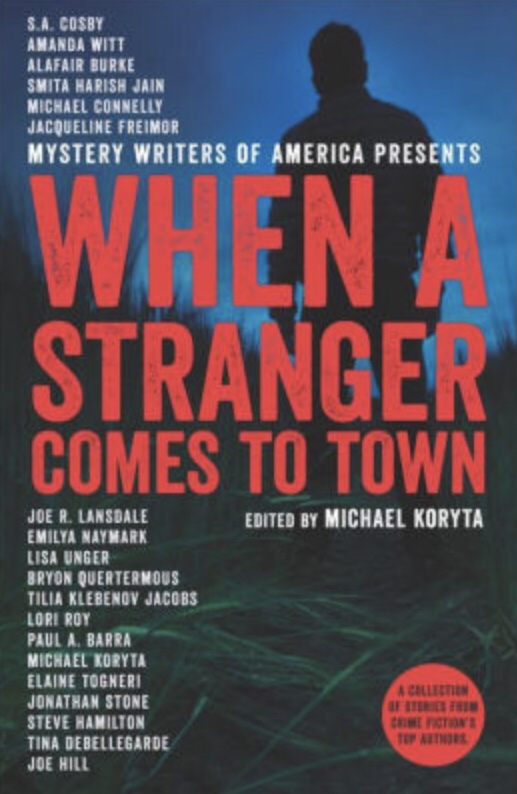














 Vickie's Book Nook and Meditation Corner