I am a Christian, a retired teacher, a mother and a grandmother. I love to read and I love the Lord Jesus Christ! Unless otherwise specified ,all visual illustrations are from the YOU VERSION APP of the Bible.
CHICAGO, Ill., 1931—Gabriella Salatino, an illustrative journalist for the Di Stasio Giornaliste Agency, never planned to return to her island home at the tip of Wisconsin’s Door Peninsula. Nor did she plan to witness a murder. But when her life is threatened, she has no choice but to hide out under the protective care of the man she left behind.
Deputy Andri Jóhannsson has been coming to Gabby’s rescue his entire life, but having her in his secluded home tests the limits of his patience. The woman has no sense of self-preservation, and he has a smuggling ring to ferret out. Except, her skill with sketchpad and pencils might be the very investigative tool he needs in order to catch the bootleggers.
With a murderer on her trail and criminals evading detection, Gabriella and Andri must set aside the past or risk its eruption. Because this time, the collateral damage might include more than losing their friendship. It might cost them the lives of those they love.
La Verità con Integrità. Truth with Integrity. The Legacy of a (Girl) Stunt Reporter.
Read the Whole Series(does not need to be read in order) Prequel: 1892 – Undercover Wish Book 1: 1931 – Eyewitness Sketch Book 2: 1932 – Sabotage Games Book 3: 1932 – Shrouded Trail Book 4: 1933 – Fraudulent Progress Book 5: 1935 – Pursuing Dust Book 6: 1936 – Hostile Ally
My Thoughts
With a fast pace and a story that begs to be read in one sitting, this book presents Gabriella Salatino, an artist whose life is in danger because she can sketch the scenes of a crime. Escaping to the small island where she was raised, Gabriella is put into the protective custody of a previous beau, Andri Johannsson. Andri is tasked with keeping the reluctant Gabby safe even as the two of them work to uncover who is behind the death of her good friend back in Chicago. Gabby is a talented artist with en eye for details and Andri is an observant and determined investigator who is good at following and clues and solving mysteries. Together, the two of them made a formidable pair and an absorbing tale of romantic suspense. The action engaging, the characters are believable and the suspense is compelling. The DiStasio Giournaliste Agency has a home in my heart and on my bookshelf with stories that are clean, easy to read and totally entertaining. I voluntarily received a complimentary copy of this book from the author. I was not required to write a positive review, and all opinions expressed are my own.
Christian Fiction with intense suspense, Rated PG
About the Author
Danielle Grandinetti is an award-winning author of 1930s historical romance, where mystery and suspense intertwine with hope. Her work has received recognition, including a Distinguished Faith in Writing Award, two National Excellence in Storytelling Awards, and finalist honors in the FHLCW Reader’s Choice, Selah, Holt Medallion, and Daphne du Maurier contests.
A second-generation Italian-American rooted in Midwest traditions, Danielle draws inspiration from tea, books, and the creative beauty of nature. Holding a master’s in communication and culture, and driven by a lifelong love of stories, she crafts tales that celebrate resilience, diversity, and belonging. Danielle lives along Wisconsin’s Lake Michigan shoreline with her husband and two sons. Find her online at daniellegrandinetti.com.
At twenty-five, Ruby Nevins has already endured more than most. But after two years of battling cancer, she’s warily determined to move forward. Researching a new project about a French actress, she soon uncovers an old diary that will change her life forever…
Cécile, the “it” girl of early 1940s French cinema, vanished from Nazi-occupied Paris in 1942. Sylvia Rousseau, Cécile’s dressmaker and confidante, left that same year. Working to piece together the truth behind Cécile’s disappearance and Sylvia’s extraordinary life, Ruby recognizes the women as kindred spirits. They risked their hearts and lives to aid the Resistance, and each day was a struggle to survive.
Ruby knows her cancer could come back, but she’s learning to embrace the future rather than fear it. If Cécile and Sylvia could live their lives in the shadow of death, so can Ruby. Because she knows there’s so much life—and love—to fight for.
My Thoughts
The story of Ruby, an author who is inspired to write the story of a missing actress and her dressmaker, is one that is poignant, realistic and soul-stirring. The women she is writing about lived during the Second World War in Nazi-occupied France. Facing danger daily was part of their way of life since both Cecile, the actress, and her dressmaker Sylvia, worked with the resistance by feeding them information via Cecile’s sister Emile. The story is a dual timeline story, showing the struggles of Cecile and Sylvia in 1940’s France and the challenge to grasp life that Ruby faces since she is a cancer survivor. The themes of strength, courage, fortitude and persistence are prevalent in this novel that had me crying and cheering, just pages apart. The characters were totally realistic, especially Ruby and her determined quest to find out the truth about Sylvia and Cecile. Using a journal written by Sylvia, Ruby researches and continues to dig out nuggets of Sylvia’s story of being a Jew in Paris when the Nazis were working hard to exterminate them. The book was well-paced and totally absorbing as I lost myself in the pages, wanting to know as much as Ruby did what had happened to Sylvia and Cecile. With multiple narrators and a well-woven story, the history of the women is given in a way that is a compelling look at self-sacrifice and family love. This book is without a doubt one of the best WWII historical fiction novels that I have read, told with the grit and authentic details that made me gasp with awe or disgust, depending on what was happening in the scene. The author brilliantly and seamlessly wove the stories of the women together, even as they were decades and a continent apart. I loved the story and the writing style that captivated my attention and securely held it from beginning to end. Disclaimer: I voluntarily received a complimentary copy of this book from the author. I was not required to write a positive review, and all opinions expressed are my own.
Rated PG-15, intense scenes and closed door sexual encounters
As do so many people, her protagonists search for their place in the world, exploring issues of family, home, love and belonging. Inevitably, Mary Ellen’s stories interweave setting, history and mysteries that span past and present. Website: maryellentaylor.com
Berlin 1961: When Uli Neumann proposes to Lise Bauer, she has every reason to accept. He offers her love, respect, and a life beyond the strict bounds of the East German society in which she was raised — which she longs to leave more than anything. But only two short days after their engagement, Lise and Uli are torn violently apart when barbed wire is rolled across Berlin, splitting the city into two hostile halves: capitalist West Berlin, an island of western influence isolated far beyond the iron curtain; and the socialist East, a country determined to control its citizens by any means necessary.
Soon, Uli and his friends in West Berlin hatch a plan to get Lise and her unborn child out of East Germany, but as distance and suspicion bleed into their lives and as weeks turn to months, how long can true love survive in the divided city?
My Thoughts
This novel is like reading an eyewitness account of the people living in East and West Berlin when the dividing wall was built and the repercussions in their lives. It is a well-crafted and mesmerizing story of two young people caught on their respective sides when all they want to do is be together. Uli loves Lise desperately and his decision to create a way to get her to the west without getting her arrested or killed was interesting, believable and gut-wrenching. The division of the novel into parts added to my understanding the story better, as the time line changed with the parts and the story was set further in the future, with more changes in the daily lives of the main characters. Uli, Lise and their friends Jurgen, Wolf and Inge became like real people to me, suffering from the will of the government and with no recourse but to find a way to rebel clandestinely. Reading the story of how they were forced to live separately, trying to find happiness in a different life than they had planned spoke to their resilience, which seemed to be a major theme of the story. I really enjoyed getting to know the characters and was fully invested in their finding their happy ending, whatever that would be. The fact that the happy ending did not immediately appear kept me engaged and invested in what was a twisted and compelling story. I think my favorite part of the story was Lise’s honest assessment of her life with her brother Paul, a man who sold out to the state and then devoted himself to discovering a way to make her happy in the east, even though she had to live without Uli. The emotion of that scene jumped off the page and made my heart pound as I read quickly to see how Paul would react. What a breathtakingly complex story that was written in a powerful way, getting way under my skin and right into my heart. This is historical fiction at its best, with plenty of action and a deep, immersive plot that captivated me from beginning to end. Disclaimer Disclosure of Material Connection: I received a complimentary copy of this book from the publisher via Netgalley. I was not required to write a positive review and all opinions expressed are my own. I am disclosing this in accordance with the Federal Trade Commission’s 16th CFR, Part 255, “Guidelines Concerning the Use of Testimonials and Endorsements in Advertising.”
Rated G, Historical Fiction
About the Author
BRYN TURNBULL is the internationally bestselling author of The Woman Before Wallis. Equipped with a master of letters in creative writing from the University of St. Andrews, a master of professional communication from Ryerson University and a bachelor’s degree in English literature from McGill University, Bryn focuses on finding stories of women lost within the cracks of the historical record. She lives in Toronto.
Uli stared out his apartment window, his pulse beating wildly in his ears. Seven stories below, a tangle of concertina wire ran the length of Bernauer Strasse, bisecting East Berlin from West: onlookers on both sides of the wire watched, muttering, as green-uniformed Grenztruppen, separated from the East German citizenry by a line of Volkspolizei, jackhammered the cobbles to fix stakes into the ground and carted in more spools of barbed wire, rolling it out with gloved hands.
Was it war? He studied the faces of the border guards, searching for an indication of panic, of fear, but they looked measured and resolute. Was it a planned operation, then? A provocation?
He needed to find Lise. He pulled on a shirt and trousers and descended into the fray.
Outside, the sound of jackhammers was a relentless snarl that drowned out the fury of Berliners on both sides of the wire, shouting their ire. In the East, a mishmash of soldiers—police officers and border guards and members of the People’s National Army—stood with their backs to the west, shoulder to shoulder, as guards hammered stakes in place.
“Uli!”
He wrenched his attention away from the barbed wire to see Jurgen’s stocky, sandy-haired figure. “Have you spoken to Lise?”
Uli shook his head: across the street, a scrum of people had formed around a nearby telephone box. “I only just came outside. I’m still trying to piece together… What’s going on?”
“Ulbricht’s sealed the border.”
“Sealed it?”
“Yeah.” Jurgen bit his lip, and Uli knew that he was thinking of his family, his brother and sister-in-law and niece, living in Bernau. “People kept saying he was going to do something, but I never thought…” He trailed off. “You’ve not seen Lise?”
“Not since Friday.” Uli searched for a higher vantage point— a bench, the bonnet of a car—and gestured for Jurgen to follow him toward a rusting Mercedes, parked on the opposite side of the road. “Have you spoken to your brother?”
“I tried telephoning Karl, but they’ve cut the wires. I heard they’ve sealed off the U-Bahn and S-Bahn as well… I don’t think anyone can make contact.”
Uli jumped onto the bonnet of the Mercedes. What purpose did it serve to cut the telephone lines? He gave Jurgen his hand and tugged him up on top of the car: from here, they could see past the guards and jackhammers to the bewildered East Berliners beyond.
“Lise was out of town, wasn’t she?” Jurgen muttered. In the empty streets beyond Bernauer Strasse, Soviet tanks rolled in and out of view in the direction of Brandenburg Gate: Where was the answering military presence from the West? He turned, hoping to see British or American troops: on a far-off corner, a pair of French soldiers watched the growing crowd but made no attempt to move closer. Surely, they had to intervene?
Uli turned back to the barbed wire and his heart lurched: there, coming down Brunnenstrasse, was Lise. He shouted her name and waved to catch her attention: she turned and lifted her arm in response.
Uli leaped down from the car and made his way toward the wire. He muscled past men and women with Jurgen in his wake, rising onto his toes to keep Lise in his sights.
A shout rang up behind him—“Fascists!”—and the crowd surged forward. He stumbled, and a West Berlin police officer caught him before he hit the ground.
“Watch yourself.”
Uli straightened. “My fiancée. She’s in the East,” he began, hearing in his voice the panic he was trying, and falling, to quell. On the opposite side of the wire, Lise was pushing forward too, her pale head visible as she tried to reason with a Grenztruppe. “I need to speak with her, if you could just let me through, she’s right there—”
The officer’s expression was pitying and fearful in equal measure. “I have my orders. No one is to approach the barrier,” he said. Across the wire, a second Grenztruppe turned his head, listening to their conversation over his shoulder. “They’re operating within East Berlin, we have no jurisdiction to intervene—”
“They’re tearing the city apart!” Uli shouted, his rational mind reeling against the sheer absurdity of what was in front of him. He took another step, searching for a break in the wire. “If I could just talk to her—”
The officer’s grip on Uli’s arms was mercilessly hard. “If you want to start the next world war, keep going,” he hissed, before shoving Uli back. “There’s nothing I can do, mate. Take it up with Walter Ulbricht.”
He stumbled into Jurgen, trembling with a rage he’d never felt: an impotence, a helplessness that he’d not experienced since he was a boy.
“Easy…this might only be temporary,” Jurgen said, his hand steady on Uli’s shoulder. “We ought to go to Brandenburg Gate. We might learn more about what this is—there will be reporters, politicians—”
On the other side of the wire, he watched as Lise’s own attempts to reason with a border guard failed: she stepped back, looking distraught. “If Ulbricht really is sealing the border, we need to act now. We need to find a way to get to Lise—bring her across—”
“I know.”
Uli broke off midsentence, wrenching his eyes away from Lise. Jurgen stared at him, resolute, and his steadiness gave ground to Uli’s panic, helped him think beyond his own fear, his own anger.
“We need to act now, but whatever we do, it can’t be here,” Jurgen continued. He was right: they couldn’t push through, not here, where there were so many people, so many sets of eyes. “We find a break in the wire—a gap…” “They can’t be everywhere all at once,” Uli said. “Further along,” Jurgen whispered back, and Uli’s heart quickened. Across the wire, Lise stared at him, and he jerked his head, knowing that Lise would understand—she nodded, and melted back into the crowd.
“C’mon,” he muttered, and he and Jurgen took off down the street.
Women can be heroes. When twenty-year-old nursing student Frances “Frankie” McGrath hears these words, it is a revelation. Raised in the sun-drenched, idyllic world of Southern California and sheltered by her conservative parents, she has always prided herself on doing the right thing. But in 1965, the world is changing, and she suddenly dares to imagine a different future for herself. When her brother ships out to serve in Vietnam, she joins the Army Nurse Corps and follows his path.
As green and inexperienced as the men sent to Vietnam to fight, Frankie is over-whelmed by the chaos and destruction of war. Each day is a gamble of life and death, hope and betrayal; friendships run deep and can be shattered in an instant. In war, she meets—and becomes one of—the lucky, the brave, the broken, and the lost.
But war is just the beginning for Frankie and her veteran friends. The real battle lies in coming home to a changed and divided America, to angry protesters, and to a country that wants to forget Vietnam.
The Women is the story of one woman gone to war, but it shines a light on all women who put themselves in harm’s way and whose sacrifice and commitment to their country has too often been forgotten. A novel about deep friendships and bold patriotism, The Women is a richly drawn story with a memorable heroine whose idealism and courage under fire will come to define an era.
My Thoughts
I literally could not put this book down and then when I forced myself to go to bed, scenes from the book continued to run through my mind. This is a realistically told and emotional novel about the Vietnam War era and how the lives of people were changed because of their involvement in the war, specifically the lives of the women who volunteered to serve. Frankie McGrath is a sympathetic character who wants nothing more than her beloved father’s approval, so when she volunteers to be a nurse in the war zone, she had no idea what she was getting into. Young, innocent and patriotic, Frankie quickly has her eyes opened to the brutality of war and I got to travel back in time to when my friends were being drafted or volunteering and the news reports that were given nightly about how we were “winning the war.” The research in the book is impeccable, transporting my mind completely to that troubled time and the years afterwards when the veterans of the war were ridiculed rather than welcomed. I thoroughly enjoyed the point of view of Frankie and all she suffered as a result of her choice and also how she was ultimately able to overcome and move on in her life. The characters were all dynamic and realistically flawed. The plot moved along quickly, keeping pace with the action on the front lines. This is a remarkable story that needs to be read and is written in such a brilliant way that it held my attention and caused me to cry, cheer and get outraged, sometimes all within the same chapter. With a tight plot and the signature style of a master of historical fiction, this book deserves many kudos for embracing a topic that is thought-provoking and complex. I highly recommend this book for all who want to know what the late 60’s and 70’s were like and how the women who served were treated, both on the battlefield and afterwards. There is so much to love about this book, but I must warn readers that it can be disturbing with the realistic details of war and the wounded and dying. I used to say that my all-time favorite book was “Gone with the Wind” by Margaret Mitchell. I have a new favorite, more timely and suited for my generation. Captivating, insightful and well-crafted, this is one that I definitely want to own and read again. An epic novel worth reading and remembering! Disclaimer Disclosure of Material Connection: I received a complimentary copy of this book from the publisher via Netgalley. I was not required to write a positive review and all opinions expressed are my own. I am disclosing this in accordance with the Federal Trade Commission’s 16 CFR, Part 255, “Guidelines Concerning the Use of Testimonials and Endorsements in Advertising.”
Rated M for mature audiences. This book deals with war, violence and has some graphic descriptions of the events in Vietnam. It also has sexual scenes and some harsh language.
ABOUT THE AUTHOR
Kristin Hannah is the award-winning and bestselling author of more than 20 novels including the international blockbuster, TheNightingale, which was named Goodreads Best Historical fiction novel for 2015 and won the coveted People’s Choice award for best fiction in the same year. Additionally, it was a selection of the Reese Witherspoon Book Club in 2023. It was named a Best Book of the Year by Amazon, iTunes, Buzzfeed, the Wall Street Journal, Paste, and The Week. In 2018, The Great Alone became an instant New York Times #1 bestseller and was named the Best Historical Novel of the Year by Goodreads. The Four Winds was published in February of 2021 and immediately hit #1 on the New York Times, Wall Street Journal, USA Today, and Indie bookstores’ bestseller lists. Additionally, it was selected as a book club pick by the both Today Show and the Book Of the Month club, which named it the best book of 2021. The Nightingale is currently in production at Tri Star, with Dakota and Elle Fanning set to star. Tri Star has also optioned The Great Aloneand it is in development. Firefly Lane, her beloved novel about two best friends, was the #1 Netflix series around the world, in the week it came out. The popular tv show stars Katherine Heigl and Sarah Chalke and Season Two is currently set to conclude the series on April 27, 2023. A former attorney, Kristin lives in the Pacific Northwest.
Told in a dual timeline and with two female protagonists, this book was well-researched and was based on an actual U.S. Intelligence program that brought former Nazis to the U.S. to work in the American rocket system. Jurgen Rhodes was forced to work for the Nazis or lose his income and possibly his children. After the war, he was whisked away to the U.S. and held at Fort Bliss until he was transferred to Huntsville, AL to work on rockets. Sofie, his wife, was separated from him for five years, anxiously remaining in Germany and without knowledge of where her husband had been taken. Then, the day came when she heard that he was settled in Alabama and and purchased a home for her and the children there. Accompanied by two of their children, Sofie makes the journey to America. The emotions in this book fairly jumped off the page as I sympathized with Sofie facing an unknown future. Their neighborhood consists of other German families, so at first Sofie feels welcomed and is eager to build a new and hopeful future in the U.S. Her dreams are dashed, however, when gossip begins and spreads quickly about Jurgen’s role in Nazi Germany. Spurred on by the other female protagonist, Lizzie, the gossip seems to take on a life of its own and destroys Sofie’s quest for peace and happiness. This story is one that was at times hard to read because of the hatred that rolled from Lizzie’s heart to Sofie. Lizzie is a bitter woman who dearly loves her brother Henry. Henry is a former soldier suffering from PTSD and Lizzie blames all Nazis for his condition. In her attempt to wreak vengeance, she targets Sofie and her family. I enjoyed the book, especially learning about this rocket program that I knew nothing about previously. I was a bit confused at first by the dual timeline and by the fast that the book is supposed to be about Sofie, but it is actually about the effects of the war on two different women, one of them being the American Lizzie. In looking for safety in the U.S., Sofie encounters some of the worst prejudice possible and has to safeguard herself and her children from the increasing violence and threats against them. Even those in their German neighborhood turn against them. I found the details disturbingly realistic and heartbreaking. There is a great deal of tension and conflict in the book as Sofie is forced to deal with the stunningly realistic actions of what basically becomes a mob against her and her family. With the themes of family, right versus wrong and making choices for one’s future, this book is a compelling look at a time and events in history that deserve a second look and apologies for undeserved prejudices. It brought home to me that often we attack what we truly have not taken the time to understand. I enjoyed learning about Sofie, but I wanted to reach into the pages and implore Lizzie to be more accepting and less judgmental. After all, the same thing that Lizzie was accusing Sofie of simply because she was German was what Lizzie was doing in “free” America. Appearances are deceptive in this book and it was this that drew me to the novel and kept me reading, hopeful for a happy future for Sofie but despairing when all seems stacked against her. Fans of historical fiction will enjoy this realistic portrayal of what it was like to be the wife who suffers the repercussions of her husband’s career. Disclaimer Disclosure of Material Connection: I received a complimentary copy of this book from the publisher via Netgalley. I was not required to write a positive review. The opinions expressed are my own. I am disclosing this in accordance with the Federal Trade Commission’s 16 CFR, Part 255, “Guidelines Concerning the Use of Testimonials and Endorsements in Advertising.”
Rated PG-13 due to emotional content that may disturb some readersFrom the author’s website at http://www.kellyrimmer.com Please go to her website to find additional information about her other books.
This book will release on June 28, 2022 and is now available for preorder. Purchase Links:
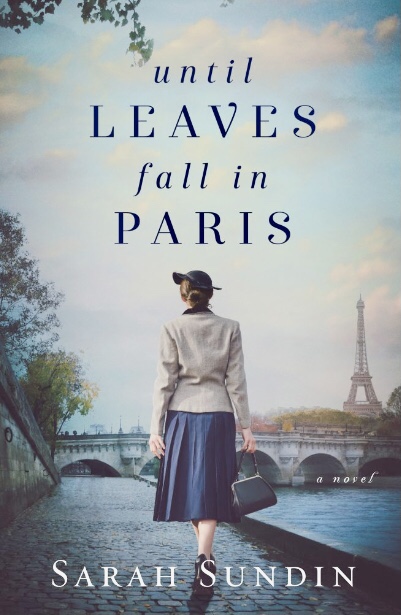
I absolutely devoured this book, with its vivid descriptions of war-torn Paris under the Nazi regime. The prose was written so well that I felt as though I became a part of the story, walking the streets of Paris and listening with bated breath for the arrival of Nazi soldiers. I thoroughly enjoyed getting to know Lucie and Paul, both Americans who joined the resistance in France in order to try to make a difference in the war effort. Putting their lives in danger repeatedly, they are dedicated to the cause and slowly learn to trust each other. Their love story is one for the ages, one that is unforgettable and poignantly bittersweet. I loved the story, the characters and the atmosphere that was so realistically portrayed. The author is a master at research and at pulling the reader into the story in such a way that I embraced the story and was sad to see it come to the end. I wanted to continue to follow the delightful and precocious Josie who wrote about Rock Monsters and a heroine named Feenee. Thus, the author sneaked in a story within a story, one from the viewpoint of a child that was insightful. Anyone who enjoyed historical fiction will want to get this book and add it to your collection of memorable stories to cherish and share. Disclaimer Disclosure of Material Connection: I received a complimentary copy of this book from the Revell Reads Blogger Program via Netgalley. I also purchased my own copy of the book by pre-order since I love this author’s style and the lessons that I learn from her books. I was not required to write a positive review. The opinions expressed are my own. I am disclosing this in accordance with the Federal Trade Commission’s 16 CFR, Part 255, “Guides Concerning the Use of Testimonials and Endorsements in Advertising.”
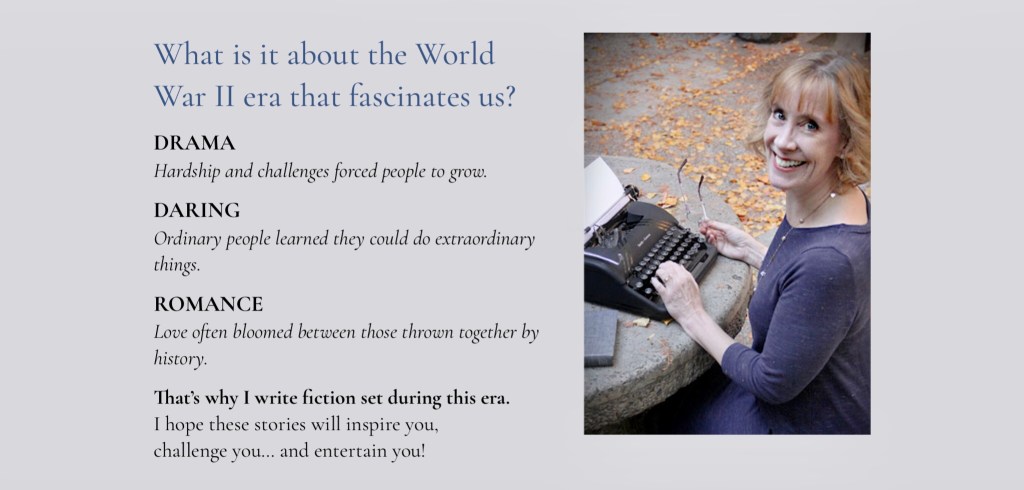
The action is intense in Nazi-occupied Paris, but the story is clean and well worth reading for anyone who enjoys historical fiction. Rated G. Photo and information are from the author’s website at http://www.sarahsundin.com
This is a new release and can be purchased at any of the retailers listed below or at your favorite bookseller.
I’m delighted to say that I was introduced to this amazing author via the Revell Reads Blogger Program and now I read all of her books and wait anxiously for the next one!
Buy this amazing book today and get lost in the story of Paul and Lucie and their love story for the ages!
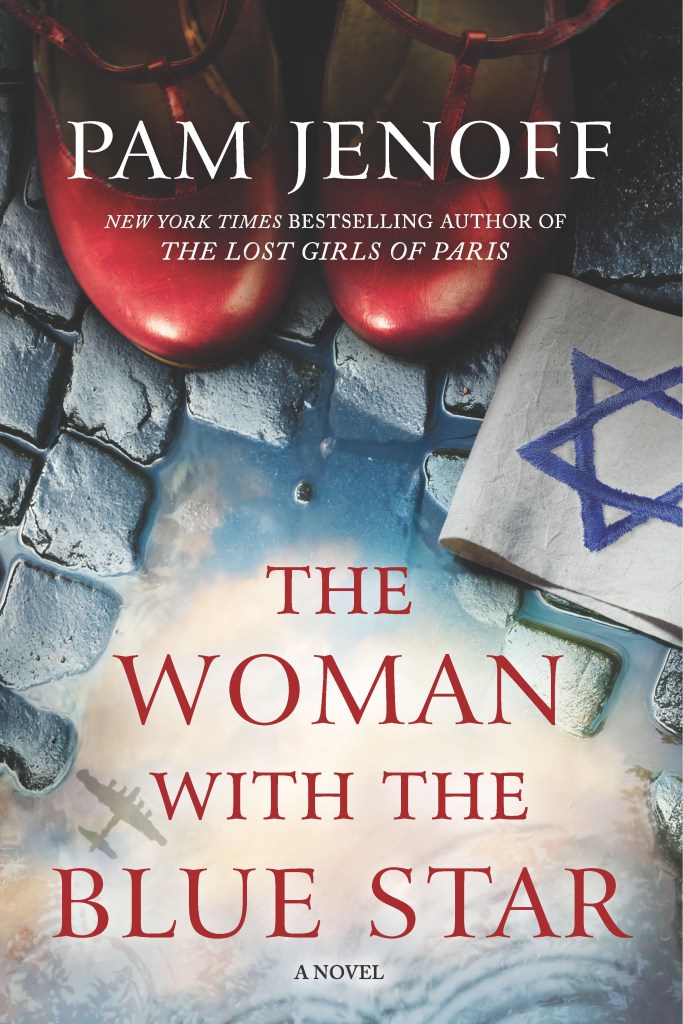
This was a powerfully written and emotion-stirring novel about the horrors of war and the ability to survive. I will be honest and state from the beginning that this was a hard book for me to read because the author did such a fantastic job of painting the setting and describing the events of 1942 Poland in graphic detail. As I read, I found myself captured by the story and the characters, but I was biting my nails and crying as I read parts of the story of Sadie and Ella, two unlikely friends. Sadie is a young woman, eighteen years old, when the story begins and has been moved by the Nazis to the ghetto, along with her family. Before the Nazis can clear out the ghetto and move all of the Jews there to concentration camps, Sadie and her family escape to live under the city in the sewers. Dark, smelly and filled with rats, the sewer was described in excruciating and heartbreaking detail. One day, as Sadie looks up through the grate, she sees another young woman. Ella’s father went to war and never returned, so she is stuck living with her stepmother who seeks to gain favor with the Germans by inviting them to parties at her home. When Ella and Sadie spy each other through the grate, an unlikely friendship begins and the story really took off. I kept waiting for the two of them to be caught and dragged away to some Nazi place of torture. What happens is what makes the story, so I can’t say much about the events following their propitious meeting. I can say that this story wrapped itself around my head and my heart and made me think long and hard about how thankful I should be for my freedom and the things I take for granted. This book was thought-provoking and well written as well as obviously well researched. It is an extremely emotional tale of the atrocities committed by the Nazis, the desperation of those desiring to survive and the friendship and hope that took place during these horrific times. Fans of historical fiction will not want to miss this book! Disclaimer Disclosure of Material Connection: I received a complimentary copy of this book from the publisher via Netgalley. I was not required to write a positive review. The opinions expressed are my own. I am disclosing this in accordance with the Federal Trade Commission’s 16 CFR, Part 255, “Guides Concerning the Use of Testimonials and Endorsements in Advertising.”
Five big stars for historical accuracyin a mesmerizing book. Caution for YA Readers: the content can be somewhat disturbing in its realistic details.
Excerpt:
Sadie
Kraków, PolandMarch 1942
Everything changed the day they came for the children.
I was supposed to have been in the attic crawl space of the three-story building we shared with a dozen other families in the ghetto. Mama helped me hide there each morning before she set out to join the factory work detail, leaving me with a fresh bucket as a toilet and a stern admonishment not to leave. But I grew cold and restless alone in the tiny, frigid space where I couldn’t run or move or even stand straight. The minutes stretched silently, broken only by a scratching—unseen children, years younger than me, stowed on the other side of the wall. They were kept separate from one another without space to run and play. They sent each other messages by tapping and scratching, though, like a kind of improvised Morse code. Sometimes, in my boredom, I joined in, too.
“Freedom is where you find it,” my father often said when I complained. Papa had a way of seeing the world exactly as he wanted. “The greatest prison is in our mind.” It was easy for him to say. Though he manual ghetto labor was a far cry from his professional work as an accountant before the war, at least he was out and about each day, seeing other people. Not cooped up like me. I had scarcely left our apartment building since we were forced to move six months earlier from our apartment in the Jewish Quarter near the city center to the Podgórze neighborhood where the ghetto had been established on the southern bank of the river. I wanted a normal life, my life, free to run beyond the walls of the ghetto to all of the places I had once known and taken for granted. I imagined taking the tram to the shops on the Rynek or to the kino to see a film, exploring the ancient grassy mounds on the outskirts of the city. I wished that at least my best friend, Stefania, was one of the others hidden nearby. Instead, she lived in a separate apartment on the other side of the ghetto designated for the families of the Jewish police.
It wasn’t boredom or loneliness that had driven me from my hiding place this time, though, but hunger. I had always had a big appetite and this morning’s breakfast ration had been a half slice of bread, even less than usual. Mama had offered me her portion, but I knew she needed her strength for the long day ahead on the labor detail.
As the morning wore on in my hiding place, my empty belly had begun to ache. Visions pushed into my mind uninvited of the foods we ate before the war: rich mushroom soup and savory borscht, and pierogi, the plump, rich dumplings my grandmother used to make. By midmorning, I felt so weak from hunger that I had ventured out of my hiding place and down to the shared kitchen on the ground floor, which was really nothing more than a lone working stove burner and a sink that dripped tepid brown water. I didn’t go to take food—even if there had been any, I would never steal. Rather, I wanted to see if there were any crumbs left in the cupboard and to fill my stomach with a glass of water.
I stayed in the kitchen longer than I should, reading the dog-eared copy of the book I’d brought with me. The thing I detested most about my hiding place in the attic was the fact that it was too dark for reading. I had always loved to read and Papa had carried as many books as he could from our apartment to the ghetto, over the protests of my mother, who said we needed the space in our bags for clothes and food. It was my father who had nurtured my love of learning and encouraged my dream of studying medicine at Jagiellonian University before the German laws made that impossible, first by banning Jews and later by closing the university altogether. Even in the ghetto at the end of his long, hard days of labor, Papa loved to teach and discuss ideas with me. He had somehow found me a new book a few days earlier, too, The Count of Monte Cristo. But the hiding place in the attic was too dark for me to read and there was scarcely any time in the evening before curfew and lights-out. Just a bit longer, I told myself, turning the page in the kitchen. A few minutes wouldn’t matter at all.
I had just finished licking the dirty bread knife when I heard heavy tires screeching, followed by barking voices. I froze, nearly dropping my book. The SS and Gestapo were outside, flanked by the vile Jüdischer Ordnungsdienst, Jewish Ghetto Police, who did their bidding. It was an aktion, the sudden unannounced arrest of large groups of Jews to be taken from the ghetto to camps. The very reason I was meant to be hiding in the first place. I raced from the kitchen, across the hall and up the stairs. From below came a great crash as the front door to the apartment building splintered and the police burst through. There was no way I could make it back to the attic in time.
Instead, I raced to our third-floor apartment. My heart pounded as I looked around desperately, wishing for an armoire or other cabinet suitable for hiding in the tiny room, which was nearly bare except for a dresser and bed. There were other places, I knew, like the fake plaster wall one of the other families had constructed in the adjacent building not a week earlier. That was too far away now, impossible to reach. My eyes focused on the large steamer trunk stowed at the foot of my parents’ bed. Mama had shown me how to hide there once shortly after we first moved to the ghetto. We practiced it like a game, Mama opening the trunk so that I could climb in before she closed the lid.
The trunk was a terrible hiding place, exposed and in the middle of the room. But there was simply nowhere else. I had to try. I raced over to the bed and climbed into the trunk, then closed the lid with effort. I thanked heavens that I was tiny like Mama. I had always hated being so petite, which made me look a solid two years younger than I actually was. Now it seemed a blessing, as did the sad fact that the months of meager ghetto rations had made me thinner. I still fit in the trunk.
When we had rehearsed, we had envisioned Mama putting a blanket or some clothes over the top of the trunk. Of course, I couldn’t do that myself. So the trunk sat unmasked for anyone who walked into the room to see and open. I curled into a tiny ball and wrapped my arms around myself, feeling the white armband with the blue star on my sleeve that all Jews were required to wear.
There came a great crashing from the next building, the sound of plaster being hewn by a hammer or ax. The police had found the hiding place behind the wall, given away by the too-fresh paint. An unfamiliar cry rang out as a child was found and dragged from his hiding place. If I had gone there, I would have been caught as well.
Someone neared the door to the apartment and flung it open. My heart seized. I could hear breathing, feel eyes searching the room. I’m sorry, Mama, I thought, feeling her reproach for having left the attic. I braced myself for discovery. Would they go easier on me if I came out and gave myself up? The footsteps grew fainter as the German continued down the hall, stopping before each door, searching.
The war had come to Kraków one warm fall day two and a half years earlier when the air-raid sirens rang out for the first time and sent the playing children scurrying from the street. Life got hard before it got bad. Food disappeared and we waited in long lines for the most basic supplies. Once there was no bread for a whole week.
Then about a year ago, upon orders from the General Government, Jews teemed into Kraków by the thousands from the small towns and villages, dazed and carrying their belongings on their backs. At first I wondered how they would all find places to stay in Kazimierz, the already cramped Jewish Quarter of the city. But the new arrivals were forced to live by decree in a crowded section of the industrial Podgórze district on the far side of the river that had been cordoned off with a high wall. Mama worked with the Gmina, the local Jewish community organization, to help them resettle, and we often had friends of friends over for a meal when they first arrived, before they went to the ghetto for good. They told stories from their hometowns too awful to believe and Mama shooed me from the room so I would not hear.
Several months after the ghetto was created, we were ordered to move there as well. When Papa told me, I couldn’t believe it. We were not refugees, but residents of Kraków; we had lived in our apartment on Meiselsa Street my entire life. It was the perfect location: on the edge of the Jewish Quarter but easy walking distance to the sights and sounds of the city center and close enough to Papa’s office on Stradomska Street that he could come home for lunch. Our apartment was above an adjacent café where a pianist played every evening. Sometimes the music spilled over and Papa would whirl Mama around the kitchen to the faint strains. But according to the orders, Jews were Jews. One day. One suitcase each. And the world I had known my entire life disappeared forever.
I peered out of the thin slit opening of the trunk, trying to see across the tiny room I shared with my parents. We were lucky, I knew, to have a whole room to ourselves, a privilege we had been given because my father was a labor foreman. Others were forced to share an apartment, often two or three families together. Still, the space felt cramped compared to our real home. We were ever on top of one another, the sights and sounds and smells of daily living magnified.
“Kinder, raus!” the police called over and over again now as they patrolled the halls. Children, out. It was not the first time the Germans had come for children during the day, knowing that their parents would be at work.
But I was no longer a child. I was eighteen and might have joined the work details like others my age and some several years younger. I could see them lining up for roll call each morning before trudging to one of the factories. And I wanted to work, even though I could tell from the slow, painful way my father now walked, stooped like an old man, and how Mama’s hands were split and bleeding that it was hard and awful. Work meant a chance to get out and see and talk to people. My hiding was a subject of much debate between my parents. Papa thought I should work. Labor cards were highly prized in the ghetto. Workers were valued and less likely to be deported to one of the camps. But Mama, who seldom fought my father on anything, had forbidden it. “She doesn’t look her age. The work is too hard. She is safest out of sight.” I wondered as I hid now, about to be discovered at any second, if she would still think she was right.
The building finally went silent, the last of the awful footsteps receding. Still I didn’t move. That was one of the ways they trapped people who were hiding, by pretending to go away and lying in wait when they came out. I remained motionless, not daring to leave my hiding place. My limbs ached, then went numb. I had no idea how much time had passed. Through the slit, I could see that the room had grown dimmer, as if the sun had lowered a bit.
Sometime later, there were footsteps again, this time a shuffling sound as the laborers trudged back silent and exhausted from their day. I tried to uncurl myself from the trunk. But my muscles were stiff and sore and my movements slow. Before I could get out, the door to our apartment flung open and someone ran into the room with steps light and fluttering. “Sadie!” It was Mama, sounding hysterical.
“Jestem tutaj,” I called. I am here. Now that she was home, she could help me untangle myself and get out. But my voice was muffled by the trunk. When I tried to undo the latch, it stuck.
Mama raced from the room back into the corridor. I could hear her open the door to the attic, then run up the stairs, still searching for me. “Sadie!” she called. Then, “My child, my child,” over and over again as she searched but did not find me, her voice rising to a shriek. She thought I was gone.
“Mama!” I yelled. She was too far away to hear me, though, and her own cries were too loud. Desperately, I struggled once more to free myself from the trunk without success. Mama raced back into the room, still wailing. I heard the scraping sound of a window opening and felt a whoosh of cold air. At last I threw myself against the lid of the trunk, slamming my shoulder so hard it throbbed. The latch sprang open.
I broke free and stood up quickly. “Mama?” She was standing in the oddest position, with one foot on the window ledge, her willowy frame silhouetted against the frigid twilight sky. “What are you doing?” For a second, I thought she was looking for me outside. But her face was twisted with grief and pain. I knew then why Mama was on the window ledge. She assumed I had been taken along with the other children. And she didn’t want to live. If I hadn’t freed myself from the trunk in time, Mama would have jumped. I was her only child, her whole world. She was prepared to kill herself before she would go on without me.
A chill ran through me as I sprinted toward her. “I’m here, I’m here.” She wobbled unsteadily on the window ledge and I grabbed her arm to stop her from falling. Remorse ripped through me. I always wanted to please her, to bring that hard-won smile to her beautiful face. Now I had caused her so much pain she’d almost done the unthinkable.
“I was so worried,” she said after I’d helped her down and closed the window. As if that explained everything. “You weren’t in the attic.”
“But, Mama, I hid where you told me to.” I gestured to the trunk. “The other place, remember? Why didn’t you look for me there?”
Mama looked puzzled. “I didn’t think you would fit anymore.” There was a pause and then we both began laughing, the sound scratchy and out of place in the pitiful room. For a few seconds, it was like we were back in our old apartment on Meiselsa Street and none of this had happened at all. If we could still laugh, surely things would be all right. I clung to this last improbable thought like a life preserver at sea.
But a cry echoed through the building, then another, silencing our laughter. It was the mothers of the other children who had been taken by the police. There came a thud outside. I started for the window, but my mother blocked me. “Look away,” she ordered. It was too late. I glimpsed Helga Kolberg, who lived down the hall, lying motionless in the coal-tinged snow on the pavement below, her limbs cast at odd angles and skirt splayed around her like a fan. She had realized her children were gone and, like Mama, she didn’t want to live without them. I wondered whether jumping was a shared instinct, or if they had discussed it, a kind of suicide pact in case their worst nightmares came true.
My father raced into the room then. Neither Mama nor I said a word, but I could tell from his unusually grim expression that he already knew about the aktion and what had happened to the other families. He simply walked over and wrapped his enormous arms around both of us, hugging us tighter than usual.
As we sat, silent and still, I looked up at my parents. Mama was a striking beauty—thin and graceful, with white-blond hair the color of a Nordic princess’. She looked nothing like the other Jewish women and I had heard whispers more than once that she didn’t come from here. She might have walked away from the ghetto and lived as a non-Jew if it wasn’t for us. But I was built like Papa, with the dark, curly hair and olive skin that made the fact that we were Jews undeniable. My father looked like the laborer the Germans had made him in the ghetto, broad-shouldered and ready to lift great pipes or slabs of concrete. In fact, he was an accountant—or had been until it became illegal for his firm to employ him anymore. I always wanted to please Mama, but it was Papa who was my ally, keeper of secrets and weaver of dreams, who stayed up too late whispering secrets in the dark and had roamed the city with me, hunting for treasure. I moved closer now, trying to lose myself in the safety of his embrace.
Still, Papa’s arms could offer little shelter from the fact that everything was changing. The ghetto, despite its awful conditions, had once seemed relatively safe. We were living among Jews and the Germans had even appointed a Jewish council, the Judenrat, to run our daily affairs. Perhaps if we laid low and did as we were told, Papa said more than once, the Germans would leave us alone inside these walls until the war was over. That had been the hope. But after today, I wasn’t so sure. I looked around the apartment, seized with equal parts disgust and fear. In the beginning, I had not wanted to be here; now I was terrified we would be forced to leave.
“We have to do something,” Mama burst out, her voice a pitch higher than usual as it echoed my unspoken thoughts.
“I’ll take her tomorrow and register her for a work permit,” Papa said. This time Mama did not argue. Before the war, being a child had been a good thing. But now being useful and able to work was the only thing that might save us.
Mama was talking about more than a work visa, though. “They are going to come again and next time we won’t be so lucky.” She did not bother to hold back her words for my benefit now. I nodded in silent agreement. Things were changing, a voice inside me said. We could not stay here forever.
“It will be okay, kochana,” Papa soothed. How could he possibly say that? But Mama laid her head on his shoulder, seeming to trust him as she always had. I wanted to believe it, too. “I will think of something. At least,” Papa added as we huddled close, “we are all still together.” The words echoed through the room, equal parts promise and prayer.
Excerpted from The Woman With the Blue Star @ 2021 by Pam Jenoff, used with permission by Park Row Books.
About the Author:
Pam Jenoff is the author of several books of historical fiction, including the NYT bestseller The Orphan’s Tale. She holds a degree in international affairs from George Washington University and a degree in history from Cambridge, and she received her JD from UPenn. Her novels are inspired by her experiences working at the Pentagon and as a diplomat for the State Department handling Holocaust issues in Poland. She lives with her husband and 3 children near Philadelphia, where she teaches law.
Although this is the first book that I have read by Sarah Sundin, I am thoroughly convinced that it will not be my last. This book was a fascinating look at D-Day from the viewpoint of the woman left behind and the warrior in action. Clay Paxton is from Texas and is stationed at a small training base when he meets Leah. Leah is on her own and working in the library when Clay comes into her life at one of her worst possible moments. The life that Leah faced when Clay left for battle was one of being alone, anxious and not always feeling accepted, struck a lot of chords with me since I’m a the wife of a retired military member. So, I really enjoyed the walks down memory lane that this book provided for me. I also was totally absorbed with the historical details that the author wove seamlessly into the story. The tale of D-Day was so well-written and historically accurate that I learned a lot from this book while also being drawn into the fictional lives of Leah and Clay. There are so many lessons to be learned from this book, including forgiveness and giving second chances and acceptance and bullying and family relationships. I loved this book and will definitely look for and read the others in this series as well as other books by this author. She paints a realistic canvas of a terrible era in the history of the world and does so with empathy and a patriotic fervor that jumps from the pages. Fans of historical fiction will not want to miss this book! Disclaimer Disclosure of Material Connection: I received a complimentary copy of this book from the author as part of an online contest. I was not required to write a positive review. The opinions expressed are my own. I am disclosing this in accordance with the Federal Trade Commission’s 16 CFR, Part 255, “Guides Concerning the Use of Testimonials and Endorsements in Advertising.”
Published by #Revell, this is a totally clean and enjoyable read!






















 Vickie's Book Nook and Meditation Corner