I am a Christian, a retired teacher, a mother and a grandmother. I love to read and I love the Lord Jesus Christ! Unless otherwise specified ,all visual illustrations are from the YOU VERSION APP of the Bible.
Author: vicklea
I love to read! I’m a retired teacher with a spouse of 45 years, three amazing children and nine wonderful grandchildren. I am blessed!
I am doing devotionals daily and as I read, I am keeping my eyes open for God’s promises. They are so numerous that I cannot begin to name them all, but finding this Scripture reminded me that reading God’s promises is not enough. I have to actually claim them. They are already mine. And, guess what? They are yours, too! How often have I sat and whined that things are not happening the way I want them to and then God shows me that He is indeed moving. What I have discovered in my journey with God is that sometimes He wants me to step out into the promise, believing that it is mine. Now, I am not a proponent of “fake it until you make it” or “Claim it” no matter how selfish the desire you have in your heart is.
God’s promises have to do with establishing His kingdom in your heart and in the world. For example, Psalm 84:11 says: “For the Lord God is a sun and shield: the Lord will give grace and glory: no good thing will He withhold from them that walk uprightly.” What “good thing” is this talking about? Riches, a huge mansion, a luxurious car? No! Of course not! Good things are God’s grace and mercy and salvation. He has already provided these good things for us. We just have to know that it is promised and walk with that promise in our hearts.
Can I see God’s Heaven here on earth? Not really. But I know that I know that the Promised Land exists for me, just as it did for the Israelites. I may face many enemies here on earth, most of them in my own heart waging battle against sin. But I have to step into the knowledge that each day I face, each step I take to advance God’s kingdom brings me closer to the Promised Land, the land in which I will spend eternity with Him. I can sometimes imagine God just looking at earth and its inhabitants and shaking his head in disbelief at how stubborn we get sometimes. He tells us to do something that will lead to the fulfillment of a promise and instead we hesitate and want all kinds of confirmation and assurances before we move forward. God’s promises are “Yes! Amen” and “Go for it!” But they are not meant to fulfill selfish desires, but to establish His kingdom.
May you be blessed by a promise today from the Lord that you find as you read and study His Word. Hold it in your heart and stop forward in belief that it will be fulfilled because God does not lie, ever.
Having read a previous book by this author, I really looked forward to this one. Although the characterization is brilliant, the plot is rather predictable and blah at points. Lexi and Jake win a lottery worth over seventeen million pounds and their lives begin to change almost immediately. The first problem is with their long-term friends who have always played the lottery with them. However, this last time, when they won, the friends had argued and backed out of playing. Now, though, of course, they want a share, saying that Lexi and Jake are lying about them leaving the “syndicate.” I think that the saddest part of how the money affected the family was how greedy Jake and teen Emily were. They couldn’t spend the money fast enough, and I was very disappointed that Lexi did nothing to try to halt their erratic behavior. I did like the sub-plot about Toma, an immigrant down on his luck and a tragic victim of an unscrupulous landlord. Since Lexi’s job is helping people like Toma, she wants to be more practical and do some good with some of the winnings. She also wants to continue to live their regular lives, with a few luxuries, but she seems totally unable to stop the train wreck that is Jake’s spending money way too fast and not keeping an account of it all. There is a big twist at the end that I didn’t see coming, but for the most part the story is unsurprising. With themes of greed, envy and broken relationships, this is not an uplifting book, but it is perhaps one that can teach a lesson about what to do if you happen to receive a windfall. Disclaimer Disclosure of Material Connection: I received a complimentary copy of this book from the publisher via Netgalley. I was not required to write a positive review. The opinions expressed are my own. I am disclosing this in accordance with the Federal Trade Commission’s 16 CFR, Part 255, “Guides Concerning the Use of Testimonials and Endorsements in Advertising.”
I would rate this book PG because of the theme and content.
What other book reviewers are saying about this book:
About the author:
Adele Parks is the #1 Sunday Times bestselling author of twenty novels, including Lies Lies Lies and Just My Luck, as well as I Invited Her In. Just My Luck is currently in development to be made into a movie. Her novels have sold 4 million copies in the UK alone, and her work has also been translated into thirty-one languages.
I can’t face going straight home to Jake. I’m not ready to deal with this. I need to try to process it first. But how? Where do I start? I have no idea. The blankness in my mind terrifies me.
I always know what to do. I always have a solution, a way of tackling something, giving it a happy spin. I’m Lexi Greenwood, the woman everyone knows of as the fixer, the smiler—some might even slightly snidely call me a do-gooder. Lexi Greenwood, wife, mother, friend.
You think you know someone. But you don’t know anyone, not really. You never can.
I need a drink. I drive to our local. Sod it, I’ll leave the car at the pub and walk home, pick it up in the morning. I order a glass of red wine, a large one, and then I look for a seat tucked away in the corner where I can down my drink alone. It’s Easter weekend, and a rare hot one. The place is packed. As I thread my way through the heaving bar, a number of neighbors raise a glass, gesturing to me to join them; they ask after the kids and Jake. Everyone else in the pub seems celebratory, buoyant. I feel detached. Lost. That’s the thing about living in a small village—you recognize everyone. Sometimes that reassures me, sometimes it’s inconvenient. I politely and apologetically deflect their friendly overtures and continue in my search for a solitary spot. Saturday vibes are all around me, but I feel nothing other than stunned, stressed, isolated.
You think you know someone.
What does this mean for our group? Our frimily. Friends that are like family. What a joke. Blatantly, we’re not friends anymore. I’ve been trying to hide from the facts for some time, hoping there was a misunderstanding, an explanation; nothing can explain away this.
I told Jake I’d only be a short while, and I should text him to say I’ll be longer. I reach for my phone and realize in my haste to leave the house I haven’t brought it with me. Jake will be wondering where I am. I don’t care. I down my wine. The acidity hits my throat, a shock and a relief at once. Then I go to the bar to order a second.
The local pub is only a ten-minute walk away from our home, but by the time I attempt the walk back, the red wine has taken effect. Unfortunately, I am feeling the sort of drunk that nurtures paranoia and fury rather than a light head or heart. What can I do to right this wrong? I have to do something. I can’t carry on as normal, pretending I know nothing of it. Can I?
As I approach home, I see Jake at the window, peering out. I barely recognize him. He looks taut, tense. On spotting me, he runs to fling open the front door.
“Lexi, Lexi, quickly come in here,” he hiss-whispers, clearly agitated. “Where have you been? Why didn’t you take your phone? I’ve been calling you. I needed to get hold of you.”
What now? My first thoughts turn to our son. “Is it Logan? Has he hurt himself?” I ask anxiously. As I’m already teetering on the edge, my head quickly goes to a dark place. Split skulls, broken bones. A dash to the hospital isn’t unheard-of. Thirteen-year-old Logan has daredevil tendencies and the sort of mentality that thinks shimmying down a drainpipe is a reasonable way to exit his bedroom in order to go outside and kick a football about. My fifteen-year-old daughter, Emily, rarely causes me a moment’s concern.
“No, no, he’s fine. Both the kids are in their rooms. It’s… Look, come inside, I can’t tell you out here.” Jake is practically bouncing up and down on the balls of his feet. I can’t read him. My head is too fuzzy with wine and full of rage and disgust. I resent Jake for causing more drama, although he has no idea what shit I’m dealing with. I’ve never seen him quite this way before. If I touched him, I might get an electric shock; he oozes a dangerous energy. I follow my husband into the house. He is hurrying, urging me to speed up. I slow down, deliberately obtuse. In the hallway he turns to me, takes a deep breath, runs his hands through his hair but won’t—can’t—meet my eyes. For a crazy moment I think he is about to confess to having an affair. “Okay, just tell me, did you buy a lottery ticket this week?” he asks.
“Yes.” I have bought a lottery ticket every week for the last fifteen years. Despite all the bother last week, I have stuck to my habit.
Jake takes in another deep breath, sucking all the oxygen from the hallway. “Okay, and did you—” He breaks off, finally drags his eyes to meet mine. I’m not sure what I see in his gaze, an almost painful longing, fear and panic. Yet at the same time there is hope there, too. “Did you pick the usual numbers?”
“Yes.”
His jaw is still set tight. “You have the ticket?”
“Yes.”
“You’re sure?”
“Yes, it’s pinned on the noticeboard in the kitchen. Why? What’s going on?”
“Fuck.” Jake lets out a breath that has the power of a storm. He falls back against the hall wall for a second, and then he rallies, grabs my hand and pulls me into the room that was designed to be a dining room but has ended up being a sort of study slash dumping ground. A place where the children sometimes do their homework, where I tackle paying the household bills, and where towering piles of ironing, punctured footballs and old trainers hide out. Jake sits down in front of the computer and starts to quickly open various tabs.
“I wasn’t sure that we even had a ticket, but when you were late back and the film I was watching had finished, I couldn’t resist checking. I don’t know why. Habit, I suppose. And look.”
“What?” I can’t quite work out what he’s on about. It might be the wine, or it might be because my head is still full of betrayal and deceit, but I can’t seem to climb into his moment. I turn to the screen. The lottery website. Brash and loud. A clash of bright colors and fonts.
The numbers glare at me from the computer—1, 8, 20, 29, 49, 58. Numbers I am so familiar with, yet they seem peculiar and unbelievable.
“I don’t understand. Is this a joke?”
“No, Lexi. No! It’s for real. We’ve only gone and won the bloody lottery!”
Oh, my! I don’t even know where to start gushing about how good this book was! The story of a luxurious hotel in Boston Harbor is one that took me to a world of wealth and relationship problems. The new manager of the hotel, Jean-Paul, has arrived from Europe and is settling into the job but has left his wife and baby daughter in the dust while he chases the dream of success. Claire O’Dell is a new widow who wants to meet up with her former high school love and hopefully reconnect. Jason and Gwen are a power couple who enjoy spending time together on the tennis courts, but both have secrets that could mean the end of their courtship. Finally, there is young Riley, engaged to Tom and meeting her mother-in-law at The Seafarer in order to decide if this luxury hotel is the right place for her and Tom to get married. The four couples were all magnetically attractive, but the way the story was told, jumping from one couple to another, made me want to keep reading to find out what happened to each. Each one was well-developed, with intriguing descriptions of their relationship and the underlying problems. My favorite couple was Riley and Tom because they were the ones with the most at stake by having The Seafarer as their wedding venue. Of course, I didn’t like Tom’s mother much because she was very pushy and not very thoughtful about Riley’s wishes for her own wedding. Watching the relationships develop was very entertaining! The plot was a complex one, with four couples, each with problems and each with secrets and some lack of communication between them. I enjoyed the fascinating character studies and the brilliantly written plot that was so well crafted. This was not a typical beach read because it had me on the edge of my seat in many parts, especially at the beginning when we know someone has died and at the end when it is ultimately revealed the identity of this unlucky guest. Fans of contemporary fiction will enjoy this spiraling and captivating book! Disclaimer Disclosure of Material Connection: I received a complimentary copy of this book from the publisher via Netgalley. I was not required to write a positive review. The opinions expressed are my own. I am disclosing this in accordance with the Federal Trade Commission’s 16 CFR, Part 255, “Guides Concerning the Use of Testimonials and Endorsements in Advertising.”
Rated PG because of content. A mysterious death is the first thing that occurs.I could not agree more! Mastery is shown on every page as the story is intricately woven.
Wendy Francis is a former book editor and the author of the novels The Summer Sail, The Summer of Good Intentions, Three Good Things, and Best Behavior. Her essays have appeared in Good Housekeeping, The Washington Post, Yahoo Parenting, The Huffington Post, and WBUR’s Cognoscenti. A proud stepmom of two grown-up children, she lives outside Boston with her husband and eleven-year-old son.
It wasn’t as if Riley could have anticipated what would happen later that day. None of them could. Because when you’re at a tasting for your wedding reception at one of Boston’s ritziest hotels, trying to decide between crab cakes or lobster quiches, no one thinks of anything bad happening. Or at least, this is what Riley tells herself later. Why she—and no one else there—could possibly be to blame.
At the moment, though, Riley is sitting at a table by the window, half-listening to her future mother-in-law while she sips gazpacho the color of marigolds. Something about wanting to know if the outdoor terrace can be transformed into a dance floor, assuming the weather cooperates. If Riley were asked to gauge her interest in planning her own wedding, she would characterize it as mild at best. Her only requirement being that she and Tom marry in July—and that the flowers are pale pink peonies from Smart Stems, the shop where she has worked for the past three years.
It was Tom who’d suggested the Seaport District for their reception, Boston’s new up-and-coming neighborhood, and Riley had happily agreed. It’s an easy spot for guests to travel to, and the setting is over-the-top gorgeous with views of both the city and the water. Not to mention the promise of fresh seafood—an almost impossible request if they were to wed in Riley’s hometown of Lansing, Michigan, where everything remains hopelessly landlocked.
But she hadn’t counted on Tom’s mother wanting to be so, well, involved. Maybe it’s the fact that Riley’s own mother passed away a few short years ago, and so Marilyn feels compelled to step up and fill her mother’s shoes. A retired schoolteacher, her mother-in-law-to-be still tackles each new day with the necessary energy for a classroom of boisterous second-graders, a gusto which she now seems to be funneling into her son’s nuptials. At first, Riley was grateful, but while she sits listening to the hotel’s wedding coordinator drone on about the Seafarer’s rich history, she’s beginning to feel as though she has stepped into one of those horrible, never-ending lines at Disney for a ride she doesn’t particularly want to go on.
Riley is well aware that the Seafarer is one of the most coveted venues for weddings, especially in light of its recent renovations. It’s no secret that New England’s most glamorous, its most fashionable clamor to stay here and that the Seafarer’s well-appointed rooms are typically booked months in advance. She should be grateful that they’re even considering it as an option. Rumor has it that everyone from Winston Churchill to Taylor Swift has been a guest (as the saying goes, if you want to appear in the society pages of the Boston Globe, then spend a few hours at the Seafarer’s exclusive summer cocktail hour from four to six). As for out-of-towners hoping to take in the full scene that Boston can be—with its attendant snobbishness and goodwill and weird accents wrapped into one—the Seafarer, Riley understands, puts you in the heart of it.
Not that she has anything against tradition, but if it were up to her alone, she would probably choose a smaller, more modest setting, a wedding with no more than fifty guests. There’d be a justice of the peace and rows of white chairs lining the harbor, the wind whipping her veil in front of her face. Naturally, she’d want a reception afterward, but Riley counts herself as the type of girl who’d be equally content with trays of fish tacos and margaritas under a tent as with oysters on the half shell served in a tony hotel restaurant.
“I can’t reveal everyone,” the coordinator is saying in hushed tones, “but it’s no secret that some of Boston’s greatest legends have celebrated their nuptials with us.” Riley shoots Tom a sideways glance, as if to say Is she for real? but her fiancé’s chin rests firmly in his hand, his attention rapt. He’s eating up every word.
“Well, Gillian, it’s all very impressive,” Tom’s mother says, slipping her reading glasses back into her pocketbook after a review of the menu. Her hair is pulled back in a severe ponytail, her lips coated in her trademark color, fuchsia. “It’s no wonder Boston’s finest flock here for their special occasions. The view alone is to die for.” She gestures toward the expanse of crystalline water out the window, the romantic outline of the city’s financial district in the distance. “Kids, wouldn’t it be something to come back here every year to toast your anniversary?”
Marilyn shoots Riley a wink, as if the two of them are in cahoots to convince Tom that this is the spot, meant to be. There’s no need to point out that she and Tom could never afford such a venue. They already discussed it over dinner the other night when Marilyn revealed that she’d gone ahead and booked an appointment for a tasting at the Seafarer on Friday and how she hoped Riley wouldn’t mind. “I don’t want you to worry about money, dear,” she instructed. “Tom’s dad and I would be honored to host. Tom is our only child after all.”
And Riley had breathed a tiny sigh of relief while swallowing her pride. Not because she wants an extravagant wedding but because it means that she and Tom can now channel the nest egg they’ve been building toward a mortgage on a new home instead of toward an elaborate one-day celebration. It’s a much more sensible use of their money, and Riley, having grown up poor verging on destitute, is nothing if not sensible.
Can she really imagine herself celebrating her marriage here, though? Tom keeps missing her not-so-thinly veiled comments about the food on the menu, which leans toward the bite-size variety that he hates (precisely because it never fills him up), but he has said nothing. Maybe he’s just being polite. Riley quickly scans the room for other future newlyweds, but most of today’s diners appear to be here for business lunches—buttoned-up men in suits and women in sharp blazers with silk shifts underneath. A few couples, perhaps away for a romantic long weekend, and a group of older women sharing a bottle of wine, sit wedged into the corners. It’s a lovely space, but is it too lovely?
She shifts in her seat and tries to picture her dad here, wearing his familiar old sports coat that’s nearly worn through at the elbows, his khaki pants and penny loafers, pretending to feel comfortable when he wouldn’t know which fork to reach for, which glass to use.
When Marilyn turns toward to her and says, “Don’t you agree, Riley?” Riley feels her cheeks flushing because she hasn’t been paying attention. She has no idea what her future mother-in-law is referring to.
“I’m sorry. What was the question again?” She’s slightly annoyed that Tom can’t—or won’t—decide on a few things himself or at the very least rein his mother in. Especially because they talked about this very thing—not letting Marilyn take over the tasting—last night! They’re discussing the appetizers, apparently, and all Riley knows is that she doesn’t want crudités. If there’s one rule she’s abiding by, it’s that her wedding menu will include only those foods that she can pronounce.
It seems there should be a box on a list that they can check for the Standard Reception—something not overtly cheap but not insanely expensive, either. Tom squeezes her knee beneath the table, though it’s unclear if it’s meant as encouragement or as a reprimand for her not giving this conversation one hundred percent. What Riley really wants to know is this: How can she avoid attending any more tastings with Marilyn? Should she just agree to the Seafarer right now and be done with it?
“Mom was wondering,” Tom says in complete seriousness, “if you thought it would be better to have cold and hot hors d’oeuvres or just cold since the wedding will be in July?”
“Oh, right.” Riley pretends to consider her options. “Good point. It’s bound to be hot, so I wonder—”
But somewhere between the words so and wonder, a loud whistle of air followed by a deafening blast socks through the room like a fist, sending Riley to grab the table and Tom to reach for her hand. Marilyn’s fork drops from her elongated fingers, clattering onto her plate, and the room seems to shake for a brief moment. There are shouts followed by an eerie hush while the dining room settles back into itself. Riley watches the other diners who begin to mumble to each other across their tables, asking if they’re okay and spinning in their seats to better determine the source of the blast. The woman at the adjacent table hovers on the edge of her chair, as if considering diving underneath the table.
When Riley glances over at Gillian, she looks equally alarmed and as surprised as the rest of them, which means this isn’t some kind of bizarre emergency testing by the hotel. Whatever they heard was real. Significant. Riley’s eyes slide toward Tom, then Marilyn, whose face has turned a shade as pale as milk, then back to Tom.
“What on earth was that?” Marilyn gasps, her voice an octave too high, her fingers fluttering to her necklace. It’s a silver chain studded with azure stones, the kind of jewelry that Riley has come to associate with women of a certain age.
“I’m not sure.” Gillian’s voice cracks. “It almost sounded like some kind of explosion, didn’t it?” And then, as if remembering her wedding-coordinator cap, she rushes to reassure them. “But I’m sure it’s nothing like that. Maybe a blown transformer?
But both Riley and Tom exchange glances because no matter how ill-versed they are in loud noises, that definitely was not a transformer. It wasn’t so much a popping sound as a crash, she thinks. Did the massive chandelier in the lobby fall? Did it come from the kitchen? Construction work outside maybe? It’s hard to tell.
“Not to be overly dramatic, but it almost felt like an earthquake,” Riley says. “The table actually shook, I think.” And although she understands that the curiosity sparked inside her is somehow inappropriate, she wants an explanation. “Whatever it was,” she says, lowering her voice, “it sounded awfully close.”
“Yes, very close,” Marilyn agrees, still fiddling with her necklace.
And that’s when the screams begin. Not from the kitchen at the back of the restaurant, not from the lobby, but from outside, just beyond the elegant bay windows peering out onto the terrace that fronts the water, the ocean seemingly close enough to dip a hand into. Riley’s glance swivels toward the small crowd that’s beginning to form outside near the firepit and hot tub.
“If you’ll excuse me?” Gillian says, as if emerging from a fog, and rises awkwardly to her feet before heading toward the row of windows.
Riley’s gaze follows her, and suddenly, she, too, feels compelled to get up, as if an invisible string tugs her toward the window. She hurries forward and angles around Gillian for a better view. But when she does, she immediately regrets her decision. Because it’s not a collapsed scaffolding or an awning or even construction work that has caused the sudden shaking, the loud blast.
But a woman, lying facedown on the terrace, several yards beyond the window.
The body lies completely still, the woman’s legs scissored like a rag doll’s, her left leg angled upward awkwardly. A curtain of muddy blond hair shields her face from view. Riley watches while a few bystanders move hesitantly toward the woman, as if afraid of startling her, until someone kneels down and grasps her wrist, presumably to check for a pulse. A man in blue running shorts and a Red Sox T-shirt yells for someone to call 9-1-1.
To Riley, it looks as if the woman was perhaps reaching for a glass that slipped from her hand, her arms still outstretched above her head. Her body is long, lean, even elegant. Riley holds her breath, waiting, and feels Gillian stiffen beside her when a youngish man, nicely tanned and formally dressed, parts the crowd and gently encourages everyone to take a few steps back. He assures them that an ambulance is on the way and speaks with an authority that suggests his importance.
“That’s Jean-Paul, our manager,” Gillian says quietly as they watch him crouch down next to the woman and brush her hair away from her face.
Just then, a young man in the crowd throws his hand to his mouth and rushes off, and Riley stands on her tiptoes for a better view. And that’s when she sees it, too—the wild splash of bright red she hadn’t noticed earlier that lies at the far edge of the woman’s hair. And in that awful moment, Riley—and everyone else watching—understands. An image of a woman in her yellow summer dress, cartwheeling through the air from somewhere up high, perhaps her hotel balcony, spirals through her mind.
“Oh, my God.” It hits her all at once, a hollow pit forming in her stomach.
“Jesus,” says Tom, who has come up beside her to rest a hand on her shoulder. “She’s not moving.”
“No.”
It’s obvious to them both, but somehow still needs to be said, as if by acknowledging it aloud, the woman might hear their words through the open window, might somehow will herself to move an inch, if only to give them a sign—a flutter of a hand, the shifting of a foot—that she’s going to be all right.
There are so many people who need to know the Lord. As we tell them about our testimony, many scoff and mock us. Nevertheless, we are called to testify and then just trust God to help the seed to grow. We may only have a small part in someone’s hearing the Word of God and believing, but we need to play our part, no matter how small we think it is.
Here is an article from Dr. Denison today about Christianity being on trial. It truly is. I encourage you to watch the accompanying videos that elaborate on the subject, especially the one about the Equality Act, a direct attack on Christianity. Don’t be surprised when the world is turning against God and all that He stands for. Prophecy said that these days would come.
Months have gone by without being able to travel and see our grandchildren, with our regular visits every quarter. Today is our youngest granddaughter’s third birthday, and I have to say that I started the day with sadness over not being with her to hug her and celebrate her life with her. After all, in a few short months, she will have a baby brother, so a lot in her life is changing. Instead of rejoicing as I should have been, I threw myself a wee pity party this morning.
Then I read my devotional, and here was this verse. It was already highlighted for me since I read through the Bible annually and this verse has spoken to me before. But never have these words spoken so directly to my heart as this morning. So many small things have been going wrong lately…my phone stopped working and I have to set up its replacement today, for example. Not a big thing for the techies out there, but I am not one and the thought of having to set it up, even with tech help on the line helping me is daunting. Nevertheless, I will persevere.
My problems are so small compared to that of others. My daughter’s friend has spine cancer and is suffering through two different kinds of chemo in order to hold in in check. She has children who love and depend on her and a husband who loves her dearly. Please say a prayer for A. Neighbors had a recent tragedy last week, losing a loved one suddenly. Please pray for them. Finally, a dear friend from church had open heart surgery and is still building his strength back from that ordeal. So, I would appreciate those of you who pray to keep him in your prayers. So many problems, large and small, have been weighing on my mind lately and affecting my heart.
Then, today, God spoke to that heart and basically told me that my hope is in God. How could I forget that, even for a moment? We just went through the Easter season and had a phenomenal service at our new church. And yet, I walked away still discouraged and crestfallen. No real reason for it…just so many months of bad news. But Jesus brought the Good News. He brought the hope! I have only to reach out to Him and tell Him what is troubling me and my load is lightened, just in the sharing. In writing this blog this morning, I am not asking you to join me in my pity party. No, I want you to join in my celebration of the hope that lives in me because of Jesus. Yes, sometimes I get discouraged. But God doesn’t let me stay that way for long…He reminds me of who I am and what I am supposed to be doing. I am His child and I am supposed to tell others about His love, grace and mercy. Others will not listen if I am being an “Eeyore” because they will not see a reason for hope. Thus, I am now smiling, knowing that my Heavenly Father loves me, forgives me and wants me to have hope.
I pray that today will be a good day for you in all ways, that you will see a reason for hope and for smiling. Smile at a stranger today and let them know that you see them. Oh, yes, you say, but you have a mask on. How will they know that you are smiling? Did you know that if you are really smiling, your eyes shine in a special way? So smile and let the world and God know that you still have hope. I do. He is my Savior and my God, and yours, too, if you will allow Him to be.
This is a suspense/mystery/police procedural that was well-written and fast-paced. Each chapter flowed seamlessly to the next one and kept me interested and reading. The main characters are Detective Jake McAllister and Victims’ Advocate Kyra Chase. They have a porcupine kind of relationship with each other at first, but there is no doubt that each knows and does their job well. In this first book of a new series, Jake and Kate are trying to outsmart and catch a serial killer who is imitating a killer from two decades ago called The Player. Assisting them on the task force are some really unique characters, including Billy, Jake’s partner who is a flashy dresser and a ladies’ man (emphasis on the plural). Billy is a smart addition to the cast of characters since he often added some comic relief. Also in the mix is the retired detective who investigated the murders of The Player and who is a good friend already of Kyra. Quinn is highly intelligent and was a good addition to the story. There were some twists in the story and an unexpected confrontation at the end. For sure, I look forward to book two in the series and more adventures with Jake and Kyra. I hope that Quinn will be along for that ride, too, because his grudging help and sarcastic remarks to Jake about accepting his age were well worth reading and developing his character more. There was a little romance, but it was subtle as this was the introductory book in the series and the characters are just now developing trust for each other. Fans of Harlequin Intrigue and mystery in general will want to delve into this one. Disclaimer Disclosure or Material Connection: I received a complimentary copy of this book from Harlequin via Netgalley. I was not required to write a positive review. The opinions expressed are my own. I am disclosing this in accordance with the Federal Trade Commission’s 16 CFR, Part 255, “Guides Concerning the Use of Testimonials and Endorsements in Advertising.”
Highly entertaining and fast paced. I would rate this book PG because of the content being about a serial killer.
Author Bio:
Carol Ericson lives in southern California, home of state-of–the-art cosmetic surgery, wild freeway chases, and a million amazing stories. These stories, along with hordes of virile men and feisty women clamor for release from Carol’s head until she sets them free to fulfill their destinies and her readers’ fantasies. To find out more about Carol and her current books, please visit her website at http://www.carolericson.com, “where romance flirts with danger.”
“Good thing she was already dead when he took her finger.” Detective Jake McAllister lifted the victim’s wrist and grimaced. He called over his shoulder, “Tire tracks at the trailhead? We know this isn’t the kill site.”
“Too many to identify just one.” His partner, Billy Crouch, impressive in a dark gray tailored suit, purple pocket square and wing tips, strode down the trail to join Jake where he crouched beside the body. “No tire tracks, no cameras. I had one of the officers check with the park rangers.”
“No cameras at the other dump site, either. He’s being careful.” Jake rose to his feet, inhaling the scent of pine from the trees and locking eyes with an ambitious squirrel who’d been busy scurrying up and down the large oak that provided a canopy over the body.
Griffith Park was an oasis of rugged, untamed land in the middle of the urban sprawl of LA. It housed the zoo, the observatory, a concert venue, a carousel, pony rides and acres of wilderness crisscrossed with hiking trails. It had also hosted several dead bodies in its day, including the Hillside Strangler’s first victim.
Jake pointed at the card inserted between the victim’s lips. “Queen of hearts, missing finger—looks like we have a pattern here.”
Billy whistled as he pushed his sunglasses to the end of his nose. “It’s The Player all over again.”
“Copycat.” Jake raised his hand to the crime scene investigators who had just arrived at the park and waved. “The Player was working twenty years ago and abruptly stopped. He’s gotta be dead or in prison.”
“Maybe he just got paroled.” Billy picked an imaginary speck of lint from the arm of his jacket. “He could’ve been twenty when he was operating before, spent twenty years behind bars for armed robbery, as- sault, rape. Now he’s forty, tanned, ready and rested.”
“Could be. They never got his DNA back then. Never left any—just like these two murders.”
Billy whipped the handkerchief, which Jake had believed was just for show, out of his front pocket and dashed it across the shiny tip of one of his shoes. “Damn, it’s dirty out here.”
Jake rolled his eyes. “It’s the great outdoors. Most people don’t take hikes in Italian suits and shoes.”
Shaking his head, Billy clicked his tongue. “Only the shoes are Italian, man. The suit’s from England.”
“Excuse me, Cool Breeze.” Jake bowed to his partner. He’d given Billy the nickname Cool Breeze, and it had stuck. The man knew his fashion, his fine wines and his women.
Jake had warned him about the women because Billy already had a fine woman, Simone, at home. They needed only one divorce in the partnership, and Jake had that covered—not that he had run around on his wife, unless you counted the job as the other woman…and a lot of cops’ wives did.
Someone cleared his throat behind him. “Finger- prints?”
Jake jerked his head toward Clive Stewart, their fingerprint guy in Forensics, his shaved head already sporting a sheen. “Yeah, you can check, Clive. He didn’t leave the knife or box cutter behind that he used to slice off the finger. You might try the playing card, her neck. You know your job, man. I’ll let you and the others do it.”
As CSI got to work, Jake shuffled away from the body on the ground and eyed the crunch of people beyond the yellow crime scene tape. Although still morning, the air possessed that quiet, suffocating feel that heralded a heat wave, and the tape hung limply, already conceding defeat.
Jake pulled out his phone. Holding it up, he snapped some pictures of the looky-loos leaning in, hoping to catch a glimpse of…what? What did they hope to see? Did they want to ogle the lifeless body of this poor woman dumped on the ground?
Maybe one of them was already familiar with the position of the victim. Killers had been known to re- turn to the scene of the crime and relive the thrill.
He swung his phone to the right to take a few more pictures from the other side of the trail. As he tipped up his sunglasses and peered into the viewfinder to zero in on his subjects, he swore under his breath.
What the hell was she doing here?
Billy stepped into his line of fire. “He wanted some- one to discover her quickly. She’s not that far off the trail, but no purse or ID, so he doesn’t want us to identify her right away.”
“You’re blocking my view.” Jake nudged Billy’s shoulder and framed the crowd at the edge of the tape again…but she was gone.
***
Heartfelt or thrilling, passionate or uplifting—our romances have it all. Visit TryHarlequin.com to sample FREE books from among 12 different series. It’s just a taste of the new books published each month—every story a journey guaranteed to leave you with That Harlequin Feeling.
So, this week we had Maundy Thursday, Good Friday and now it’s Saturday. What do we celebrate on Saturday? On the day after His crucifixion, Jesus lay in a tomb, for all intents and purposes, dead. All hope seemed to be lost. Today, we know that He arose on the third day. But, put yourself in the place of His followers when He walked the earth. They knew what He had told them, but did they really believe it? Did they remember that He said He would arise on the third day? I know myself pretty well and I would have been pulling an “Eeyore” attitude, with a, “Now, what? Our leader is dead and we could be in trouble with the authorities ourselves.” This is what Saturday is about…waiting. Perhaps despair and lack of trust. But, definitely waiting. No signs and wonders. No great miracles or preaching from a boat or a sea shore. Just waiting. Take a deep breath and imagine how you would have felt. The Lord has been crucified and is in a tomb. As Christians today, we have the Holy Bible that tells us that Resurrection Day really happened and that Jesus is alive. But, the disciples and other followers did not have the luxury of centuries of Easter Sundays to look back on as we do or the New Testament to read. Imagine their despair, if you will. Let us hope that they dared to believe that what Jesus said He would do would happen. We don’t know. We do know that it is Saturday and perhaps we should spend some time reflecting on what it would have been like to be a follower in the days of the crucifixion. We are waiting, perhaps with expectation, perhaps only with despair. But we are waiting.
In our faith journey, we spend a lot of time waiting. We wait for the answers to prayer for healing. We wait for the Lord to give us wisdom about a decision that we have to make. We wait for God to speak comfort and peace to our churning hearts when things don’t happen the way we think they should. But we are NOT waiting for news that Jesus has arisen because we know it happened. We know that He lives and we have eternal life because He left that tomb empty. But today is Saturday, and so we wait. We wait for the celebration that we call Easter, but we wait with total expectation and hope. There is no despair in our hearts because we know that He kept His promise and arose from that grave. Yes, it’s Saturday. We face the day with an expectation of a believer in Christ the Lord. Let’s do our best to share this Good News with someone today. They don’t need to despair. They don’t need to worry about waiting. Their hope lives, in the person of Jesus Christ, our Lord and Savior.
May you have a blessed Saturday and a really special Resurrection Sunday, celebrating the life of our Lord who loved us so much that He died for us. Hallelujah! He lives and reigns forever!
Hummingbird Lane is a fictional place, but in reality, we all need a place like this. Emma and Sophie befriended each other in childhood when Sophie’s mom Rebel was the housekeeper for Emma’s mother Victoria. Separated by Victoria’s determination to control Emma’s life, the story begins when the two women are re-united because Sophie wants to rescue Emma from an institution and whisk her away to her hideaway at Hummingbird Lane. A place with tiny trailers and a landscape that was breathtaking, it awakened in Emma a new desire to not just to survive but to thrive. Everyone needs a friend like Sophie and a place like Hummingbird Lane! I loved the realistic characters, each one portrayed with their own secrets and weaknesses which made them even more endearing. I wanted to visit Hummingbird Lane and see the views, sitting in the stillness of a place that seemed to speak to hearts. This book teaches a lesson and touched my heart with the simplicity of relationships that you can count on and places you can escape to. With a plot that had many surprises and a lot of energy, this book was one that I was happy to read because it made me think of my friends and my special places and gave me things to consider about life’s choices and how we can change things in mid-stream and be better for that decision. Fans of the author and women’s fiction with strong female protagonists will thoroughly enjoy this book. Disclaimer Disclosure of Material Connection: I received a complimentary copy of this book from the author. I was not required to write a positive review. I am disclosing this in accordance with the Federal Trade Commission’s 16 CFR, Part 255, “Guides Concerning the Use of Testimonials and Endorsements in Advertising.”
Excellent, entertaining book with lots of lessons about friendship and love.Rated PG because of extramarital sex.Photo and bio from the author’s website at http://www.carolynbrownbooks.com
Coming on April 6th, but you can pre-order today! Purchase Links:
This is a standalone book with an awesome lesson and so much positivity that it made me happy to read it. I hope that you will get a copy and enjoy the encouragement of visiting HUMMINGBIRD LANE!
This was my introductory book to this author and I must say that I loved the book and will most definitely look for more from her to add to my bookshelves. The heart of this book is the emotion that is written into every page…love, loss, insecurity, family, and health issues. Jessica Clayton is a happy wanderer, going from place to place helping others downsize and never looking to settle down herself. When she gets a job at Whitaker House in Cape Sanctuary, her former hometown and where her sister still lives, Jess is a little leery of spending time with Rachel or forming attachments with anyone actually. The story of how Jess manages to let go of her carefully controlled life and allow others in was charming and absolutely delightful. The characterization was just as expected, with people who seemed real enough to just walk off the page. I especially liked Eleanor Whitaker, the widow who hired Jess to come help her clean out her house. Eleanor is honest and kind and loving, just the kind of woman who makes people feel welcome. Her son Nate was prickly at first but warmed up to Jess as he saw how much she was helping his mom and how she bridged the gap between him and his teen-aged daughter. I enjoyed the sub-plot of Rachel and her marriage to Cody, with the romance going out the window as the two of them dealt with a toddler on the spectrum. With empathy and heartfelt compassion, the author presented the tale of broken relationships repaired with hard work and a desire to be someone’s all, no matter what the challenges. This book can certainly be read as a standalone and I highly recommend it to those who enjoy contemporary romance. Disclaimer Disclosure of Material Connection: I received a complimentary copy of this book from the publisher via Netgalley. I was not required to write a positive review. The opinions expressed are my own. I am disclosing this in accordance with the Federal Trade Commission’s 16, Part 255, “Guides Concerning the Use of Testimonials and Endorsements in Advertising.”
Rated PG because of content, but nothing in this book is totally objectionable. There is some allusion to sex, but not descriptive scenes, and the language is fine for all audiences. A sweet romance.Author Bio: New York Times bestselling author RaeAnne Thayne finds inspiration in the beautiful northern Utah mountains where she lives with her family. Her books have won numerous honors, including six RITA Award nominations from Romance Writers of America and Career Achievement and Romance Pioneer awards from RT Book Reviews. She loves to hear from readers and can be reached through her website at www.raeannethayne.com.
And just in case you aren’t quite convinced yet, here’s an excerpt for your reading pleasure:
Chapter One
If not for all of the emotional baggage cluttering up her Airstream, this wouldn’t be a bad place to park for a few days.
As Jess Clayton drove through the quiet streets of Cape Sanctuary on a beautiful May afternoon, she couldn’t help being charmed anew by the Northern California beach town vibes.
She had been here before, of course. Several times. Her sister lived just down that street there, in a large two-story cottage with gables, a bay window and a lush flower garden. Rachel loved it here. Every time Jess came to town, she was reminded why. What was not to love? Cape Sanctuary was a town defined by whimsical houses, overflowing gardens, wind chimes and Japanese fishing balls.
And, of course, the gorgeous coastline, marked by redwoods, rock formations, cliffs.
She drove past Juniper Way, her sister’s street, but didn’t turn down. Not yet. She would see Rachel, Cody and the kids soon, after she was settled.
They were the whole reason she was here, after all. She didn’t see her nieces and nephew enough, only on the rare holidays and birthdays that she could arrange a visit. When a prospective client reached out from the same town as Rachel and her family, Jess saw it as a golden opportunity to spend more time with the kids.
And her sister, of course.
She sighed as she made her way to her destination, Sunshine Cove, still a mile away, according to her navigation system.
Rachel was the reason for all that baggage she was towing along. Jess loved her younger sister dearly but their relationship was like a messy tangle of electric wires, some of them live and still sparking.
She would be in Cape Sanctuary for two weeks on this job. Maybe she would finally have the chance to sort things out with Rachel and achieve some kind of peace.
The road rose, climbing through a stand of redwoods and coastal pine, with houses tucked in here and there before the view to the ocean opened up again
. In five hundred feet, your destination is on the right: 2135 Seaview Road.
She couldn’t argue with Siri on this one. That was a spectacular view. The Pacific glistened in the afternoon sunlight, with only a few feathery clouds above the horizon line. She turned at the orca-shaped mailbox Eleanor Whitaker had told her to seek. Through more coastal pine, she could see the house. She recognized it from the pictures her client had sent. One level, made of stone and cedar, the house looked as if it had grown out of the landscape fully formed.
She knew the house was more than five thousand square feet, built at the turn of the century by a wealthy ranching and logging family in the area. It featured seven bedrooms and eight bathrooms, all of which she would come to know well over the next two weeks.
From the picture Eleanor had sent, Jess knew Whitaker House was beautiful. Elegant. Comfortable. Warm.
The kind of place where Jess had once dreamed of living, free of shouting, chaos, pain.
She could see, tucked into the trees overlooking the ocean, a smaller house on the property that was almost a miniature of the big house, with the same cedar and stone exterior as well as windows that gleamed in the afternoon sun.
A big dark blue pickup truck was parked there but she couldn’t see anyone around.
Jess pulled her own rig over to the side of the driveway in case anyone needed to come in and out, then scouted around for a place she could unhitch.
From their phone call earlier that morning as she was driving, she knew Eleanor wouldn’t be here, that she had taken her teenage granddaughter into a nearby town to an orthodontist appointment and then to catch a movie they had both been wanting to see.
Make yourself at home and set up anywhere that works, Eleanor had said.
As she cased the property, she instantly found the spot a hundred yards from the house that would give her a perfect view of the water, almost as if it had been created exactly for her twenty-four-foot 1993 Airstream, affectionately nicknamed Vera by Jess’s business partner.
This job was meant to be. She had already bonded with Eleanor Whitaker over their weeks of email and phone correspondence. This view sealed the deal.
When she was done working each day, she could go to sleep to the restful sound of the ocean. She climbed back in her pickup and backed the trailer with the ease of long practice. Some people struggled with trailering but Jess didn’t. The seven years she had spent as a driver in the military still served her well.
When the Airstream was in a good spot, she hopped out and was reaching in the back of the pickup for the chocks when an angry male voice drifted across the manicured lawn to her.
“Hey. This is private property. You can’t park that here!”
She instinctively wrapped her hand around the chock. Angry male voices always brought out the warrior princess in her. She could blame both her childhood and those years in the army when she had to go toe to toe with people twice her weight and a foot taller.
The chock was heavy and could do real damage in the right hands.
Hers.
“I have permission to be here,” she said, her voice cool but polite.
He frowned. “Permission? That’s impossible.”
“I assure you, it’s not.”
“This is my mother’s property. She would have told me if she had given somebody permission to camp here.”
Ah. This must be Nathaniel Whitaker, Eleanor’s son. Her client had mentioned that he lived in another house on the property and would probably be in and out as Jess went about her work.
Hadn’t Eleanor told him Jess was coming?
She relaxed her grip on the chock but didn’t release it. “You must be Nathaniel. Eleanor has told me about you.”
Her words didn’t have an impact on his expression. If anything, his glower intensified, his frown now edged with confusion that she knew his name.
Despite his sour expression, she couldn’t help noticing he was an extraordinarily good-looking man. Eleanor hadn’t mentioned that her son had dark hair, stormy blue eyes, a square jawline. Or that his green T-shirt with a logo over the right breast pocket that read Whitaker Construction clung to his muscles.
Jess found it extremely inconvenient that Nathaniel Whitaker happened to hit every single one of her personal yum buttons.
“Who are you?” he demanded. “And how do you know my mother?”
Ah. This was tricky. Eleanor was her client. She must have had her own reasons for not telling her son Jess was showing up. Jess felt compelled to honor those reasons. Until she could talk to the woman, Jess didn’t feel right about giving more information to Nate than his own mother had
. “My name is Jess Clayton. Your mother knows I planned to arrive today. I have her permission to set up anywhere. I thought this would work well.”
Beautifully, actually. The more time she looked around, the better she liked it. A twisting path down to the ocean started just a few yards away, leading down to what looked like a protected cove.
“Set up for what? Why are you here?”
“You really should ask your mother,” she said. It would be so much better if he could hear the explanation from Eleanor.
“I just tried to call her when I saw you pulling in. She’s not answering.”
“Probably in the middle of the movie. She told me she and Sophie were going to a matinee after the orthodontist.”
If she thought this further knowledge about his family would set Nate’s mind at ease, she was sadly mistaken. His gaze narrowed further. “How the hell do you know my daughter had an orthodontist appointment?”
“Your mom happened to mention it.”
“Funny, the things my mother told you. I talk to her several times a day, every day, and she hasn’t said a word to me about a strange woman setting up a trailer in the side yard. Tell me again what you’re doing here?”
She wanted to be finishing her trailer setup so she could unhitch and go into town for groceries. She would rather not be engaged in a confrontation with a strange man, no matter how hot, who didn’t need to know every detail of his mother’s life.
Why hadn’t Eleanor told him already? It’s not as if the woman could keep their efforts a secret for long.
Still, it was not up to Jess to spill the dirt.
“I’m afraid that’s between me and your mother. You really need to get the answer to that question from her.”
“Sorry, ma’am, but that’s not good enough. Right now, you’re trespassing. If you don’t move this out of here, I’m calling the police. The chief happens to be a good friend of mine.”
“Yes, I know.” Done with this discussion, Jess reached down to wedge the chock behind the passenger-side wheel. “You play poker with him every other Friday night. Your mother told me.”
“What else did she tell you?” He had moved beyond suspicion to outright hostility. She probably shouldn’t have said anything about the poker. She certainly wouldn’t want someone she didn’t know poking into her business. If he hadn’t been so blasted good-looking, she might have been able to handle this whole thing better.
She forced a smile, trying to take a different tack. “I assure you, Eleanor knows I’m coming, as I said. She told me to settle in and make myself comfortable until she gets home. You can try calling her again.”
Or you can accept that maybe I’m telling the truth and give me a break here. I’ve been driving for hours. I’m tired and hungry and I would really like to make a sandwich, which I can’t do with you standing there like a bouncer at a nightclub in a bad part of town.
“I’ve tried multiple times. She’s not answering. You’re probably right, her phone is probably on silent.”
“Look, when Eleanor and Sophie come back from the movie, she can tell you what’s going on. Until then, I would really like to finish setting up here.”
“No matter what I say?”
She didn’t want to challenge him but she was starving.
“This is your mother’s house and she invited me here,” she said simply. “It will be easy enough to prove that once Eleanor returns. If I’m lying for some unknown reason and just happened to make an extraordinarily lucky guess about your mom and a daughter named Sophie who had an orthodontist appointment today, you and the entire Cape Sanctuary police force can boot me out.”
He didn’t look at all appeased, his features still suspicious. She couldn’t really blame him. He was only trying to protect those he loved. She would probably do the same in his shoes.
“Would you like a sandwich?” she said, trying another tack. “I make a mean PB and J.”
For the first time, she saw a glimmer of surprise on his expression, as if he couldn’t quite believe she had the audacity to ask. “No, I wouldn’t like a sandwich.”
“Suit yourself. I’ve had a long day already and I’m ready for some food. And I need to see how Vera survived the drive.”
As she might have expected, his frown deepened. “Who is Vera?”
She patted the skin on the Airstream. “It was, um, a pleasure to meet you, Nathaniel.”
“Nate,” he muttered. “Nobody but my mother calls me Nathaniel.”
“Nate, then.”
She nodded and without waiting for him to argue, she slipped into the trailer and closed the door firmly behind her.
The curtains were still closed from the drive and she didn’t want to open them yet to the afternoon sunlight. Not when Nate Whitaker might still be lurking outside.
Instead, she sank onto the sofa that doubled as her office, dining room and guest space, astonished and dismayed to find her hands were shaking.
What was that about? She had a familiar itchiness between her shoulder blades and could feel a little crash as her adrenaline subsided.
Nate Whitaker wasn’t a threat to her. Yes, he might be angry right now but he wouldn’t hurt her. She already felt like his mother was an old and dear friend. Eleanor surely couldn’t have a son who was prone to random violence.
Instinct told her he wouldn’t physically hurt her, yet Jess still had the strangest feeling that Nate posed some kind of danger to her.
Ah well. She likely wouldn’t have much to do with the man. She was here to help Eleanor, not to fraternize with the woman’s gorgeous offspring.
She only had to make sure she didn’t lose sight of her twin objectives here in Cape Sanctuary—spending time with her sister’s family and helping her client—and she would be fine.
The story of three women, all of whom face huge challenges in life, was written with so much powerful emotion that it carried me along, much as the tide carries the shells with it. Mary, the mother of Autumn and grandmother of Taylor, is hiding a terrible secret that she fears others will discover. Autumn’s husband of a couple of decades is missing after a trip to Ukraine and she is undone by his disappearance. Finally, Taylor, Autumn’s daughter, has some serious drama of her own to deal with. Just when I thought not one more secret could be revealed, they just kept coming. I loved the mysterious aura that was scattered throughout the book and the way the characters interacted with each other at each new revelation. I really liked all of the characters and thought that each of them was portrayed realistically and with real heart. From chapter to chapter, I personalized the story and asked myself what would I do if that dilemma were mine. Being able to put myself into the story created a bond between me and the characters so that when I got to the end, I wasn’t really ready for it to conclude. I wanted the story to go on and on, with happy endings for all. The lesson that I learned from the story is that sometimes you just need to let go and do what is right for you, no matter what others think. Fans of Brenda Novak’s romance books will enjoy the web of intricate details woven into this story and will want to discuss it with book clubs, friends and family members who read her books. This is not a light romance, but it is a romance that you will never forget! Disclaimer Disclosure of Material Connection: I received a complimentary copy of this book from the publisher via Netgalley. I was not required to write a positive review. The opinions expressed are my own. I am disclosing this in accordance with the Federal Trade Commission’s 16 CFR, Part 255, “Guides Concerning the Use of Testimonials and Endorsements in Advertising.”
Excellent book, rated PG-13
About the Author:
Brenda Novak, a New York Times and USA Today bestselling author, has penned over sixty novels. She is a five-time nominee for the RITA Award and has won the National Reader’s Choice, the Bookseller’s Best, the Bookbuyer’s Best, and many other awards. She also runs Brenda Novak for the Cure, a charity to raise money for diabetes research (her youngest son has this disease). To date, she’s raised $2.5 million. For more about Brenda, please visit http://www.brendanovak.com.
Happy to be a part of the Harlequin Trade Publishing Winter 2021 Blog Tour for Women’s Fiction
Excerpt:
CHAPTER 1
Tuesday, June 8
Today her daughter was returning for the summer. Mary Langford gazed eagerly out at the street in front of her small bookstore, looking for a glimpse of Autumn’s car and, when she saw nothing except a large family going into the ice cream parlor at the end of the block, checked her watch. Three-thirty. Autumn had called at lunchtime to say that she and the kids were making good time. They probably wouldn’t be much longer.
“You’ve been quiet today,” Laurie commented from where she sat behind the counter, straightening the pens, tape, stapler and bookmarks.
Mary turned from the large front window she’d recently decorated with posters of the hottest new releases. “I worry when she’s on the road for so long.”
“She’ll make it, and it’ll be great to see her and the kids. They haven’t been back since Christmas, have they?”
“No.” She picked up the feather duster and began cleaning shelves—a never-ending job at Beach Front Books, which she and Laurie owned as 50/50 partners. Autumn lived in Tampa, Florida, far enough away that it wasn’t easy to get together when Taylor and Caden were in school. “And I doubt they’ll come back for the holidays this year.” Fortunately, they were more consistent about returning for the summer—except for last summer, of course, which was understandable. Mary hoped she’d be able to count on that continuing, but with the kids getting older, nothing was certain. Taylor had only one more year of high school before heading off to college. Caden had two. Mary feared this might be the last time, for a while, they’d all be together in Sable Beach.
“You could go visit them,” Laurie pointed out.
Autumn had invited her many times. Remembering the arguments her refusal had sparked over the years caused Mary’s stomach to churn. She wanted to go to Tampa, wanted to make it so that her daughter wouldn’t have to do all the traveling. Autumn had been going through so much lately. But the thought of venturing into unfamiliar territory filled Mary with dread. Other than to go to Richmond occasionally, which was the closest big city, she hadn’t left the sleepy Virginia Beach town she called home in thirty-five years. “Yes, but you know me. This is the only place I feel safe.”
Laurie rocked back on the tall stool. “Well, if the fear hasn’t gone away by now, I guess it’s not going to.”
“No. I don’t talk about it anymore, but the past is as real to me now as it’s ever been.”
Although the store had been busy earlier, what with the influx of tourists for the season, foot traffic had slowed. When that happened, they often talked more than they worked. Beach Front Books wasn’t Laurie’s sole source of income. Her husband, Christopher Conklin, was a talented artist. He painted all kinds of seascapes, and while he wasn’t in any prestigious galleries, he sold his paintings in a section they reserved for him in the store as well as online.
But Mary, who’d never been married, had no other support. Beach Front Books didn’t make a large profit, but no one loved the escape that books provided more than she did, and the store garnered enough business that she could eke out a living. That was all that mattered to her.
“Autumn gets so mad that I won’t go out and see the world. Visit. Travel. That sort of thing,” she murmured, wishing she didn’t have the scars and limitations that had, at times, put such a strain on their relationship. “She keeps saying I’m too young to live like an old lady.”
“She has a point.”
Mary sighed. “I’m not young anymore.”
“What are you talking about? You’re nine years younger than me. Fifty-four is not old.”
That was true, but she’d had to grow up far sooner than most people. “I feel ancient.”
“Next year, you should go to Tampa, if they ask you.”
She shook her head. “I can’t.”
“Maybe you’ll prove that you can.”
Mary couldn’t help bristling. She didn’t like it when Laurie pushed her. “No.”
“Autumn doesn’t understand, Mary. That’s what causes almost every fight you have with her.”
“I know. And I feel bad about that. But there’s nothing I can do.”
Laurie lowered her voice. “You could tell her the truth…”
“Absolutely not,” Mary snapped. “Why would I ever do that?”
“There are reasons. And you know it. We’ve talked about this before,” Laurie said, remaining calm, as always. That was one of the many things Mary liked about her—she was steady and patient, and that steadiness somehow helped Mary cope when old feelings and memories began to resurface.
In this instance, Laurie might also be right. Mary could feel the past rising up from its deep slumber. Maybe it was time to tell Autumn.
But there were just as many reasons not to—compelling reasons. And the thought of revealing the past, seeing it all through her daughter’s eyes, made Mary feel ill. “I can’t broach that subject right now, not with what she’s been dealing with the past year and a half. Besides, it’s been so long it’s almost as if it happened to someone else,” she said, mentally shoving those dark years into the deepest recesses of her mind. “I want to stay as far away from that subject as possible.”
Laurie didn’t call her out on the contradiction her statement created. And Mary was glad. She couldn’t have explained how it could be real and frightening and always present and yet she could feel oddly removed from it at the same time.
“Except that it didn’t happen to someone else,” Laurie responded sadly. “It happened to you.”
* * *
The scent of the ocean, more than anything else, told Autumn she was home. She lowered her window as soon as she rolled into town and breathed deeply, letting the salt air fill her lungs.
“What are you doing?” Taylor held her long brown hair in one hand to keep it from whipping across her face as she looked over from the passenger seat.
Autumn smiled, which was something she knew her children hadn’t seen her do enough of lately. “Just getting a little air.”
“You hate it when I roll down my window,” Caden grumbled from the backseat.
“I’m hoping I won’t be so irritable anymore.” For the past eighteen months, Autumn had been mired in the nightmare that had overtaken her life. She almost hadn’t come to Sable Beach because of it. But when her children had each pleaded with her, separately, to ask if they could spend the summer with “Mimi” like they used to, she knew they needed some normalcy in their lives—needed to retain at least one of their parents. Her grief and preoccupation with her husband’s disappearance had probably made them feel as though she’d gone missing, too—at least the mother they’d known before. She hoped by returning to the place that held so many wonderful memories for them all, they’d be able to heal and reconnect.
It wasn’t as if she could do anything more for Nick, anyway. That was the ugly reality. She’d exhausted every viable lead and still had no idea where he was. If he was dead, she had to figure out a way to go on without him for the sake of their children.
The second she spotted the bookstore, the nostalgia that welled up—along with memories of a simpler, easier time—nearly brought her to tears. When she was a little girl, she’d spent so many hours following her mother through the narrow aisles of that quaint shop, which looked like something from the crooked, narrow streets of Victorian London, dusting bookshelves or reading in the nook her mother had created for her.
She’d spent just as much time at Beach Front Books when she was a teenager, only then she was stocking shelves, ordering inventory, working the register—and, again, reading, but this time sitting on the stool behind the counter while waiting for her next customer.
God, it was good to be back. As hard as she could be on her mother for her unreasonable fears and idiosyncrasies, she couldn’t wait to see her. Until this moment, she hadn’t realized just how much she missed her mother. So what if Mary was almost agoraphobic with her unwillingness to leave her little bungalow a block away from the sea? She was always there, waiting to welcome Autumn home. Maybe Autumn had never had a father, or the little brother or sister she’d secretly longed for, but she was lucky enough to have the enduring love of a good mother.
“There it is.” She pointed to the bookstore as she slowed to look for a place to park.
“We’re not going to the beach house?” Caden asked, looking up from whatever he’d been doing on his phone.
“Not right now. First, we’re stopping to see Mimi and Aunt Laurie. Then we’ll take our stuff over to the house.”
A glance in the rearview mirror showed her his scowl. “I hope it won’t be too late to go to the beach,” he said.
“I’m sure we can manage to get there before dark,” she responded as she wedged her white Volvo SUV between a red convertible and a gray sedan and grabbed her purse.
Taylor spoke, causing her to pause with her hand on the door latch. “You already seem different.”
“In what way?” Autumn asked.
“Less uptight. Not so sad.”
“Coming here makes me happy,” she admitted.
“Then why were we going to skip it again?” Caden asked.
Autumn twisted around to look at him. “You know why.”
A pained expression claimed her daughter’s face. “Does this mean you’re letting go?”
“Of Dad? Of course she’s letting go,” Caden answered, the hard edge to his voice suggesting he considered the question to be a stupid one. “Dad’s dead.”
“Don’t say that!” Taylor snapped. “We don’t know it’s true. He could be coming back.”
“It’s been eighteen months, Tay,” Caden responded. “He would’ve come back by now if he could.”
“Stop it, both of you.” Autumn didn’t want them getting into an argument right before they saw her mother. They were at each other’s throats so often lately; it drove her crazy to constantly have to play referee. But she could hardly blame them. They’d lost their father, and they didn’t know how or why. And she had no explanation. “Life’s been hard enough lately,” she added. “Let’s not make it any harder.”
“Then you tell her,” Caden said. “Dad’s dead, and we have to move on. Right? Isn’t that the truth? Go ahead and say it—you are letting go.”
Was she? Is that what this trip signified? If not, how much longer should she hold on? And would holding on be best for them? She couldn’t imagine her kids would want to spend another eighteen months swallowed up by grief and consumed with seeking answers they may never find. Taylor was seventeen, going to be a senior and starting to investigate colleges. Caden was only a year behind her. Surely, they would prefer to look forward and not back.
Regardless, Autumn wasn’t sure she could continue to search, not like she had. She was exhausted—mentally and physically. She’d put everything she had into the past year and a half, and it hadn’t made a damn bit of difference. That was the most disheartening part of it.
“I’m continuing to hold out hope,” she said, even though everyone she’d talked to, including the FBI, insisted her husband must be dead. It was difficult to see the idyllic, two-parent upbringing she was trying to give her kids—something she’d never had herself—fall apart that quickly and easily, and the heartbreak, loneliness and frustration of looking for Nick, with no results, created such a downward spiral for her. She knew it had been just as painful for her children. That was why maybe she should let go—to provide the best quality of life for them as possible.
“What does that mean? Are you going to keep looking for him?” Caden pressed. “Is that how you’re going to spend the summer?”
He could tell something had changed, that coming here signified a difference, and he wanted to reach the bottom line. But Autumn wasn’t ready to admit that she’d failed. Not with as many times as she’d tried to comfort them by promising she’d have answers eventually.
She opened her mouth to try to explain what she was thinking in the gentlest possible way when she spotted her mother. Mary had come out of the store and was waving at them.
“There’s your grandmother,” she said.
Thankfully, her children let the conversation lapse and got out of the car.
“Hi, Mimi.” With his long strides, Caden reached Mary first. Although he wasn’t yet fully grown, he was already six-one. And Taylor was five foot ten. They were both tall, like their father.
Mary gave each of the kids a big hug and exclaimed about how grown-up they both were and how excited she was to see them before turning to Autumn.
“You’ve lost weight,” she murmured gently, a hint of worry belying her smile before they embraced.
“I’m okay, Mom.” Autumn could smell a hint of the bookstore on Mary’s clothes and realized that was another scent she’d never forget. It represented her childhood and all the great stories she’d read growing up. She’d once hoped to read every book in the store. She hadn’t quite made it, thanks to new releases and fluctuating inventory, but she’d read more books than most people. She still considered books to be a big part of her life. “It’s good to be home.”
“Laurie’s dying to see you. Let’s go in and say hello,” Mary said and held the door.
As soon as the bell sounded, Laurie hurried out from behind the register. “There you are! It’s a good thing you came when you did. I was afraid it would drive your mother crazy waiting for you. She’s been so anxious for you to arrive. We both have.”
Taylor allowed her aunt to give her an exuberant squeeze. “I’m glad we got to come this year. Where’s Uncle Chris?”
“Probably on the beach somewhere, painting. You know how he is once the weather warms up—just like a child, eager to get outdoors.”
They took a few minutes to visit the small section of the store dedicated to Christopher’s work so they could admire his latest paintings. Autumn was especially enamored with one he’d done of the bookstore that portrayed a child out front, hanging on to her mother with one hand and carrying a stack of books with the other. That child could’ve been her once upon a time. She almost wondered if his memory of her had inspired it, which was why she decided, if that painting didn’t sell before she left, she’d buy it herself and take it back to Tampa.
Fortunately, she had the money. As a corporate attorney, Nick had always done well financially. After the first few years of their marriage, which he spent finishing school, they’d rarely had to scrimp. But it was what he’d inherited when his father passed away that’d really set them up. After Sergey’s death, Autumn had quit working as a loan officer for a local bank and, for the past ten years, had focused on her family, her home, gardening and cooking. Her financial situation was also one of the reasons she rejected the idea that Nick might’ve left her for another woman, a possibility that had been suggested to her many, many times. Why would he leave his children, too, and walk away without a cent? Sure, they’d had their struggles, especially in recent years, when his work seemed to take more and more of his time and attention, but neither of them had ever mentioned separating.
“This is amazing,” she exclaimed as she continued to study the little girl in the painting. “I love Chris’s work.”
“The last original he donated to charity went for six thousand dollars,” Laurie announced proudly.
“Who bought it?” Autumn asked. If whoever it was lived in Sable Beach, chances were good she’d know him or her.
“Mike Vanderbilt, over at The Daily Catch. He was drunk when he got into a bidding war for it, and now it’s hanging in his restaurant. I think he’s glad to have it, but I imagine he also sees it as a reminder not to raise his paddle when he’s been drinking.”
They all laughed to think of the barrel-chested and good-natured Mike letting alcohol bring out his competitive nature.
“His wife must be doing well, then,” Autumn said. “She’s still in remission?”
Laurie shot Mary a surprised glance, and it was Mary who answered. “I’m afraid not. She was when he bought that painting, but they received word just a couple of months ago that Beth’s breast cancer has come back.”
“Oh no,” Autumn cried. Everyone knew the owners of The Daily Catch. They did a lot for the community. And it was her favorite restaurant. When she was home, she ate there all the time. “What’s her prognosis?”
“Not good. That’s why Quinn has moved home from that little town in upstate New York. He helps his father with the restaurant these days. I’m sure he’s also here to spend time with his mother before…well, before he has to say goodbye to her for good.”
“Quinn’s home?” Autumn said. She wasn’t expecting that; the mention of his name knocked her a little off-kilter. When he was a senior and she was a junior, she’d given him her virginity in the elaborate tree house that was in his backyard, even though he hadn’t been nearly as interested in being with her as she was him. And then he’d broken her heart by getting back together with his girlfriend, the same woman he married five years later. “So his wife and kids are here now, too?”
“No, he doesn’t have any kids,” Laurie said, chiming in again. “And he and Sarah—what was her maiden name?”
“Vizii,” Autumn supplied.
“Yes. Vizii. They divorced almost two years ago. You didn’t know?”
“How would I?” She’d seen nothing about it on social media, but then, Quinn had never been on social media, and she’d never been able to find Sarah, either—not that she’d checked recently because she hadn’t. “I haven’t seen him since he was working as a lifeguard at the beach after his first year of college and he had to swim out and save me from drowning.” She didn’t add that she’d faked the whole episode just to get his attention. She was mortified about that now and cringed at how obvious it must’ve been to him.
“I’m surprised the gossip didn’t reach you all the way down in Tampa,” Laurie said. “For a while, it was about the only thing anyone around here could talk about.”
But who would tell her? Her mother wasn’t much for gossip, which was ironic, considering she’d lived in Sable Beach for so long. The town where Autumn had been raised took talking about their friends and neighbors to a whole new level.
“Why would his divorce be such big news?” she asked. Besides being one of the most popular boys in school, Quinn had been handsome, athletic and at the top of his class—undoubtedly one of Sable Beach’s finest. But still. Divorce was so commonplace it was hardly remarkable anymore. And Quinn was thirty-nine. He’d been gone from this place—except for when he visited his folks—for twenty-one years. How could what was going on in his life be such a hot topic?
Laurie tilted her head toward Taylor and Caden in such a way that Autumn understood she was hesitant to speak in front of them. “There were some…extenuating circumstances. Have your mother tell you about it later.”
“I want to hear,” Caden protested.
“Why? We don’t even know him.” Taylor jumped in before Autumn could respond, then Caden snapped at her to shut up and they started arguing again.
“Don’t make Mimi regret inviting us.” Autumn rolled her eyes to show how weary she was of this behavior.
“Should we go over and get you settled in?” Mary asked. “Laurie offered to close the store tonight, so I’m free to start dinner while you unpack.”
“Sure,” Autumn said. Once Caden and Taylor got to the beach, maybe they’d mellow out and fall into the same companionable rhythm they usually achieved when they came to Sable Beach.
Her mother’s house seemed the same, except that its shingle siding was now white instead of green. It had needed a fresh coat of paint, and the white looked clean and crisp. But as much as she loved the update, Autumn was relieved to find that nothing else had changed. Visiting Mary was like going back in time. Not many people could do that twenty years after they’d left home.
Because it was such a small cottage, Caden had to sleep on the couch, Taylor took Autumn’s old room next to Mary’s, and the three of them shared the only bathroom, which was off the hallway. Autumn slept above the detached garage, where she had her own bed and bath, thanks to Nick. Because he’d typically had to work when she brought the kids, he’d never spent more than a few days at a time in Sable Beach. That had caused more than a few arguments over the years, so she’d readily agreed when he’d insisted they have their own space for when he did come. She’d thought it might mean he’d accompany them more often, or stay a little longer when he did. It made no difference in the end, but he was the one who’d hired an architect to create the plans to finish off the top of the garage, even though it had been Autumn who’d picked out the finishes and colors.
A wave of melancholy washed over her as she left the kids with her mother to get settled in at the main house, let herself into the garage and climbed the narrow stairs at the back to the apartment, where she’d be living for the next few months, by herself. As often as she’d been here over the years, it felt strange to know that Nick would not be visiting. At times, she was still so lost without him.
“Where are you?” she whispered as she walked around, touching the things he’d touched. She’d come for Christmas without him, but she and Taylor had shared her old room in the house. They could do that for a week or so but not for three months—not without wanting to turn around and head straight home.
She stopped in front of the dresser, where her mother had put a picture of her family. She’d known her husband was getting involved in something secretive, that a friend who was with the FBI had recruited him for his knowledge of Ukraine. Because his parents had emigrated from there, he’d known the language, was familiar with the customs and still had a few relatives in the country. That made him useful in what had become a very troubled region.
Although he couldn’t tell her exactly what he was doing for the government, she guessed he was working in counterterrorism, probably trying to infiltrate various radical groups. She’d read that the FBI sometimes used civilians who were particularly adept with computers, or had some specific knowledge or ability, to assist them.
Maybe he’d become a full-fledged spy, and whoever was on the other side had discovered his activities. The FBI claimed they hadn’t sent him to Ukraine to begin with, but she’d discovered that he’d flown into Kyiv before disappearing and had no idea why he’d go there if not at their request. If he wanted to reacquaint himself with his uncle and cousins, he would’ve told her. Besides, the family he had there claimed they hadn’t heard from him. She’d traveled halfway across the world to speak to them face-to-face—not that the long, tiring trip had accomplished anything.
She lifted her suitcase onto the bed and was unpacking her clothes when her mother came up. “The kids would like to go to the beach before we have dinner, but I told them I’d rather they not go alone.”
“Mom, they’re sixteen and seventeen,” she said. “Kids that age go to the beach by themselves all the time.”
“Still. I don’t mind walking down with them.”
That was her mother’s polite way of saying she was afraid they wouldn’t be safe and felt the need to watch over them. Mary had always been overprotective. But Autumn managed not to say anything. What would it hurt for their Mimi to walk down to the water with them? There was no need to transfer the suffocation she’d felt to her children, especially because they’d had to put up with so much less of it. “Okay.”
“Would you like us to wait for you?”
“No, I’ll find you in a few minutes.”
With a nod, her mother turned to leave but paused before descending the stairs. “It can’t be easy for you to stay out here, knowing that Nick won’t be coming. Would you rather we make other arrangements, like we did at Christmas? Have you stay in the house with us?”
Unless Nick suddenly showed up, she’d have to brave it at some point, wouldn’t she? It might as well be now. “No. There’s not enough room. Taylor and I both need our space.”
“If you’re sure.”
“Mom?”
She looked up. “Yes?”
“Before you go, tell me what Laurie was referring to at the bookshop.”
“About…”
“Quinn and Sarah,” she said.
“Oh. No one really knows exactly what happened,” her mother said.
“There must’ve been a story circulating.” And she was eager to focus on something besides her own troubles for a change. She could see Nick’s rain boots in the corner of the room and knew there would probably come a time—in the not-too-distant future—when she would have to make the difficult decision about what to do with them.
She couldn’t even imagine that. But she had a whole houseful of his belongings in Tampa, and if he didn’t come back, she’d have to decide what to do with all of it. Should she box it up and put it in storage? Stubbornly continue to wait? And if so, for how long?
Her mother seemed as reluctant as ever to repeat gossip, but she must’ve understood that what’d happened to Quinn might create a good distraction, because she finally relented. “Sarah claims he was having an affair, which caused her to fly into a jealous rage and stab him.”
This was not what Autumn had expected. “Did you say stab him?”
Her mother frowned. “I’m afraid so.”
“But…he must be okay. Laurie said he was here, helping his father run the restaurant.”
“She didn’t hit anything vital, thank goodness. But I heard he spent a few days in the hospital, so his wounds weren’t superficial, either.”
Autumn whistled as she imagined how bad their marriage must’ve been for something like that to happen. “I thought they’d be happy together. They dated for so long before they got married. It’s not as if they didn’t know each other well.” She sank onto the bed next to her suitcase. “Did he admit to cheating?”
“Not that I know of.”
“But you think he did—cheat, I mean.”
“I wouldn’t be surprised. Something had to have made her react so violently.”
Mary never gave the benefit of the doubt to a man. Autumn had noticed this before and assumed her father was to blame. Although Mary refused to talk about the past—went rigid as soon as Autumn mentioned her father—there were times, more of them as she got older, when she found herself wondering who he was and what he was like. Before Nick went missing, she’d told her mother that she was tempted to try to look him up, and Mary had been so appalled—that Autumn would have any interest in him when he was such a “bad person”—that she’d dropped the idea.
It was something she thought she might like to revisit, though. Times had changed. Nowadays, a simple DNA test could possibly tell her a great deal. And there were moments when she felt she should be allowed to fill in those blanks.
But she hated to proceed without her mother’s blessing. She owed Mary a degree of loyalty for being the parent who’d stuck with her.
Finished unpacking, she put her empty suitcase in the closet while trying to ignore Nick’s snorkel gear, which was also in there, changed into her bathing suit and cover-up, slipped on her flip-flops and grabbed her beach bag. She was on her way down the stairs when she heard her phone buzz with an incoming call.
Assuming it would be her mother or one of her children, wondering what was taking her so long, she dug it out of her bag so that she could answer. But according to Caller ID, the person attempting to reach her wasn’t a member of the family. It was Lyaksandro Olynyk, the Ukrainian private investigator she’d hired to look for Nick.
It was seven hours later in that part of the world. Why would he be calling her in the middle of the night?

 www.bible.com/1171/jos.18.3.mev











 www.bible.com/1171/psa.42.11.mev





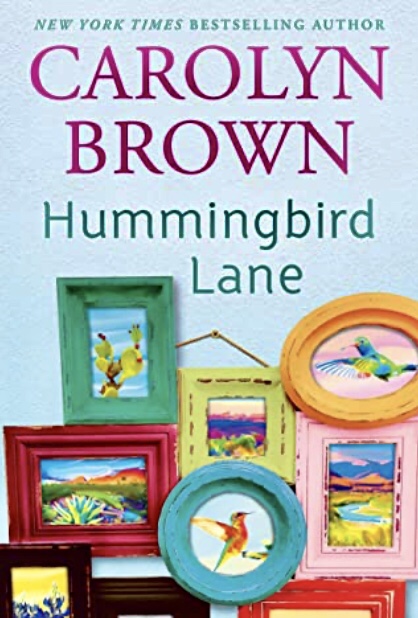




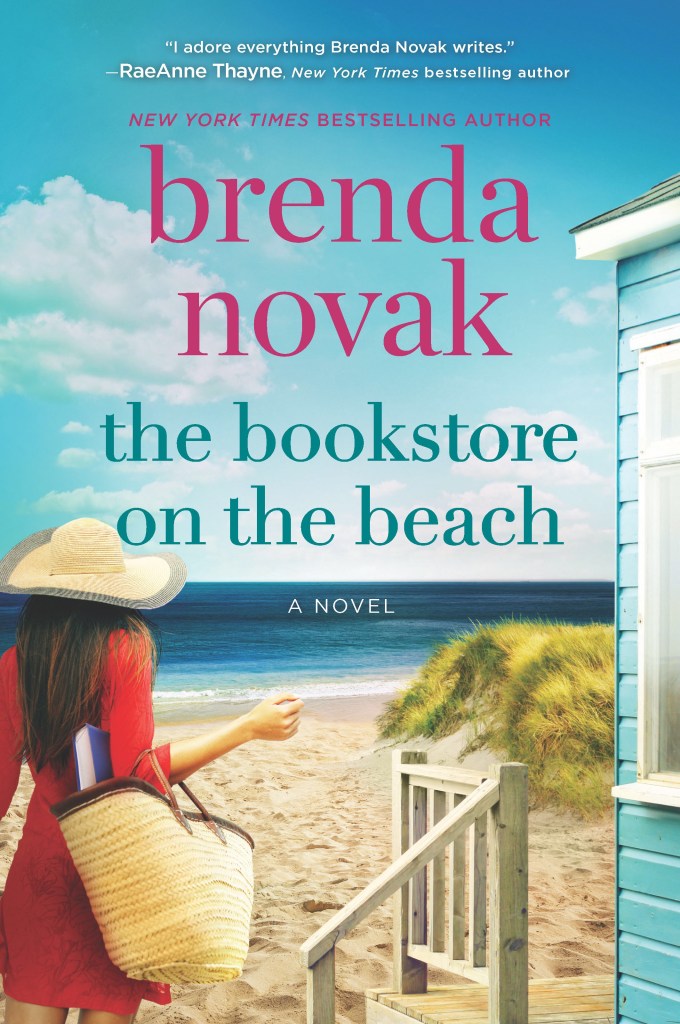


 Vickie's Book Nook and Meditation Corner