Review of LOCAL WOMAN MISSING by Mary Kubica

This was a well-written and extremely complex suspense thriller dealing with some very emotional issues, including child abduction, child abuse, relationship issues and, of course, secrets that kill. The time frame jumps sporadically from past to present and there are four narrators, including a missing child, a young child at home, a midwife named Meredith and her neighbor Kate. I was confused at first because of the complicated points of view and timelines, but I quickly got pulled into the story and ended up enjoying it immensely. In fact, I got so invested that it was hard to put the book down in the last few days of my reading it. The story is about a small town with two woman and a child suddenly missing. Supposedly a safe place, the town is no longer considered safe and there is a lot of speculation about what happened to Shelby Tebow, Meredith and six year old Delilah. There was a lot of backstory to this book, and since I don’t want to spoil it for anyone, I will just say that the background information is important to the understanding of the story, so I had to pay careful attention to it. I discovered the secrets and mysteries as I read as the clues were very nuanced and I was not able to figure things out. I will say that there were a lot of coincidences that weren’t quite believable, but they did not take away from my enjoyment of the story. At the end, I wanted more. I wanted to know more about the missing child, more about the neighbor, more about Meredith’s family and their future together. This was an engrossing book, but it did have some disturbing scenes in it that are not for the faint of heart. Fans of thrillers with some really intense scenes will enjoy this book.
Disclaimer
Disclosure of Material Connection: I received a complimentary copy of this book from the publisher via Netgalley. I was not required to write a positive review. The opinions expressed are my own. I am disclosing this in accordance with the Federal Trade Commission’s 16 CFR, Part 255, “Guides Concerning the Use of Testimonials and Endorsements in Advertising.”

This book was excellent for me, but I am a mature reader. The content was somewhat disturbing, especially the parts that dealt with child abuse and neglect. There was also a lesbian relationship as a central part of the story. So I would rate this book M for mature audiences.

Excerpt:

MEREDITH

11 YEARS BEFORE

March

The text comes from a number I don’t know. It’s a 630 area code. Local. I’m in the bathroom with Leo as he soaks in the tub. He has his bath toys lined up on the edge of it and they’re taking turns swan diving into the now-lukewarm water. It used to be hot, too hot for Leo to get into. But he’s been in there for thirty minutes now playing with his octopus, his whale, his fish. He’s having a ball.

Meanwhile I’ve lost track of time. I have a client in the early stages of labor. We’re texting. Her husband wants to take her to the hospital. She thinks it’s too soon. Her contractions are six and a half minutes apart. She’s absolutely correct. It’s too soon. The hospital would just send her home, which is frustrating, not to mention a huge inconvenience for women in labor. And anyway, why labor at the hospital when you can labor in the comfort of your own home? First-time fathers always get skittish. It does their wives no good. By the time I get to them, more times than not, the woman in labor is the more calm of the two. I have to focus my attention on pacifying a nervous husband. It’s not what they’re paying me for. 

I tell Leo one more minute until I shampoo his hair, and then fire off a quick text, suggesting my client have a snack to keep her energy up, herself nourished. I recommend a nap, if her body will let her. The night ahead will be long for all of us. Childbirth, especially when it comes to first-time moms, is a marathon, not a sprint. 

Josh is home. He’s in the kitchen cleaning up from dinner while Delilah plays. Delilah’s due up next in the tub. By the time I leave, the bedtime ritual will be done or nearly done. I feel good about that, hating the times I leave Josh alone with so much to do. 

I draw up my text and then hit Send. The reply is immediate, that all too familiar ping that comes to me at all hours of the day or night. 

I glance down at the phone in my hand, expecting it’s my client with some conditioned reply. Thx. 

Instead: I know what you did. I hope you die. 

Beside the text is a picture of a grayish skull with large, black eye sockets and teeth. The symbol of death. 

My muscles tense. My heart quickens. I feel thrown off. The small bathroom feels suddenly, overwhelmingly, oppressive. It’s steamy, moist, hot. I drop down to the toilet and have a seat on the lid. My pulse is loud, audible in my own ears. I stare at the words before me, wondering if I’ve misread. Certainly I’ve misread. Leo is asking, “Is it a minute, Mommy?” I hear his little voice, muff led by the ringing in my ears. But I’m so thrown by the cutthroat text that I can’t speak. 

I glance at the phone again. I haven’t misread. 

The text is not from my client in labor. It’s not from any client of mine whose name and number is stored in my phone. As far as I can tell, it’s not from anyone I know.

A wrong number, then, I think. Someone sent this to me by accident. It has to be. My first thought is to delete it, to pretend this never happened. To make it disappear. Out of sight, out of mind. 

But then I think of whoever sent it just sending it again or sending something worse. I can’t imagine anything worse. 

I decide to reply. I’m careful to keep it to the point, to not sound too judgy or fault-finding because maybe the intended recipient really did do something awful—stole money from a children’s cancer charity—and the text isn’t as egregious as it looks at first glance. 

I text: You have the wrong number. 

The response is quick. 

I hope you rot in hell, Meredith. 

The phone slips from my hand. I yelp. The phone lands on the navy blue bath mat, which absorbs the sound of its fall. 

Meredith. 

Whoever is sending these texts knows my name. The texts are meant for me. 

A second later Josh knocks on the bathroom door. I spring from the toilet seat, and stretch down for the phone. The phone has fallen facedown. I turn it over. The text is still there on the screen, staring back at me. 

Josh doesn’t wait to be let in. He opens the door and steps right inside. I slide the phone into the back pocket of my jeans before Josh has a chance to see. 

“Hey,” he says, “how about you save some water for the fish.” 

Leo complains to Josh that he is cold. “Well, let’s get you out of the bath,” Josh says, stretching down to help him out of the water. 

“I need to wash him still,” I admit. Before me, Leo’s teeth chatter. There are goose bumps on his arm that I hadn’t noticed before. He is cold, and I feel suddenly guilty, though it’s mired in confusion and fear. I hadn’t been paying any attention to Leo. There is bathwater spilled all over the floor, but his hair is still bone-dry. 

“You haven’t washed him?” Josh asks, and I know what he’s thinking: that in the time it took him to clear the kitchen table, wash pots and pans and wipe down the sinks, I did nothing. He isn’t angry or accusatory about it. Josh isn’t the type to get angry. 

“I have a client in labor,” I say by means of explanation. “She keeps texting,” I say, telling Josh that I was just about to wash Leo. I drop to my knees beside the tub. I reach for the shampoo. In the back pocket of my jeans, the phone again pings. This time, I ignore it. I don’t want Josh to know what’s happening, not until I get a handle on it for myself. 

Josh asks, “Aren’t you going to get that?” I say that it can wait. I focus on Leo, on scrubbing the shampoo onto his hair, but I’m anxious. I move too fast so that the shampoo suds get in his eye. I see it happening, but all I can think to do is wipe it from his forehead with my own soapy hands. It doesn’t help. It makes it worse. 

Leo complains. Leo isn’t much of a complainer. He’s an easygoing kid. “Ow,” is all that he says, his tiny wet hands going to his eyes, though shampoo in the eye burns like hell. 

“Does that sting, baby?” I ask, feeling contrite. But I’m bursting with nervous energy. There’s only one thought racing through my mind. I hope you rot in hell, Meredith. 

Who would have sent that, and why? Whoever it is knows me. They know my name. They’re mad at me for something I’ve done. Mad enough to wish me dead. I don’t know anyone like that. I can’t think of anything I’ve done to upset someone enough that they’d want me dead.

I grab the wet washcloth draped over the edge of the tub. I try handing it to Leo, so that he can press it to his own eyes. But my hands shake as I do. I wind up dropping the washcloth into the bath. The tepid water rises up and splashes him in the eyes. This time he cries. 

“Oh, buddy,” I say, “I’m so sorry, it slipped.” 

But as I try again to grab it from the water and hand it to him, I drop the washcloth for a second time. I leave it where it is, letting Leo fish it out of the water and wipe his eyes for himself. Meanwhile Josh stands two feet behind, watching. 

My phone pings again. Josh says, “Someone is really dying to talk to you.” 

Dying. It’s all that I hear. 

My back is to Josh, thank God. He can’t see the look on my face when he says it. 

“What’s that?” I ask. 

“Your client,” Josh says. I turn to him. He motions to my phone jutting out of my back pocket. “She really needs you. You should take it, Mer,” he says softly, accommodatingly, and only then do I think about my client in labor and feel guilty. What if it is her? What if her contractions are coming more quickly now and she does need me? 

Josh says, “I can finish up with Leo while you get ready to go,” and I acquiesce, because I need to get out of here. I need to know if the texts coming to my phone are from my client or if they’re coming from someone else. 

I rise up from the floor. I scoot past Josh in the door, brushing against him. His hand closes around my upper arm as I do, and he draws me in for a hug. “Everything okay?” he asks, and I say yes, fine, sounding too chipper even to my own ears. Everything is not okay. 

“I’m just thinking about my client,” I say. “She’s had a stillbirth before, at thirty-two weeks. She never thought she’d get this far. Can you imagine that? Losing a baby at thirty-two weeks?”

Josh says no. His eyes move to Leo and he looks saddened by it. I feel guilty for the lie. It’s not this client but another who lost a baby at thirty-two weeks. When she told me about it, I was completely torn up. It took everything in me not to cry as she described for me the moment the doctor told her her baby didn’t have a heartbeat. Labor was later induced, and she had to push her dead baby out with only her mother by her side. Her husband was deployed at the time. After, she was snowed under by guilt. Was it her fault the baby died? A thousand times I held her hand and told her no. I’m not sure she ever believed me. 

My lie has the desired effect. Josh stands down, and asks if I need help with anything before I leave. I say no, that I’m just going to change my clothes and go. 

I step out of the bathroom. In the bedroom, I close the door. I grab my scrub bottoms and a long-sleeved T-shirt from my drawer. I lay them on the bed, but before I get dressed, I pull my phone out of my pocket. I take a deep breath and hold it in, summoning the courage to look. I wonder what waits there. More nasty threats? My heart hammers inside me. My knees shake. 

I take a look. There are two messages waiting for me. 

The first: Water broke. Contractions 5 min apart. 

And then: Heading to hospital.—M. 

I release my pent-up breath. The texts are from my client’s husband, sent from her phone. My legs nearly give in relief, and I drop down to the edge of the bed, forcing myself to breathe. I inhale long and deep. I hold it in until my lungs become uncomfortable. When I breathe out, I try and force away the tension. 

But I can’t sit long because my client is advancing quickly. I need to go.

Excerpted from Local Woman Missing @ 2021 by Mary Kyrychenko, used with permission by Park Row Books.

About the Author:

Mary Kubica is the New York Times and USA Today bestselling author of six novels, including THE GOOD GIRL, PRETTY BABY, DON’T YOU CRY, EVERY LAST LIE, WHEN THE LIGHTS GO OUT, and THE OTHER MRS. A former high school history teacher, Mary holds a Bachelor of Arts degree from Miami University in Oxford, Ohio, in History and American Literature. She lives outside of Chicago with her husband and two children. Her last novel THE OTHER MRS. was an instant New York Times bestseller; is coming soon to Netflix; was a LibraryReads pick for February 2020; praised by the New York Times; and highly recommended by Entertainment Weekly, People, The Week, Marie Claire, Bustle, HelloGiggles, Goodreads, PopSugar, BookRiot, HuffingtonPost, First for Women, Woman’s World, and more. Mary’s novels have been translated into over thirty languages and have sold over two million copies worldwide. She’s been described as “a helluva storyteller,” (Kirkus Reviews) and “a writer of vice-like control,” (Chicago Tribune), and her novels have been praised as “hypnotic” (People) and “thrilling and illuminating” (Los Angeles Times).  LOCAL WOMAN MISSING is her seventh novel. 

Social Links:

Website: https://marykubica.com/ 

Facebook: https://www.facebook.com/MaryKubicaAuthor

Twitter: https://twitter.com/MaryKubica 

Instagram: https://www.instagram.com/marykubica 

Goodreads: https://www.goodreads.com/author/show/7392948.Mary_Kubica :

On sale now! Just follow these links:

Amazon: https://www.amazon.com/Local-Woman-Missing-Mary-Kubica/dp/0778389448/

Barnes & Noble: https://www.barnesandnoble.com/w/local-woman-missing-mary-kubica/1137387568  

Bookshop: https://bookshop.org/books/local-woman-missing/9780778389446 

IndieBound: https://www.indiebound.org/book/9780778389446 

Libro.fm: https://libro.fm/audiobooks/9781488211690-local-woman-missing 

Books-A-Million: https://www.booksamillion.com/p/Local-Woman-Missing/Mary-Kubica/9780778389446?id=8051055467945# 

Target: https://www.target.com/p/local-woman-missing-by-mary-kubica-hardcover/-/A-81225904 

Walmart: https://www.walmart.com/ip/Local-Woman-Missing-Original-ed-Hardcover-9780778389446/700252600 

Indigo: https://www.chapters.indigo.ca/en-ca/books/local-woman-missing-a-novel/9780778389446-item.html 

Kobo: https://www.kobo.com/us/en/ebook/local-woman-missing 

AppleBooks: https://books.apple.com/us/book/local-woman-missing/id1524947457 

Google Play: https://www.google.com/books/edition/Local_Woman_Missing/sKazzQEACAAJ?hl=en

Many thanks to Harlequin Trade Publishing for the opportunity to read and review this riveting and thought-provoking book!

Review of THE WOMAN WITH THE BLUE STAR by Pam Jenoff

Delighted to be a part of this blog tour!

This was a powerfully written and emotion-stirring novel about the horrors of war and the ability to survive. I will be honest and state from the beginning that this was a hard book for me to read because the author did such a fantastic job of painting the setting and describing the events of 1942 Poland in graphic detail. As I read, I found myself captured by the story and the characters, but I was biting my nails and crying as I read parts of the story of Sadie and Ella, two unlikely friends. Sadie is a young woman, eighteen years old, when the story begins and has been moved by the Nazis to the ghetto, along with her family. Before the Nazis can clear out the ghetto and move all of the Jews there to concentration camps, Sadie and her family escape to live under the city in the sewers. Dark, smelly and filled with rats, the sewer was described in excruciating and heartbreaking detail. One day, as Sadie looks up through the grate, she sees another young woman. Ella’s father went to war and never returned, so she is stuck living with her stepmother who seeks to gain favor with the Germans by inviting them to parties at her home. When Ella and Sadie spy each other through the grate, an unlikely friendship begins and the story really took off. I kept waiting for the two of them to be caught and dragged away to some Nazi place of torture. What happens is what makes the story, so I can’t say much about the events following their propitious meeting. I can say that this story wrapped itself around my head and my heart and made me think long and hard about how thankful I should be for my freedom and the things I take for granted. This book was thought-provoking and well written as well as obviously well researched. It is an extremely emotional tale of the atrocities committed by the Nazis, the desperation of those desiring to survive and the friendship and hope that took place during these horrific times. Fans of historical fiction will not want to miss this book!
Disclaimer
Disclosure of Material Connection: I received a complimentary copy of this book from the publisher via Netgalley. I was not required to write a positive review. The opinions expressed are my own. I am disclosing this in accordance with the Federal Trade Commission’s 16 CFR, Part 255, “Guides Concerning the Use of Testimonials and Endorsements in Advertising.”

Five big stars for historical accuracy in a mesmerizing book. Caution for YA Readers: the content can be somewhat disturbing in its realistic details.

Excerpt:

Sadie

Kraków, PolandMarch 1942

Everything changed the day they came for the children.

I was supposed to have been in the attic crawl space of the three-story building we shared with a dozen other families in the ghetto. Mama helped me hide there each morning before she set out to join the factory work detail, leaving me with a fresh bucket as a toilet and a stern admonishment not to leave. But I grew cold and restless alone in the tiny, frigid space where I couldn’t run or move or even stand straight. The minutes stretched silently, broken only by a scratching—unseen children, years younger than me, stowed on the other side of the wall. They were kept separate from one another without space to run and play. They sent each other messages by tapping and scratching, though, like a kind of improvised Morse code. Sometimes, in my boredom, I joined in, too.

“Freedom is where you find it,” my father often said when I complained. Papa had a way of seeing the world exactly as he wanted. “The greatest prison is in our mind.” It was easy for him to say. Though he manual ghetto labor was a far cry from his professional work as an accountant before the war, at least he was out and about each day, seeing other people. Not cooped up like me. I had scarcely left our apartment building since we were forced to move six months earlier from our apartment in the Jewish Quarter near the city center to the Podgórze neighborhood where the ghetto had been established on the southern bank of the river. I wanted a normal life, my life, free to run beyond the walls of the ghetto to all of the places I had once known and taken for granted. I imagined taking the tram to the shops on the Rynek or to the kino to see a film, exploring the ancient grassy mounds on the outskirts of the city. I wished that at least my best friend, Stefania, was one of the others hidden nearby. Instead, she lived in a separate apartment on the other side of the ghetto designated for the families of the Jewish police.

It wasn’t boredom or loneliness that had driven me from my hiding place this time, though, but hunger. I had always had a big appetite and this morning’s breakfast ration had been a half slice of bread, even less than usual. Mama had offered me her portion, but I knew she needed her strength for the long day ahead on the labor detail.

As the morning wore on in my hiding place, my empty belly had begun to ache. Visions pushed into my mind uninvited of the foods we ate before the war: rich mushroom soup and savory borscht, and pierogi, the plump, rich dumplings my grandmother used to make. By midmorning, I felt so weak from hunger that I had ventured out of my hiding place and down to the shared kitchen on the ground floor, which was really nothing more than a lone working stove burner and a sink that dripped tepid brown water. I didn’t go to take food—even if there had been any, I would never steal. Rather, I wanted to see if there were any crumbs left in the cupboard and to fill my stomach with a glass of water.

I stayed in the kitchen longer than I should, reading the dog-eared copy of the book I’d brought with me. The thing I detested most about my hiding place in the attic was the fact that it was too dark for reading. I had always loved to read and Papa had carried as many books as he could from our apartment to the ghetto, over the protests of my mother, who said we needed the space in our bags for clothes and food. It was my father who had nurtured my love of learning and encouraged my dream of studying medicine at Jagiellonian University before the German laws made that impossible, first by banning Jews and later by closing the university altogether. Even in the ghetto at the end of his long, hard days of labor, Papa loved to teach and discuss ideas with me. He had somehow found me a new book a few days earlier, too, The Count of Monte Cristo. But the hiding place in the attic was too dark for me to read and there was scarcely any time in the evening before curfew and lights-out. Just a bit longer, I told myself, turning the page in the kitchen. A few minutes wouldn’t matter at all.

I had just finished licking the dirty bread knife when I heard heavy tires screeching, followed by barking voices. I froze, nearly dropping my book. The SS and Gestapo were outside, flanked by the vile Jüdischer Ordnungsdienst, Jewish Ghetto Police, who did their bidding. It was an aktion, the sudden unannounced arrest of large groups of Jews to be taken from the ghetto to camps. The very reason I was meant to be hiding in the first place. I raced from the kitchen, across the hall and up the stairs. From below came a great crash as the front door to the apartment building splintered and the police burst through. There was no way I could make it back to the attic in time.

Instead, I raced to our third-floor apartment. My heart pounded as I looked around desperately, wishing for an armoire or other cabinet suitable for hiding in the tiny room, which was nearly bare except for a dresser and bed. There were other places, I knew, like the fake plaster wall one of the other families had constructed in the adjacent building not a week earlier. That was too far away now, impossible to reach. My eyes focused on the large steamer trunk stowed at the foot of my parents’ bed. Mama had shown me how to hide there once shortly after we first moved to the ghetto. We practiced it like a game, Mama opening the trunk so that I could climb in before she closed the lid.

The trunk was a terrible hiding place, exposed and in the middle of the room. But there was simply nowhere else. I had to try. I raced over to the bed and climbed into the trunk, then closed the lid with effort. I thanked heavens that I was tiny like Mama. I had always hated being so petite, which made me look a solid two years younger than I actually was. Now it seemed a blessing, as did the sad fact that the months of meager ghetto rations had made me thinner. I still fit in the trunk.

When we had rehearsed, we had envisioned Mama putting a blanket or some clothes over the top of the trunk. Of course, I couldn’t do that myself. So the trunk sat unmasked for anyone who walked into the room to see and open. I curled into a tiny ball and wrapped my arms around myself, feeling the white armband with the blue star on my sleeve that all Jews were required to wear.

There came a great crashing from the next building, the sound of plaster being hewn by a hammer or ax. The police had found the hiding place behind the wall, given away by the too-fresh paint. An unfamiliar cry rang out as a child was found and dragged from his hiding place. If I had gone there, I would have been caught as well.

Someone neared the door to the apartment and flung it open. My heart seized. I could hear breathing, feel eyes searching the room. I’m sorry, Mama, I thought, feeling her reproach for having left the attic. I braced myself for discovery. Would they go easier on me if I came out and gave myself up? The footsteps grew fainter as the German continued down the hall, stopping before each door, searching.

The war had come to Kraków one warm fall day two and a half years earlier when the air-raid sirens rang out for the first time and sent the playing children scurrying from the street. Life got hard before it got bad. Food disappeared and we waited in long lines for the most basic supplies. Once there was no bread for a whole week.

Then about a year ago, upon orders from the General Government, Jews teemed into Kraków by the thousands from the small towns and villages, dazed and carrying their belongings on their backs. At first I wondered how they would all find places to stay in Kazimierz, the already cramped Jewish Quarter of the city. But the new arrivals were forced to live by decree in a crowded section of the industrial Podgórze district on the far side of the river that had been cordoned off with a high wall. Mama worked with the Gmina, the local Jewish community organization, to help them resettle, and we often had friends of friends over for a meal when they first arrived, before they went to the ghetto for good. They told stories from their hometowns too awful to believe and Mama shooed me from the room so I would not hear.

Several months after the ghetto was created, we were ordered to move there as well. When Papa told me, I couldn’t believe it. We were not refugees, but residents of Kraków; we had lived in our apartment on Meiselsa Street my entire life. It was the perfect location: on the edge of the Jewish Quarter but easy walking distance to the sights and sounds of the city center and close enough to Papa’s office on Stradomska Street that he could come home for lunch. Our apartment was above an adjacent café where a pianist played every evening. Sometimes the music spilled over and Papa would whirl Mama around the kitchen to the faint strains. But according to the orders, Jews were Jews. One day. One suitcase each. And the world I had known my entire life disappeared forever.

I peered out of the thin slit opening of the trunk, trying to see across the tiny room I shared with my parents. We were lucky, I knew, to have a whole room to ourselves, a privilege we had been given because my father was a labor foreman. Others were forced to share an apartment, often two or three families together. Still, the space felt cramped compared to our real home. We were ever on top of one another, the sights and sounds and smells of daily living magnified.

“Kinder, raus!” the police called over and over again now as they patrolled the halls. Children, out. It was not the first time the Germans had come for children during the day, knowing that their parents would be at work.

But I was no longer a child. I was eighteen and might have joined the work details like others my age and some several years younger. I could see them lining up for roll call each morning before trudging to one of the factories. And I wanted to work, even though I could tell from the slow, painful way my father now walked, stooped like an old man, and how Mama’s hands were split and bleeding that it was hard and awful. Work meant a chance to get out and see and talk to people. My hiding was a subject of much debate between my parents. Papa thought I should work. Labor cards were highly prized in the ghetto. Workers were valued and less likely to be deported to one of the camps. But Mama, who seldom fought my father on anything, had forbidden it. “She doesn’t look her age. The work is too hard. She is safest out of sight.” I wondered as I hid now, about to be discovered at any second, if she would still think she was right.

The building finally went silent, the last of the awful footsteps receding. Still I didn’t move. That was one of the ways they trapped people who were hiding, by pretending to go away and lying in wait when they came out. I remained motionless, not daring to leave my hiding place. My limbs ached, then went numb. I had no idea how much time had passed. Through the slit, I could see that the room had grown dimmer, as if the sun had lowered a bit.

Sometime later, there were footsteps again, this time a shuffling sound as the laborers trudged back silent and exhausted from their day. I tried to uncurl myself from the trunk. But my muscles were stiff and sore and my movements slow. Before I could get out, the door to our apartment flung open and someone ran into the room with steps light and fluttering. “Sadie!” It was Mama, sounding hysterical.

“Jestem tutaj,” I called. I am here. Now that she was home, she could help me untangle myself and get out. But my voice was muffled by the trunk. When I tried to undo the latch, it stuck.

Mama raced from the room back into the corridor. I could hear her open the door to the attic, then run up the stairs, still searching for me. “Sadie!” she called. Then, “My child, my child,” over and over again as she searched but did not find me, her voice rising to a shriek. She thought I was gone.

“Mama!” I yelled. She was too far away to hear me, though, and her own cries were too loud. Desperately, I struggled once more to free myself from the trunk without success. Mama raced back into the room, still wailing. I heard the scraping sound of a window opening and felt a whoosh of cold air. At last I threw myself against the lid of the trunk, slamming my shoulder so hard it throbbed. The latch sprang open.

I broke free and stood up quickly. “Mama?” She was standing in the oddest position, with one foot on the window ledge, her willowy frame silhouetted against the frigid twilight sky. “What are you doing?” For a second, I thought she was looking for me outside. But her face was twisted with grief and pain. I knew then why Mama was on the window ledge. She assumed I had been taken along with the other children. And she didn’t want to live. If I hadn’t freed myself from the trunk in time, Mama would have jumped. I was her only child, her whole world. She was prepared to kill herself before she would go on without me.

A chill ran through me as I sprinted toward her. “I’m here, I’m here.” She wobbled unsteadily on the window ledge and I grabbed her arm to stop her from falling. Remorse ripped through me. I always wanted to please her, to bring that hard-won smile to her beautiful face. Now I had caused her so much pain she’d almost done the unthinkable.

“I was so worried,” she said after I’d helped her down and closed the window. As if that explained everything. “You weren’t in the attic.”

“But, Mama, I hid where you told me to.” I gestured to the trunk. “The other place, remember? Why didn’t you look for me there?”

Mama looked puzzled. “I didn’t think you would fit anymore.” There was a pause and then we both began laughing, the sound scratchy and out of place in the pitiful room. For a few seconds, it was like we were back in our old apartment on Meiselsa Street and none of this had happened at all. If we could still laugh, surely things would be all right. I clung to this last improbable thought like a life preserver at sea.

But a cry echoed through the building, then another, silencing our laughter. It was the mothers of the other children who had been taken by the police. There came a thud outside. I started for the window, but my mother blocked me. “Look away,” she ordered. It was too late. I glimpsed Helga Kolberg, who lived down the hall, lying motionless in the coal-tinged snow on the pavement below, her limbs cast at odd angles and skirt splayed around her like a fan. She had realized her children were gone and, like Mama, she didn’t want to live without them. I wondered whether jumping was a shared instinct, or if they had discussed it, a kind of suicide pact in case their worst nightmares came true.

My father raced into the room then. Neither Mama nor I said a word, but I could tell from his unusually grim expression that he already knew about the aktion and what had happened to the other families. He simply walked over and wrapped his enormous arms around both of us, hugging us tighter than usual.

As we sat, silent and still, I looked up at my parents. Mama was a striking beauty—thin and graceful, with white-blond hair the color of a Nordic princess’. She looked nothing like the other Jewish women and I had heard whispers more than once that she didn’t come from here. She might have walked away from the ghetto and lived as a non-Jew if it wasn’t for us. But I was built like Papa, with the dark, curly hair and olive skin that made the fact that we were Jews undeniable. My father looked like the laborer the Germans had made him in the ghetto, broad-shouldered and ready to lift great pipes or slabs of concrete. In fact, he was an accountant—or had been until it became illegal for his firm to employ him anymore. I always wanted to please Mama, but it was Papa who was my ally, keeper of secrets and weaver of dreams, who stayed up too late whispering secrets in the dark and had roamed the city with me, hunting for treasure. I moved closer now, trying to lose myself in the safety of his embrace.

Still, Papa’s arms could offer little shelter from the fact that everything was changing. The ghetto, despite its awful conditions, had once seemed relatively safe. We were living among Jews and the Germans had even appointed a Jewish council, the Judenrat, to run our daily affairs. Perhaps if we laid low and did as we were told, Papa said more than once, the Germans would leave us alone inside these walls until the war was over. That had been the hope. But after today, I wasn’t so sure. I looked around the apartment, seized with equal parts disgust and fear. In the beginning, I had not wanted to be here; now I was terrified we would be forced to leave.

“We have to do something,” Mama burst out, her voice a pitch higher than usual as it echoed my unspoken thoughts.

“I’ll take her tomorrow and register her for a work permit,” Papa said. This time Mama did not argue. Before the war, being a child had been a good thing. But now being useful and able to work was the only thing that might save us.

Mama was talking about more than a work visa, though. “They are going to come again and next time we won’t be so lucky.” She did not bother to hold back her words for my benefit now. I nodded in silent agreement. Things were changing, a voice inside me said. We could not stay here forever.

“It will be okay, kochana,” Papa soothed. How could he possibly say that? But Mama laid her head on his shoulder, seeming to trust him as she always had. I wanted to believe it, too. “I will think of something. At least,” Papa added as we huddled close, “we are all still together.” The words echoed through the room, equal parts promise and prayer.

Excerpted from The Woman With the Blue Star @ 2021 by Pam Jenoff, used with permission by Park Row Books.

About the Author:

Pam Jenoff is the author of several books of historical fiction, including the NYT bestseller The Orphan’s Tale. She holds a degree in international affairs from George Washington University and a degree in history from Cambridge, and she received her JD from UPenn. Her novels are inspired by her experiences working at the Pentagon and as a diplomat for the State Department handling Holocaust issues in Poland. She lives with her husband and 3 children near Philadelphia, where she teaches law.

Social Links:

Website: https://www.pamjenoff.com/ 

Facebook: https://www.facebook.com/PamJenoffauthor/ 

Twitter: https://twitter.com/PamJenoff 

Instagram: https://www.instagram.com/pamjenoff/ 

Goodreads: https://www.goodreads.com/author/show/213562.Pam_Jenoff 

Mailing List: https://pamjenoff.com/mailing-list/

Purchase Links:

Amazon: https://www.amazon.com/Woman-Blue-Star-Novel/dp/0778389383/

Barnes & Noble: https://www.barnesandnoble.com/w/the-woman-with-the-blue-star-pam-jenoff/1137387567 

Bookshop: https://bookshop.org/books/the-woman-with-the-blue-star-9780778311546/9780778389385 

IndieBound: https://www.indiebound.org/book/9780778389385 

Libro.fm: https://libro.fm/audiobooks/9781488211706-the-woman-with-the-blue-star?bookstore=betweenthecovers 

Books-A-Million: https://www.booksamillion.com/p/Woman-Blue-Star/Pam-Jenoff/9780778389385?id=8140224153967 

Target: https://www.target.com/p/the-woman-with-the-blue-star-by-pam-jenoff-paperback/-/A-81225916 

Walmart: https://www.walmart.com/ip/The-Woman-with-the-Blue-Star-Original-Edition-Paperback-9780778389385/304633554 

Indigo: https://www.chapters.indigo.ca/en-ca/books/the-woman-with-the-blue/9780778389385-item.html 

Kobo: https://www.kobo.com/us/en/ebook/the-woman-with-the-blue-star 

AppleBooks: https://books.apple.com/us/book/the-woman-with-the-blue-star/id1524947358 

Google Play: https://play.google.com/store/books/details/The_Woman_with_the_Blue_Star_A_Novel?id=De_yDwAAQBAJ&hl=en&gl=US

Captivating, horrifying and spellbinding story. Thanks to #Park Row Books for the ARC to read and review. Buy it today wherever books are sold!

Review of NEVER MISS by Melissa Koslin

This book was good romantic suspense, with the emphasis on suspense at the beginning. The story is about Kadance Tolle, a former CIA sniper who is being pursued by assassins herself and ends up saving the life of geeky Lyndon Vaile, a researcher with three doctorates. Lyndon’s life is in danger from someone called the Mastermind who is pursuing him for his knowledge of Ebola. Once she saves his life, Kadance seems to become his new rear guard, whether he wants one or not and follows him from place to place as he tries to find out more about a plot to use a bio-weapon in the U.S. capital. The entire plot was other-worldly to me because many parts of it were far-fetched. The fact that a scientist is being targeted by criminals was believable, but there were many unbelievable elements that made it hard for me to really like the storyline. That being said, the book was a good one, fast-paced with short chapters. I was definitely disappointed with the lack of a faith element. Neither Lyndon nor Kadance state their beliefs in God, nor do they seem to depend on Him much for protection. I am accustomed to prayers or appeals to God in the Christian fiction that I read and this just was not there. There are even some aspects that seemed non-Christian, like Lyndon cursing for no apparent reason when he is in a thinking trance. The words are not there, but the book says he cursed, so it is left up to the reader’s imagination. I just didn’t like that in Christian fiction. Also, the simmering attraction between the two was a little heated at times, more than what I am accustomed to in Christian fiction. Since there was no real detail about the faith of the two main characters, I could have read this book from a different publisher and not known that it is supposed to be Christian fiction. The good news is that most of it is a clean read, intense at times, sometimes intriguing. At times, it was terrifying, like I was on a roller coaster hurtling down the slope and then I was going uphill again and all was relatively calm for a few pages. The ending was not at all satisfying since the book just seemed to rush to a conclusion after building up the suspense. If I had to rate this book in the Christian category, I would give it a D or even an F. For romance, a C and for suspense a B. So, although this book did not touch me in all of the right places for me to want to pick it up and read it again, it was basically good entertainment, but not a book that I can highly recommend. I must add that my favorite character was Mac the Maine Coon Cat who was intuitive, smart and just plain fun!
Disclaimer
Disclosure of Material Connection: I received a complimentary copy of this book from Revell. I was not required to write a positive review. The opinions expressed are my own. I am disclosing this in accordance with the Federal Trade Commission’s 16 CFR, Part 255, “Guides Concerning the Use of Testimonials and Endorsements in Advertising.”

This is mostly a clean Christian fiction but there is no mention of the faith of the main characters.
Photo and information from the author’s website at http://www.melissakoslin.com

About Melissa Koslin

Melissa Koslin is a fourth-degree black belt in and certified instructor of Songahm Taekwondo. In her day job as a commercial property manager, she secretly notes personal quirks and funny situations, ready to tweak them into colorful additions for her books. She and Corey, her husband of twenty years, live in Florida, where they do their best not to melt in the sun. Bio from the author’s Amazon web page

Available for purchase now. Purchase Links:

Indiebound

Google Play Store

Books-a-Million

Christian Book

Powells

Barnes and Noble

Amazon

Many thanks to Revell for giving me the opportunity to read and review this book.

Review of CONFESSIONS FROM THE QUILTING CIRCLE by Maisey Yates

This was certainly a multi-layered book in which each character had her own story and then the stories gradually meshed together. It was the story of Mary, a mom who doesn’t feel that she has a close relationship with her own daughters and knows that she feels abandoned by her own mother. It is also the story of each of her daughters: Avery, a proud stay-at-home-mom; Hannah, an accomplished violinist on break from the Boston Symphony; and Lark, an artist with a real spark of creativity. Each girl and her mother has a secret that is the central focus of the story, unraveling the secrets as they make a quilt together from the scraps that Mary’s mom left behind. Some of the story was heartbreaking to me because of my own past experiences. Other parts were interesting but not in a personal way. I think this story will appeal of all because of its characters that are so varied and yet so much alike in the way that a family is. I like the saying that kept getting repeated, “You can never go so far that you can’t go home again.” This was a powerful theme that lent itself to the focus of self-discovery, revelations and forgiveness. I loved the way the author crafted the story around sewing a quilt, with its many pieces that are totally different. I especially liked the slow reveals of what was in each ladies’ heart. The characters and theme made this story and I highly recommend it to those looking for a good contemporary fiction or romance. Yes, there is romance, but it is not the main idea of the book. The real theme is discovering each other and accepting one’s past. Amazing book with so many life lessons! Deep and yet so simple…loved it!
Disclaimer
Disclosure of Material Connection: I received a complimentary copy of this book from the publisher via Netgalley. I was not required to write a positive review. The opinions expressed are my own. I am disclosing this in accordance with the Federal Trade Commission’s 16 CFR, Part 255, “Guides Concerning the Use of Testimonials and Endorsements in Advertising.”

I would rate this book PG because of content.
Author Bio: New York Times Bestselling author Maisey Yates lives in rural Oregon with her three children and her husband, whose chiseled jaw and arresting features continue to make her swoon. She feels the epic trek she takes several times a day from her office to her coffee maker is a true example of her pioneer spirit.

Social Links:

Author Website

Twitter: @maiseyyates

Facebook:@MaiseyYates.Author 

Instagram: @maiseyyates

Goodreads

Purchase Links:

Harlequin 

Indiebound

Amazon

Barnes & Noble 

Books-A-Million

Walmart

Google

iBooks

Kobo

Excerpt:

1

March 4th, 1944

The dress is perfect. Candlelight satin and antique lace. I can’t wait for you to see it. I can’t wait to walk down the aisle toward you. If only we could set a date. If only we had some idea of when the war will be over.

Love, Dot

Present day—Lark

Unfinished.

The word whispered through the room like a ghost. Over the faded, floral wallpaper, down to the scarred wooden floor. And to the precariously stacked boxes and bins of fabrics, yarn skeins, canvases and other artistic miscellany.

Lark Ashwood had to wonder if her grandmother had left them this way on purpose. Unfinished business here on earth, in the form of quilts, sweaters and paintings, to keep her spirit hanging around after she was gone.

It would be like her. Adeline Dowell did everything with just a little extra.

From her glossy red hair—which stayed that color till the day she died—to her matching cherry glasses and lipstick. She always had an armful of bangles, a beer in her hand and an ashtray full of cigarettes. She never smelled like smoke. She smelled like spearmint gum, Aqua Net and Avon perfume.

She had taught Lark that it was okay to be a little bit of extra.

A smile curved Lark’s lips as she looked around the attic space again. “Oh, Gram…this is really a mess.”

She had the sense that was intentional too. In death, as in life, her grandmother wouldn’t simply fade away.

Neat attics, well-ordered affairs and pre-death estate sales designed to decrease the clutter a family would have to go through later were for other women. Quieter women who didn’t want to be a bother.

Adeline Dowell lived to be a bother. To expand to fill a space, not shrinking down to accommodate anyone.

Lark might not consistently achieve the level of excess Gram had, but she considered it a goal.

“Lark? Are you up there?”

She heard her mom’s voice carrying up the staircase. “Yes!” She shouted back down. “I’m…trying to make sense of this.”

She heard footsteps behind her and saw her mom standing there, gray hair neat, arms folded in. “You don’t have to. We can get someone to come in and sort it out.” 

“And what? Take it all to a thrift store?” Lark asked.

Her mom’s expression shifted slightly, just enough to convey about six emotions with no wasted effort. Emotional economy was Mary Ashwood’s forte. As contained and practical as Addie had been excessive. “Honey, I think most of this would be bound for the dump.”

“Mom, this is great stuff.”

“I don’t have room in my house for sentiment.”

“It’s not about sentiment. It’s usable stuff.”

“I’m not artsy, you know that. I don’t really…get all this.” The unspoken words in the air settled over Lark like a cloud.

Mary wasn’t artsy because her mother hadn’t been around to teach her to sew. To knit. To paint. To quilt.

Addie had taught her granddaughters. Not her own daughter.

She’d breezed on back into town in a candy apple Corvette when Lark’s oldest sister, Avery, was born, after spending Mary’s entire childhood off on some adventure or another, while Lark’s grandfather had done the raising of the kids.

Grandkids had settled her. And Mary had never withheld her children from Adeline. Whatever Mary thought about her mom was difficult to say. But then, Lark could never really read her mom’s emotions. When she’d been a kid, she hadn’t noticed that. Lark had gone around feeling whatever she did and assuming everyone was tracking right along with her because she’d been an innately self focused kid. Or maybe that was just kids.

Either way, back then badgering her mom into tea parties and talking her ear off without noticing Mary didn’t do much of her own talking had been easy.

It was only when she’d had big things to share with her mom that she’d realized…she couldn’t.

“It’s easy, Mom,” Lark said. “I’ll teach you. No one is asking you to make a living with art, art can be about enjoying the process.”

“I don’t enjoy doing things I’m bad at.”

“Well I don’t want Gram’s stuff going to a thrift store, okay?”

Another shift in Mary’s expression. A single crease on one side of her mouth conveying irritation, reluctance and exhaustion. But when she spoke she was measured. “If that’s what you want. This is as much yours as mine.”

It was a four-way split. The Dowell House and all its contents, and The Miner’s House, formerly her grandmother’s candy shop, to Mary Ashwood, and her three daughters. They’d discovered that at the will reading two months earlier.

It hadn’t caused any issues in the family. They just weren’t like that.

Lark’s uncle Bill had just shaken his head. “She feels guilty.”

And that had been the end of any discussion, before any had really started. They were all like their father that way. Quiet. Reserved. Opinionated and expert at conveying it without saying much.

Big loud shouting matches didn’t have a place in the Dowell family.

But Addie had been there for her boys. They were quite a bit older than Lark’s mother. She’d left when the oldest had been eighteen. The youngest boy sixteen.

Mary had been four.

Lark knew her mom felt more at home in the middle of a group of men than she did with women. She’d been raised in a house of men. With burned dinners and repressed emotions.

Lark had always felt like her mother had never really known what to make of the overwhelmingly female household she’d ended up with.

“It’s what I want. When is Hannah getting in tonight?” 

Hannah, the middle child, had moved to Boston right after college, getting a position in the Boston Symphony Orchestra. She had the summer off of concerts and had decided to come to Bear Creek to finalize the plans for their inherited properties before going back home.

Once Hannah had found out when she could get time away from the symphony, Lark had set her own plans for moving into motion. She wanted to be here the whole time Hannah was here, since for Hannah, this wouldn’t be permanent.

But Lark wasn’t going back home. If her family agreed to her plan, she was staying here.

Which was not something she’d ever imagined she’d do.

Lark had gone to college across the country, in New York, at eighteen and had spent years living everywhere but here. Finding new versions of herself in new towns, new cities, whenever the urge took her.

Unfinished.

“Sometime around five-ish? She said she’d get a car out here from the airport. I reminded her that isn’t the easiest thing to do in this part of the world. She said something about it being in apps now. I didn’t laugh at her.”

Lark laughed, though. “She can rent a car.”

Lark hadn’t lived in Bear Creek since she was eighteen, but she hadn’t been under the impression there was a surplus of ride services around the small, rural community. If you were flying to get to Bear Creek, you had to fly into Medford, which was about eighteen miles from the smaller town. Even if you could find a car, she doubted the driver would want to haul anyone out of town.

But her sister wouldn’t be told anything. Hannah made her own way, something Lark could relate to. But while she imagined herself drifting along like a tumbleweed, she imagined Hannah slicing through the water like a shark. With intent, purpose, and no small amount of sharpness.

“Maybe I should arrange something.”

“Mom. She’s a professional symphony musician who’s been living on her own for fourteen years. I’m pretty sure she can cope.”

“Isn’t the point of coming home not having to cope for a while? Shouldn’t your mom handle things?” Mary was a doer. She had never been the one to sit and chat. She’d loved for Lark to come out to the garden with her and work alongside her in the flower beds, or bake together. “You’re not in New Mexico anymore. I can make you cookies without worrying they’ll get eaten by rats in the mail.”

Lark snorted. “I don’t think there are rats in the mail.”

“It doesn’t have to be real for me to worry about it.”

And there was something Lark had inherited directly from her mother. “That’s true.”

That and her love of chocolate chip cookies, which her mom made the very best. She could remember long afternoons at home with her mom when she’d been little, and her sisters had been in school. They’d made cookies and had iced tea, just the two of them.

Cooking had been a self-taught skill her mother had always been proud of. Her recipes were hers. And after growing up eating “chicken with blood” and beanie weenies cooked by her dad, she’d been pretty determined her kids would eat better than that.

Something Lark had been grateful for.

And Mom hadn’t minded if she’d turned the music up loud and danced in some “dress up clothes”—an oversized prom dress from the ’80s and a pair of high heels that were far too big, purchased from a thrift store. Which Hannah and Avery both declared “annoying” when they were home. 

Her mom hadn’t understood her, Lark knew that. But Lark had felt close to her back then in spite of it.

The sound of the door opening and closing came from downstairs. “Homework is done, dinner is in the Crock-Pot. I think even David can manage that.”

The sound of her oldest sister Avery’s voice was clear, even from a distance. Lark owed that to Avery’s years of motherhood, coupled with the fact that she—by choice—fulfilled the role of parent liaison at her kids’ exclusive private school, and often wrangled children in large groups. Again, by choice.

Lark looked around the room one last time and walked over to the stack of crafts. There was an old journal on top of several boxes that look like they might be overflowing with fabric, along with some old Christmas tree ornaments, and a sewing kit. She grabbed hold of them all before walking to the stairs, turning the ornaments over and letting the silver stars catch the light that filtered in through the stained glass window.

Her mother was already ahead of her, halfway down the stairs by the time Lark got to the top of them. She hadn’t seen Avery yet since she’d arrived. She loved her older sister. She loved her niece and nephew. She liked her brother-in-law, who did his best not to be dismissive of the fact that she made a living drawing pictures. Okay, he kind of annoyed her. But still, he was fine. Just… A doctor. A surgeon, in fact, and bearing all of the arrogance that stereotypically implied.

One of the saddest things about living away for as long as she had was that she’d missed her niece’s and nephew’s childhoods. She saw them at least once a year, but it never felt like enough. And now they were teenagers, and a lot less cute.

And then there was Avery, who had always been somewhat untouchable. Four years older than Lark, Avery was a classic oldest child. A people pleasing perfectionist. She was organized and she was always neat and orderly.  And even though the gap between thirty-four and thirty-eight was a lot narrower than twelve and sixteen, sometimes Lark still felt like the gawky adolescent to Avery’s sweet sixteen.

But maybe if they shared in a little bit of each other’s day-to-day it would close some of that gap she felt between them.

Excerpted from Confessions From the Quilting Circle by Maisey Yates, Copyright © 2021 by Maisey Yates. Published by HQN Books.
I was delighted to be a part of the Summer Blog Tour for Women’s Fiction!

I hope that you enjoyed my review and that you will buy this amazing book! Many thanks to Harlequin for extending to me the opportunity to read and review this novel with so many life lessons in it. Enjoy!

Review of POWER PLAY by Rachel Dylan

With strong characterization and a fast-paced plot, this conclusion to the Capital Intrigue series is a definite must-read. State Department attorney Vivian Steele gets inadvertently caught up in government schemes when she witnesses the deaths of two ambassadors at a state dinner. The Egyptian ambassador’s death appears to be a plot against his government and somehow Viv is targeted afterwards because of her prior dealings with that government. Because she becomes a target, she is assigned security in the form of Jacob Cruz, a former SEAL who is determined that no one else will die on his watch. The American ambassador who died, Penelope King, has an entire backstory that is intriguing and adds to the story. Her death is being investigated by Delaney, an FBI agent extraordinarily well-suited for her position. Delaney is mentoring Weston and the two of them together make a formidable team. This second plot had a lot of twists and turns as Delaney follows the clues and finds the killer. Delaney’s investigation was a cerebral one for the most part. The first plot, involving Viv, had a lot more action in it, with bad guys targeting Vivian and some “bite your nails” moments as she narrowly escapes death herself. There is violence depicted in the book, but it is not graphically described, so the novel is a clean read. I was sorry to see the series end because I have befriended the well-developed characters. I did especially enjoy the epilogue that was like a curtain call for all of the characters from this book and the previous ones. This book can be read as a standalone, but I recommend reading the entire series because each book is a fascinating look at investigations and the inner workings of our national government. Fiction, of course!
Disclaimer
Disclosure of Material Connection: I received a complimentary copy of this book from the author via Netgalley. I was not required to write a positive review. The opinions expressed are my own. I am disclosing this in accordance with the Federal Trade Commission’s 16 CFR, Part 255, “Guides Concerning the Use of Testimonials and Endorsements in Advertising.”

A clean Christian fiction with some intense scenes. Rated PG.
Photo and author info from author’s website at http://www.racheldylan.com

This book is published by Bethany House and will be released on June 1, 2021. Pre-orders are available now. Purchase Links:

Baker Book House

Books-a-Million

Indiebound

Google Play Store

Powells

Christian Book

Amazon

Barnes and Noble

This edge-of-your-seat suspense/thriller will entertain you for hours and give you insight into the power players” of the U.S.A. I hope that you will buy it today!

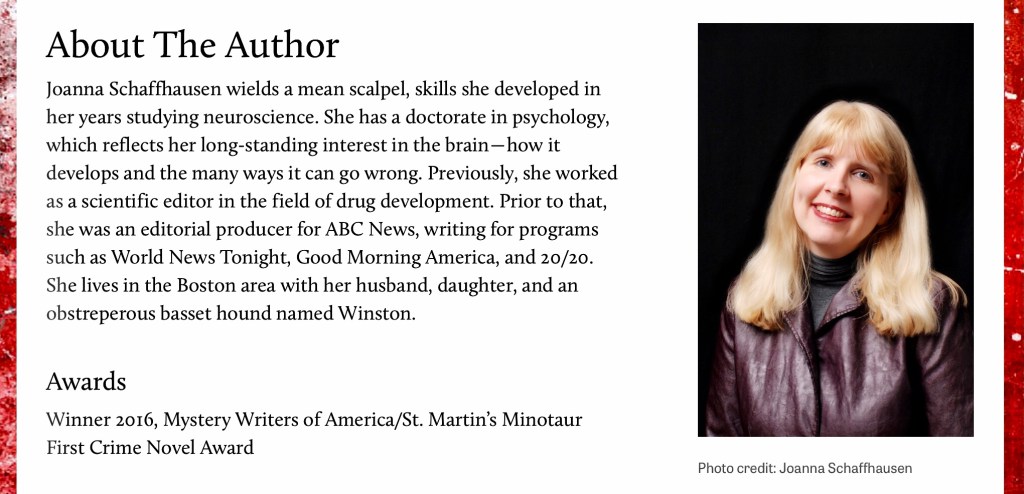
Review of GONE FOR GOOD by Joanna Schaffhausen

I was so excited to see that Joanna Schaffhausen has a new series and that I got to read and review the first one for Netgalley. Detective Annalisa Vega is a complex character with a sad and intense past, including a father who was also a policeman. Her new case is to find the Lovelorn Killer, a serial killer who has been active for two decades, long enough for her father to have tried to catch him before the task fell to her. Her partner Nick is also her ex-husband the rapport between the two was humorous and rare. They actually performed as if they were still friends! There is family drama thrown into the mix of the killer who has now killed seven victims. He is currently trying to catch Annalisa alone so that he can make her another victim, but her partner and her friends are not going to let that happen. The story moves along at a fast pace, with plenty of action and twists along the way. I certainly did not guess the killer’s identity, even with the multiple clues that the author left on the trail. Schaffhausen is an absolute master of weaving an intricate tale with hidden clues and likable characters and this one was no exception. In fact, it was so good that when I got to the end, I immediately wanted to know how long I have to wait until book two of the series is released. Annalisa is a sympathetic character who understands people and she knows that we will not want to wait long to see her again! Fans of mystery/suspense/police procedural should not pass up a chance to read this one!
Disclaimer
Disclosure of Material Connection: I received a complimentary copy of this book from the publisher via Netgalley. I was not required to write a positive review. The opinions expressed are my own. I am disclosing this in accordance with the Federal Trade Commission’s 16 CFR, Part 255, “Guides Concerning the Use of Testimonials and Endorsements in Advertising.”

Descriptive violence and language, so I would rate this for mature audiences.
Photo and author info from the author’s website at http://www.joannaschaffhausen.com

Coming on August 10, 2021. Purchase Links:

Books -a-Million

Powells

Google Play Store

Barnes and Noble

Amazon

Many thanks to St. Martin’s Press for the ARC to read and review! Fantastic book and a great start to a new series!

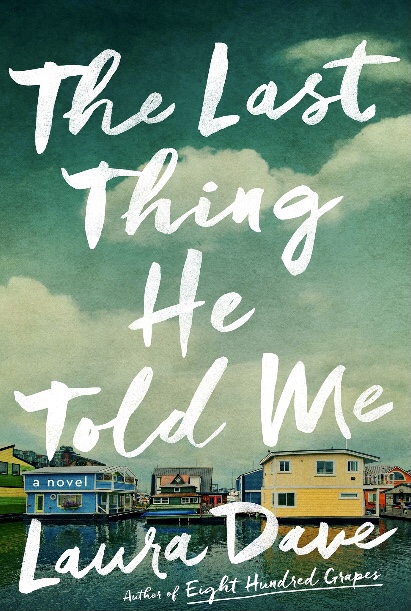
Review of THE LAST THING HE TOLD ME by Laura Dave

This was a totally engrossing domestic suspense story of a stepmother named Hannah and her stepdaughter Bailey. Hannah has married Owen Michaels, Bailey’s father, and is seemingly living an idyllic life on a boat docked in Sausalito when one day Owen disappears. Like, poof! Owen’s boss at his tech company is arrested and Hannah is totally perplexed when her numerous calls to Owen’s phone go unanswered. She and Bailey set out to discover what happened to Owen and in their trip down the rabbit hole of secrets and lies, they slowly discover a relationship with each other. With lots of twists and turns, this was a book that was hard to put down and completely absorbing. The characters are well-developed and realistic, with Bailey’s character being one of a spoiled “daddy’s girl” who has to wake up to a new reality. Hannah is inventive in her quest to find out what happened to Owen and why he would leave his beloved daughter behind. Bailey seems to hold a lot of secrets that she doesn’t know she holds and it is up to Hannah to tease them out. This entire book was like being drawn further and further into a spider’s web and not knowing where I would end up. The plot was intricately and delicately woven around the non-relationship between Hannah and Bailey and the lies that Owen told each of them. I really enjoyed how the author depicted the growing dependency and relationship between the two and how Bailey’s view of her stepmother increasingly became one of trust instead of total resentment. The characters made this story, and the plot wasn’t far behind. Loved it! Fans of domestic suspense will not want to miss this one that will have you on the edge of your seat waiting for the next secret to be revealed.
Disclaimer
Disclosure of Material Connection: I received a complimentary copy of this book from the publisher via Netgalley. I was not required to write a positive review. The opinions expressed are my own. I am disclosing this in accordance with the Federal Trade Commission’s 16 CFR, Part 255, “Guides Concerning the Use of Testimonials and Endorsements in Advertising.”

Totally captivating story rated a PG-13 because of content
Photo and author info from her website at http://www.lauradave.com

Available TOMORROW, May 4, 2021! Purchase Links:

Google Play

Indiebound

Books-a-Million

Powells

Barnes and Noble

Amazon

Many thanks to Simon and Schuster Publishing for the ARC to read and review. This was a completely “take me away from reality” read and I thoroughly enjoyed it!

Review of THE NEWCOMER by Mary Kay Andrews

This book is part mystery, part romance and all about family. When Letty is awakened in the parking lot of The Murmuring Surf motel in Florida, she had no idea that policeman Joe who awakened her would play such a big part in her life. Letty was running from NYC and had her niece Maya with her, a precocious four year old who wants her mommy. Unfortunately, Letty had discovered her sister Tanya dead on the floor of her NY condo and had fled with Maya, escaping the possible murderer. The story has some parts that are too coincidental, but all of the pieces flowed together well and made the story an awesome read. The characters were fun to read about, especially the snow birds who inhabited The Murmuring Surf and made constant demands on Ava, the owner and Joe’s mom. Ava was a determined owner of a classic motel, setting high standards for her tenants and providing all kinds of opportunities fo them to socialize. Her acceptance of Letty without asking questions made the story. There were too many minor characters to name, but one of the most memorable is Vicki Hill, the FBI agent who reminded me of Stephanie Plum from the Evanovich series. She was bold, brash and reckless, but she also got the job done. The plot was an enjoyable read with some unexpected twists and a great ending! Fans of romance with mystery will love this book as much as I did.
Disclaimer
Disclosure of Material Connection: I received a complimentary copy of this book from the publisher via Netgalley. I was not required to write a positive review. The opinions expressed are my own. I am disclosing this in accordance with the Federal Trade Commission’s 16 CFR, Part 255, “Guides Concerning the Use of Testimonials and Endorsements in Advertising.”

Some mature content, so I would rate it PG-13
Photo from the author’s website at http://www.marykayandrews.com

Author Bio: (also from website)

MARY KAY ANDREWS is the New York Times bestselling author of 27 novels (including Hello, SummerSunset Beach; The High Tide Club; The WeekendersBeach Town; Save the Date; Ladies’ Night; Christmas Bliss; Spring FeverSummer Rental; The Fixer Upper; Deep Dish; Blue Christmas; Savannah Breeze; Hissy Fit; Little Bitty Lies; and Savannah Blues), and one cookbook,The Beach House Cookbook.

A native of St. Petersburg, Florida, she earned a B.A. in journalism from The University of Georgia. After a 14-year career working as a reporter at newspapers including The Savannah Morning News, The Marietta Journal, and The Atlanta Journal-Constitution, where she spent the final ten years of her career, she left journalism in 1991 to write fiction.

Her first novel, Every Crooked Nanny, was published in 1992 by HarperCollins. She went on to write ten critically acclaimed mysteries under her real name, Kathy Hogan Trocheck. In 2002, she assumed the pen name Mary Kay Andrews with the publication of Savannah Blues. In 2006, Hissy Fit became her first New York Times bestseller, followed by twelve more New York TimesUSA Today and Publisher’s Weekly bestsellers. To date, her novels have been published in German, Italian, Polish, Slovenian, Hungarian, Dutch, Czech and Japanese.

She and her family divide their time between Atlanta and Tybee Island, GA, where they cook up new recipes in two restored beach homes, The Breeze Inn and Ebbtide—both named after fictional places in Mary Kay’s novels, and both available to rent through Tybee Vacation Rentals. In between cooking, spoiling her grandkids, and plotting her next novel, Mary Kay is an intrepid treasure hunter whose favorite pastime is junking and fixing up old houses.

This book will be available on Tuesday, May 2, 2021, but you can pre-order it now.

Purchase Links:

Books-a-Million

Indiebound

Google Play Store

Powells

Barnes and Noble

Amazon

Many thanks to St. Martin’s Press and Netgalley for the ARC of this book to read. So enjoyable and filled with happy feelings!

Review of A PLAN FOR HER FUTURE by Lois Richer

What a very sweet and clean romance! Grace has retired as the town’s librarian and is looking forward to a long trip to celebrate when her old love Jack Prinz shows up with his little granddaughter Lizzie and is insistent that Grace is going to marry him. Grace is generous, compassionate and the perfect person to be Lizzie’s grandmother. All of her traits are admirable and to be emulated. Jack is learning to be a new Christian and to trust God’s will instead of insisting on his own. The plot is predictable but getting to the end was heart-warming entertainment. The characters were well-developed, even little Lizzie with her heartbreak that she needs Grace to help heal. I especially enjoyed Grace’s generosity to her friend Jess and how the entire town rallied around to do a fundraiser to improve the children’s camp. This book portrayed life the way I wish it could be, with people just loving and accepting each other and waiting for God to tell them the next step to take in life. Fans of romance will enjoy this book, especially if you’re older and have given up on love. With the lesson to never give up on God, this was a wonderful story to read!
Disclaimer
Disclosure of Material Connection: I received a complimentary copy of this book from Harlequin via Netgalley. I was not required to write a positive review. The opinions expressed are my own. I am disclosing this in accordance with the Federal Trade Commission’s 16 CFR, Part 255, “Guides Concerning the Use of Testimonials and Endorsements in Advertising.”

Totally clean and rated G
Photo from author’s website at http://www.loisricher.com

Author Bio:

With more than fifty books and millions of copies in print worldwide, Lois Richer continues to write of characters struggling to find God amid their troubled world. Whether from her small prairie town, while crossing oceans or in the midst of the desert, Lois strives to impart hope as well as encourage readers’ hunger to know more about the God of whom she writes. 

Author Links:

Website: http://www.loisricher.com

Goodreads: https://www.goodreads.com/author/show/128821.Lois_Richer

A PLAN FOR HER FUTURE by Lois Richer

Blog tour excerpt

Grace Partridge, you look stunning so stop fussing.” Jessica James flipped up the car’s visor, hiding the passenger mirror. “Trust me, with your makeup update, your stunning wardrobe and now that glorious feathered cut, you’re going to be attracting men’s looks the entire three months you’re traveling the world.” 

“Oh.” Grace gulped. Attracting men’s looks— Did she really want that? “Maybe it’s too much…” 

“Out!” Jess laughed as she parked in front of Grace’s tidy bungalow. She leaned across and flicked the door latch so the passenger door swung open. “No more second- guessing yourself. Embrace the new you, best friend of mine. And finish getting ready,” she ordered after glancing at her watch. “The Calhoun boys will soon be here to drive you to catch your flight in Missoula.” 

“Yes, they will. Thanks for being my cheerleader.” Grace hugged Jess, stepped out of her car and then she bent over to ask anxiously, “You will call me before I leave?” 

“Try and stop me.” Jessica sounded amused by her hesitancy.

“Thank you, dear friend. You are so—” 

“I love you, too. Later, kiddo.” With a cheery wave, Jess drove away.”

Inside her home, Grace dropped her keys on the dish in the foyer while thinking how much she’d miss Jess these next few months. She hung the new dress she’d just purchased in the closet. What a lot of things she’d bought for this trip. 

Actually, her wardrobe shift wasn’t only for the trip. It was part of Grace’s plan to shed the three D’s: Dumpy, Drab and Dreary. 

Her musing disintegrated at the sound of frantic pounding on her front door. When she pulled it open, her jaw dropped at the sight of a young girl whose face streamed with tears while she danced from one foot to the other. 

“Help,” she pleaded. “My pops is hurt.” 

Taken aback, Grace wondered when that nest of black hair had last seen a comb. 

“Hey! Lady! Help him,” the girl begged. 

“Of course, dear.” Grace snapped into action and grabbed her phone. “Uh, where is your pops?” 

“There.” The child pointed. 

Grace gasped at the sight of a silver-templed man in a battered black leather jacket, lying sprawled on the street in front of an expensive-looking black car. She dialed 911 before racing outside and down her sidewalk toward the victim. 

“I didn’t see him, Grace,” her elderly neighbor Mrs. Fothergill wailed as she stood by her car. “When I started backing up, he wasn’t there. Then he was and my foot slipped on the gas pedal. Please help him.” 

“I’ll try, Mrs. Fothergill. I’m reporting an accident.” Grace focused on the operator and gave her address. “A man’s been hit by a car. We need the ambulance and police. Hold on while I try to find out more about his condition.” 

Grace knelt by the man. He was unconscious. She pressed her fingers against his neck for a pulse. With his head half-buried under his arm she couldn’t get a good look at his face. She was afraid to move him lest there were nonvisible injuries. 

“Oh, Lord, help us,” Mrs. Fothergill chanted repeatedly. Distracted by the feeble woman’s agitation, Grace suggested she sit in her car and wait for help. 

“Please, do something for Pops,” the little girl implored her. 

“I’m doing my best, dear.” Grace studied her watch. “He has a pulse,” she told the operator. “It’s a bit fast. Yes, I do have first-aid knowledge, but I don’t want to move him because his leg is at a strange angle. Also, there’s a large bruise forming above his left eyebrow. I believe he hit his head when he fell so he may be concussed.” She turned to the child. “Does your grandfather take medication?” 

“He already took it,” the girl explained. “I dunno if he’s s’posed to take more.” 

Grace relayed that information and the name of the pre- scription on the vial she withdrew from the pocket of the leather jacket. The name suddenly registered. 

“Jack?” she gasped in utter consternation. 

The man moaned and moved his arm slightly, revealing his face. Grace gaped as her breath whooshed out. 

He’d aged. His face was thinner, more angled, rendering him more rakish-looking than ever. But it was Jack. The operator demanded to know what was going on. 

“The victim’s name is Jack Prinz,” Grace explained after licking her dry lips and finding her voice. “He’s fifty-three. Not from Sunshine. Not for many years.” 

***

Heartfelt or thrilling, passionate or uplifting—our romances have it all. Visit TryHarlequin.com to sample FREE books from among 12 different series. It’s just a taste of the new books published each month—every story a journey guaranteed to leave you with That Harlequin Feeling.

Available NOW! Purchase Links:

Harlequin: https://www.harlequin.com/shop/books/9781488071096_a-plan-for-her-future.html

IndieBound: https://www.indiebound.org/book/9781335488855

Amazon: https://www.amazon.ca/s?k=9781488071096&tag=hcg-02-20

Barnes & Noble: https://www.barnesandnoble.com/w/a-plan-for-her-future-lois-richer/1137915419

Walmart: https://www.walmart.com/ip/Calhoun-Cowboys-4-A-Plan-for-Her-Future-Paperback-9781335488855/443963888

Apple Books: https://books.apple.com/ca/book/a-plan-for-her-future/id1536267960

Google Play: https://play.google.com/store/books/details/Lois_Richer_A_Plan_for_Her_Future?id=LqMDEAAAQBAJ

Kobo: https://www.kobo.com/us/en/ebook/a-plan-for-her-future

Review of GONE TOO FAR by Debra Webb

This riveting second book in the Devlin and Falco series had me on the edge of my seat as the complicated and multi-layered plot was masterfully unraveled by author Debra Webb. Definitely a suspense thriller, the main characters are Birmingham detectives Katie Devlin and Luke Falco who are called in to investigate a double homicide. One of the victims is a deputy district attorney, Asher Walsh who is somehow connected to former detective Sadie Cross. Sadie had left the force after an undercover operation with the Osorio drug cartel went way south and she ended up with a fragmented memory and nightmares. To add to the plot, Katie’s daughter Tori is involved in an incident at her school that resulted in the injury of a “mean girl.” So many interesting twists and turns were in this book! I enjoyed learning more about Katie’s family life and how devoted she is to Tori and I really liked getting to know Sadie. She is broken because of her past, but she is not irredeemable. The characters made the story, in my opinion, because they were varied, active and so realistic that I expected them to leave the written page and share with me the secrets of what was going to happen next. There was lots of fast-paced action and plenty of cerebral detective work going on as well. Although this is the second book in the series, it can easily be read as a standalone. Fans of suspense thrillers and police procedurals will want to get their hands on this book and devour its mesmerizing pages!
Disclaimer
Disclosure of Material Connection: I received a complimentary copy of this book from the publisher via Netgalley. I was not required to write a positive review. The opinions expressed are my own. I am disclosing this in accordance with the Federal Trade Commission’s 16 CFR, Part 255, “Guides Concerning the Use of Testimonials and Endorsements in Advertising.”

Because of the mature content in this book, I would rate it a hard PG-13.
Photo from the author’s page at http://www.debrawebb.com

Author’s Biography (from her page at http://www.debrawebb.com)

DEBRA WEBB is the USA Today bestselling author of more than 150 novels, including reader favorites the Faces of Evil, the Colby Agency and the Shades of Death series. She is the recipient of the prestigious Romantic Times Career Achievement Award for Romantic Suspense as well as numerous Reviewers Choice Awards. In 2012 Debra was honored as the first recipient of the esteemed L. A. Banks Warrior Woman Award for her courage, strength, and grace in the face of adversity. Recently Debra was awarded the distinguished Centennial Award for having achieved publication of her 100th novel. With this award Debra joined the ranks of a handful of authors like Nora Roberts and Carole Mortimer.

With more than four million books sold in numerous languages and countries, Debra’s love of storytelling goes back to her childhood when her mother bought her an old typewriter in a tag sale. Born in Alabama, Debra grew up on a farm and spent every available hour exploring the world around her and creating her stories. She wrote her first story at age nine and her first romance at thirteen. It wasn’t until she spent three years working for the Commanding General of the US Army in Berlin behind the Iron Curtain and a five-year stint in NASA’s Shuttle Program that she realized her true calling. A collision course between suspense and romance was set. Since then she has expanded her work into some of the darkest places the human psyche dares to go.

This riveting book will be available on Tuesday, April 27, 2021. Pre-order now at these retailers:

Books-a-Million

Indiebound

Powells

Barnes and Noble

Amazon

Order today and get ready experience a fast-paced detective thriller!